
War Paint in Australian Sign Language (Auslan)

The sign for “war paint” in Auslan refers to the traditional practice of applying paint or markings to the face and body, often used during ceremonies, cultural events, or performances. This sign can be used in conversations about cultural heritage, festivals, or artistic expressions. It embodies a sense of identity and pride within the community.
Table of Contents
How to Sign “War Paint In Auslan”
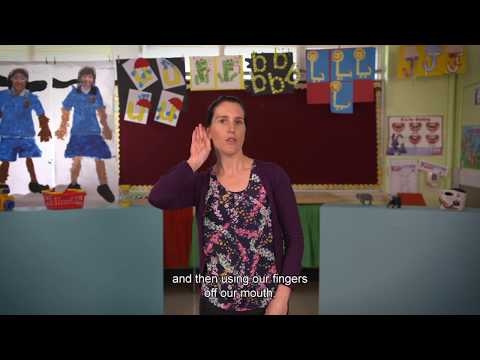
- Start with your dominant hand in a flat handshape, fingers together, and palm facing down.
- Position your hand near your forehead, slightly above your eyebrows.
- With a swift motion, move your hand downwards toward your cheek, as if applying paint across your face.
- While performing the movement, slightly arch your eyebrows and add a facial expression that conveys pride or intensity.
- Optionally, you can repeat this action with your non-dominant hand for emphasis or to indicate multiple applications of paint.
Common Mistakes
- Forgetting to include facial expressions, which are crucial in conveying the emotion associated with the sign.
- Using a flat handshape but not keeping fingers together, which can lead to confusion with other signs.
- Moving the hand too slowly, which may diminish the energetic feel of the action.
Related Signs
- 1 – The sign for the number one in ASL.
- 1 Dollar – The sign for one dollar, often used in shopping contexts.
- 10 – The sign for the number ten.
- 100 – The sign for one hundred, useful for discussing amounts.
- 11 – The sign for eleven, often used in counting.
Using “War Paint” in Everyday Conversations
The sign “War Paint” can be integrated into various everyday conversations, particularly when discussing cultural practices or personal experiences related to identity. Here are a few example sentences that illustrate how to use this sign naturally:
- Example 1: “I saw my friend wearing war paint for the dance performance.”
- Auslan: “FRIEND WAR PAINT DANCE PERFORMANCE I SEE.”
- Example 2: “During the festival, everyone applied war paint.”
- Auslan: “FESTIVAL EVERYONE WAR PAINT APPLY.”
- Example 3: “In some cultures, war paint is a symbol of strength.”
- Auslan: “SOME CULTURES WAR PAINT STRENGTH SYMBOL.”
These situations highlight how “War Paint” can be used to discuss cultural expressions and personal identity, making it relevant in conversations about community events or cultural heritage.
Cultural Notes
The concept of “War Paint” holds significant cultural meaning, particularly in Indigenous Australian contexts. In many Aboriginal cultures, war paint is not only a form of expression but also a connection to identity, storytelling, and spirituality. It is often used in ceremonies and rituals, symbolizing readiness for battle or marking important life events.
In the Australian Deaf community, the use of “War Paint” can also reflect pride in cultural identity and heritage. While Auslan is predominantly uniform, some regional dialects may have variations in the sign’s execution or the context in which it is used. For instance, Northern dialects might emphasize the visual aspect of the sign more dramatically, while Southern dialects may incorporate different facial expressions or body language to convey nuances of meaning.
Tips for Learning This Sign
To effectively learn and remember the sign “War Paint,” consider these practical tips:
- Mirror Practice: Stand in front of a mirror while practicing the sign. This helps you observe your own facial expressions and body posture, which are essential parts of Auslan.
- Watch for Non-Manual Features: Pay attention to your facial expressions while signing. Non-manual features can change the meaning or emphasis of your sign significantly.
- Use in Short Signed Sentences: Incorporate “War Paint” into simple sentences during practice sessions. This contextualizes the sign and helps reinforce memory through repetition.
By integrating these strategies into your learning routine, you’ll find it easier to remember and use “War Paint” in conversations.
Frequently Asked Questions
How can I use “war paint” in a sentence?
You can say, “I saw the dancers with war paint at the festival,” which emphasizes the cultural significance of the sign.
Are there regional variations for this sign?
While the basic sign remains consistent, some regions may have slight variations in facial expressions or hand movements.
What are similar signs to “war paint”?
Similar signs include “face paint” and “tattoo,” which also involve body art but may have different cultural meanings.
How does this sign compare to BSL?
British Sign Language (BSL) has different signs, but the concept of war paint may be expressed similarly depending on context.
What tips do you recommend for teaching this sign?
Encourage students to focus on the movement and facial expression, as these elements are vital for conveying the meaning effectively.
Practice This Sign
Try signing War Paint In Auslan with your camera and get AI coaching on your handshape, movement, and location.
Free · No signup required