
Magnetic in Australian Sign Language (Auslan)
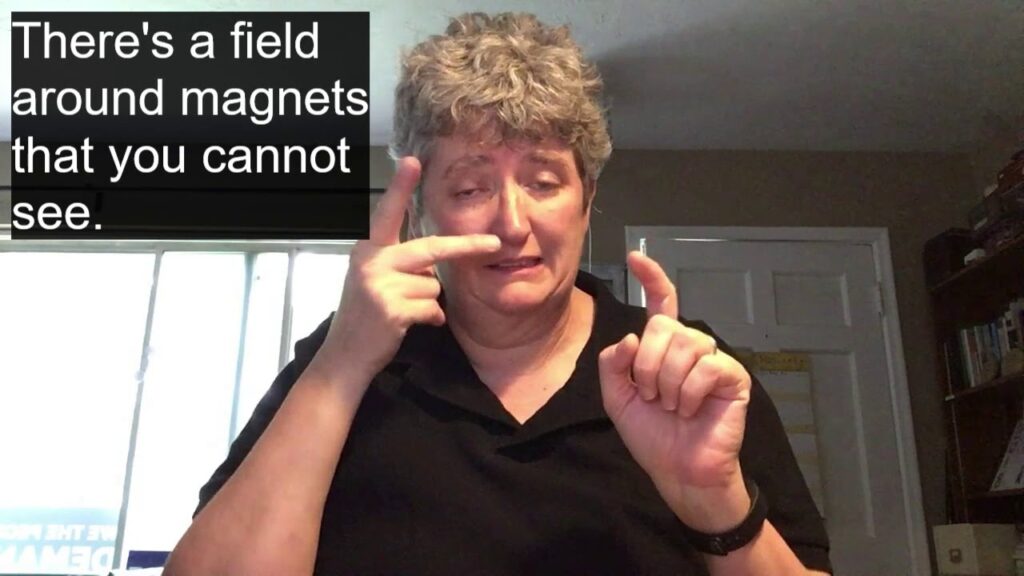
The sign for “magnetic” in Auslan refers to the concept of attraction, often used in contexts involving physical objects that attract or draw things to them, such as magnets. It’s also applicable in metaphorical contexts, indicating a strong pull or attraction between people or ideas.
Table of Contents
How to Sign “Magnetic”
- Start with your dominant hand in a flat shape, palm facing downward.
- Position your hand about shoulder height, slightly in front of you.
- Make a small, circular motion with your hand, moving it toward your body.
- As you perform the motion, maintain a facial expression that shows curiosity or interest, as if you are indicating a strong attraction.
Common Mistakes
- Some learners may forget to use the appropriate facial expressions, which are essential in Auslan for conveying meaning.
- Others might make the circular motion too large or exaggerated, which can misrepresent the sign’s intent of attraction.
- Using the wrong hand shape can lead to confusion; ensure you’re using a flat hand for clarity.
Related Signs
- 1 – The sign for the number one.
- 1 Dollar – The sign representing one dollar.
- 10 – The sign for the number ten.
- 100 – The sign for the number one hundred.
- 11 – The sign for the number eleven.
Using “Magnetic” in Everyday Conversations
The sign for “magnetic” can come up in various contexts, especially when discussing physics, technology, or everyday objects that have magnetic properties. Here are a few example sentences where you might use this sign:
- “This fridge is magnetic.” (SIGN: THIS FRIDGE MAGNETIC) – This sentence could arise during a conversation about kitchen appliances.
- “I bought a magnetic phone holder.” (SIGN: I BUY MAGNETIC PHONE HOLDER) – You might use this while discussing gadgets with friends or family.
- “The magnet is strong.” (SIGN: MAGNET STRONG) – This could come up in a science class or while explaining something to children.
Cultural Notes
In the Australian Deaf community, the sign for “magnetic” carries not just its literal meaning but also reflects a broader appreciation for science and technology. Many Deaf individuals engage in technical fields where understanding concepts like magnetism is essential. Additionally, there are subtle dialect variations between northern and southern regions in Australia, with some signs being articulated differently depending on local influences. While “magnetic” may remain consistent, it’s useful to be aware of these variations when communicating with Deaf individuals from different areas.
Tips for Learning This Sign
To effectively learn and remember the sign for “magnetic,” consider these practical tips:
- Mirror Practice: Stand in front of a mirror while practicing the sign. This allows you to see your handshape and facial expression, ensuring you are aligned with the correct formation.
- Watch for Non-Manual Features: Pay attention to your facial expressions while signing “magnetic.” Non-manual features, such as eyebrow movement, can enhance the meaning and help you convey the right context.
- Use in Short Signed Sentences: Integrate the sign into brief sentences or phrases during practice. This helps reinforce the sign’s meaning and improves your overall fluency.
Regular practice and engagement with the Deaf community can also enrich your understanding and use of the sign “magnetic” in conversation.
Frequently Asked Questions
How can I use “magnetic” in a sentence?
You can say, “The magnet is magnetic,” by signing the phrase and incorporating the sign for “magnetic” to emphasize the quality of attraction.
Are there regional variations for this sign?
While “magnetic” is generally consistent, some regions may have slight variations in hand shape or movement. It’s beneficial to learn from local Deaf individuals.
Are there similar signs to “magnetic”?
Yes, signs like “attract” or “pull” share similar meanings and can sometimes be used interchangeably, depending on context.
How does this compare to BSL?
In British Sign Language (BSL), the sign for “magnetic” may differ in hand shape and movement. It’s helpful to learn both signs for better communication.
What tips do you have for teaching this sign?
Use visual aids and real-life examples of magnets to help learners connect the sign with its meaning. Encourage practice with facial expressions to enhance understanding.
Practice This Sign
Try signing Magnetic In Auslan with your camera and get AI coaching on your handshape, movement, and location.
Free · No signup required