
Identify in Australian Sign Language (Auslan)

The sign “identify in Auslan” is used to express the action of recognizing or determining the identity of a person or object. This sign is often used in conversations about introductions, descriptions, or when clarifying who or what is being referred to.
Table of Contents
How to Sign “Identify”
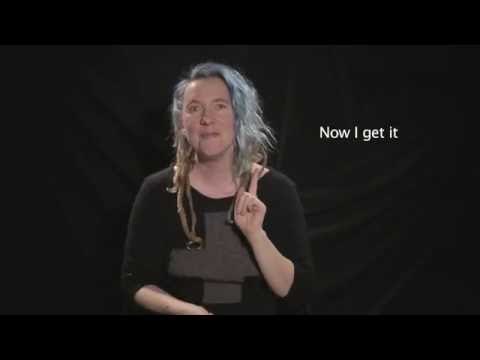
- Begin with your dominant hand in a flat “B” handshape, fingers extended and together.
- Position your hand in front of your chest, palm facing slightly upwards.
- Move your hand forward away from your body, making a slight arc as you do so.
- As you move your hand, maintain a focused facial expression that reflects the act of identifying.
- End the movement with your hand slightly extended in front of you, emphasizing the action of identifying.
Common Mistakes
- Forgetting to use facial expressions, which are crucial in conveying meaning in Auslan.
- Using a closed fist instead of the flat “B” handshape, which can change the meaning of the sign.
- Not moving the hand forward adequately, making the sign less clear and recognizable.
Related Signs
- 1 – The sign for the number one.
- 1 Dollar – A sign representing one dollar.
- 10 – The sign for the number ten.
- 100 – The sign for the number one hundred.
- 11 – The sign for the number eleven.
Using “Identify” in Everyday Conversations
The sign “Identify” often comes up in various everyday situations, especially when discussing people, places, or objects. Here are a few example sentences illustrating its use:
- Example 1: “I identify my friends at the café.” (SIGN: FRIENDS CAFÉ IDENTIFY)
- Example 2: “Can you identify the main issue?” (SIGN: MAIN ISSUE IDENTIFY CAN YOU?)
- Example 3: “Identify the person in the photo.” (SIGN: PHOTO PERSON IDENTIFY)
These examples highlight how “identify” serves as a key term in conversations about recognition and clarification, making it a valuable sign to master in social interactions.
Cultural Notes
The use of “Identify” within the Australian Deaf community reflects a strong emphasis on clarity and communication. Identifying people, places, or items is often crucial in social settings, where visual cues play a significant role. In addition, the northern and southern dialects of Auslan may have slight variations in the signing of “Identify.” For instance, some users in the northern regions might incorporate a specific facial expression to emphasize the act of identification, while southern variants may focus more on the handshape used. Understanding these nuances can enhance communication and ensure mutual understanding among Deaf individuals from different areas.
Tips for Learning This Sign
Practicing the sign “Identify” effectively can help reinforce your learning and improve your fluency. Here are some practical tips:
- Mirror Practice: Use a mirror to watch your signing. This helps you see if your handshape and movement match the correct form.
- Focus on Non-Manual Features: Pay attention to facial expressions and body language that accompany the sign. These features provide context and meaning.
- Incorporate in Short Signed Sentences: Create scenarios where you can use “identify” in context. Practice sentences like “Identify the key points” to reinforce your understanding.
These strategies will not only help you remember the sign but also improve your overall Auslan skills.
Frequently Asked Questions
How can I use “identify” in a sentence?
You can say, “I need to identify the person in the photo.” In Auslan, you would sign the entire concept using the sign for “identify” along with other relevant signs.
Are there regional variations of this sign?
There might be slight variations in the sign based on the region or community. It’s always good to observe and ask native signers for clarification.
What are similar signs to “identify”?
Signs for “recognize” or “know” can be similar in concept, but each has its own distinct handshape and movement.
How does this compare to BSL?
While both Auslan and BSL share some signs due to historical connections, “identify” may look different in BSL. It’s beneficial to learn the differences when communicating with BSL users.
What tips do you have for teaching this sign?
Encourage learners to practice in front of a mirror to observe their facial expressions and hand movements. Pairing the sign with real-life examples can also help reinforce understanding.
Practice This Sign
Try signing Identify In Auslan with your camera and get AI coaching on your handshape, movement, and location.
Free · No signup required