
Hair Type in Australian Sign Language (Auslan)
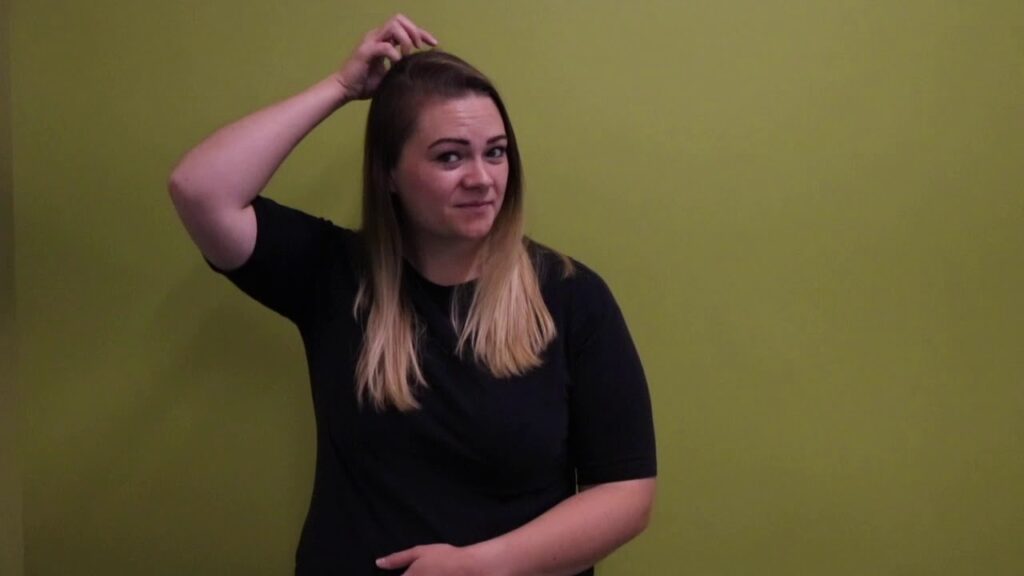
The sign for “hair type” in Auslan refers to the various textures and styles of hair, and it’s commonly used in discussions about appearance, beauty, or identity. This sign allows individuals to express preferences and attributes related to hair in social conversations.
Table of Contents
How to Sign “Hair Type”
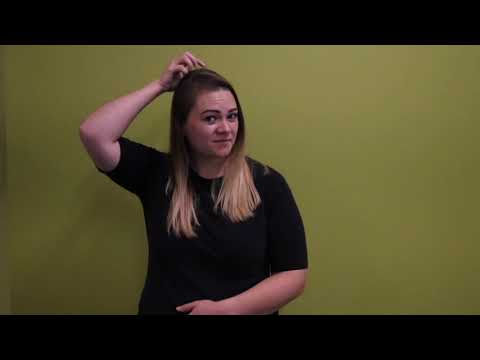
- Start with your dominant hand in a flat ‘B’ shape (palm facing down).
- Position your hand above your head, close to the hair, with your fingertips slightly touching the top of your head.
- Move your hand down and away from your head while gently bending your fingers to suggest the texture of the hair.
- As your hand moves, change the position or shape of your fingers to reflect different hair types, such as straight, wavy, or curly.
- Maintain an expressive facial expression that matches the type of hair you are describing; this adds context and emotion to your sign.
Common Mistakes
- Forgetting to vary hand shape when indicating different hair types, which can lead to a lack of clarity.
- Not incorporating facial expressions, which are crucial for conveying the meaning of the sign.
- Using too much or too little movement when signing; the sign should be fluid but not exaggerated.
Related Signs
- 1 – The number one sign used in various contexts.
- 1 Dollar – A sign for indicating currency.
- 10 – The sign for the number ten.
- 100 – Used for indicating one hundred.
- 11 – The sign for the number eleven.
Using “Hair Type” in Everyday Conversations
The sign for “Hair Type” can be quite useful in a variety of everyday conversations, particularly when discussing personal appearance or preferences. Here are a few example sentences:
- MY HAIR TYPE CURLY (indicating you have curly hair).
- YOUR HAIR TYPE STRAIGHT? (asking someone if their hair is straight).
- THEY HAVE THICK HAIR TYPE (describing someone with thick hair).
These sentences might come up naturally during casual conversations about hairstyles, fashion, or when meeting new friends. For instance, you might discuss hair types while at a social gathering, ensuring everyone feels included in the conversation.
Cultural Notes
In the Australian Deaf community, discussions about hair types often go beyond mere physical characteristics; they can also reflect personal identity and cultural pride. Hair can be a significant aspect of self-expression within Deaf culture, and sharing information about hair types can foster connections among individuals. Additionally, there can be variations in how “Hair Type” is signed depending on regional dialects in Australia. For instance, some northern regions might incorporate slight variations in handshape or movement when signing, while southern areas may have more standardized forms. Engaging with Deaf community members can enhance your understanding of these nuances.
Tips for Learning This Sign
Practicing the sign for “Hair Type” can be both enjoyable and effective. Here are some concrete tips to help you learn and remember it:
- Mirror Practice: Stand in front of a mirror and practice the sign repeatedly. This helps you see your own movements and ensure they match the correct form.
- Watch for Non-Manual Features: Pay attention to facial expressions and body language while signing. These non-manual features are important in Auslan and can change the meaning of your sign.
- Use in Short Sentences: Incorporate “Hair Type” into brief conversations with friends or practice partners. For example, try signing, “MY HAIR TYPE WAVY” to reinforce your learning.
Regular practice in real-life situations will help solidify your understanding and use of this sign.
Frequently Asked Questions
How can I use “hair type” in a sentence?
You can use it by saying, “I like your hair type,” which would be signed using the appropriate gestures for “I like” followed by the sign for “hair type.”
Are there regional variations for the sign?
Yes, some regions may have slight variations in the handshape or movement, so it’s beneficial to observe local signers.
What similar signs should I be aware of?
Similar signs include those for “hair color” and “hairstyle,” which focus on different aspects of hair.
How does this sign compare to BSL?
While the concept is similar, the sign itself may differ in BSL, so it’s essential to learn each version for effective communication.
Any tips for teaching this sign?
Encourage students to practice in front of a mirror to observe their facial expressions and hand movements for clarity.
Practice This Sign
Try signing Hair Type In Auslan with your camera and get AI coaching on your handshape, movement, and location.
Free · No signup required