
Calculation in Australian Sign Language (Auslan)

The sign for “calculation” in Auslan is used when discussing mathematical operations or problem-solving tasks. This sign is commonly used in educational settings or when engaging in conversations about numbers and mathematics. It conveys the act of performing calculations or arithmetic.
Table of Contents
How to Sign “Calculation”
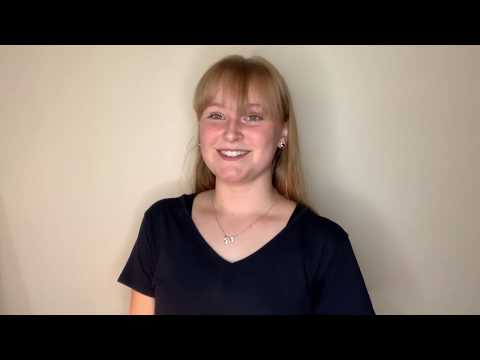
- Start with your dominant hand in a flat handshape, palm facing down.
- Position your hand in front of your chest, about shoulder height.
- Using your dominant hand, make a circular motion, moving it in a clockwise direction.
- As you perform the circular motion, maintain a focused facial expression that conveys concentration.
- Finish the sign by bringing your hand back to a neutral position in front of you.
Common Mistakes
- Some learners may confuse the movement and make it too quick or erratic, losing the smooth circular motion that indicates calculation.
- Another common error is using the wrong facial expression; it’s crucial to show focus and engagement while signing.
- Failing to keep the dominant hand flat can lead to misunderstandings about the sign’s meaning.
Related Signs
- 1 – The sign for the number one.
- 10 – The sign for the number ten.
- 100 – The sign for the number one hundred.
- 1 Dollar – The sign representing one dollar.
- 11 – The sign for the number eleven.
Using “Calculation” in Everyday Conversations
In everyday conversations, the sign “Calculation” can be used in various contexts, especially when discussing numbers, finances, or problem-solving. Here are a couple of example sentences to illustrate its use:
- Example 1: “I need to do a calculation for my budget.” (BUDGET I NEED CALCULATION)
- Example 2: “Did you see the calculation for the project costs?” (PROJECT COST CALCULATION YOU SEE?)
These sentences typically arise in discussions about managing finances, planning projects, or even in educational settings where math is involved. Using “Calculation” in these contexts helps convey the message clearly and effectively.
Cultural Notes
The concept of “Calculation” holds significant cultural relevance within the Australian Deaf community, often relating to everyday life, education, and work. In many cases, Deaf individuals may utilize calculations in discussions about budgeting, planning events, or even during activities like shopping. The emphasis on clear numerical communication reflects a broader value placed on accessibility and understanding in the Deaf community.
Dialectal variations may exist, particularly between northern and southern regions of Australia. While the sign itself remains largely consistent, the context or how it is incorporated into conversation may differ slightly. Awareness of these regional nuances can enhance communication and foster deeper connections within the community.
Tips for Learning This Sign
Practicing the sign “Calculation” can be both fun and effective with these tips:
- Mirror Practice: Stand in front of a mirror and practice the sign repeatedly. This helps you observe your handshape and movements while ensuring your signs are clear.
- Non-Manual Features: Pay attention to facial expressions and body language while signing. Non-manual features can add emphasis and context, making your signing more expressive.
- Use in Short Sentences: Incorporate “Calculation” into simple, everyday sentences. This not only reinforces the sign but also helps with its contextual usage.
By using these strategies, you can confidently incorporate “Calculation” into your Auslan vocabulary and enhance your overall signing skills.
Frequently Asked Questions
How can I use “calculation” in a sentence?
You can say, “I need to do a calculation for my math homework,” and sign “calculation” to emphasize the mathematical work.
Are there regional variations for this sign?
While the sign is generally consistent, some regions may have slight variations in movement or facial expressions. Observing local Deaf community practices can help.
What are some similar signs to “calculation”?
Signs like “addition,” “subtraction,” and “multiplication” are related and often used in similar contexts involving math.
How does this sign compare to BSL?
In British Sign Language (BSL), the signs for calculation may differ significantly, so it’s essential to learn from BSL resources if you’re interested in that system.
What are some teaching tips for this sign?
Encourage learners to practice the smoothness of the circular motion and to pair it with appropriate facial expressions to convey concentration.
Can children learn this sign easily?
Yes! Children often pick up signs quickly, especially when learning in a fun and interactive way. Incorporating games can help reinforce the concept.
Practice This Sign
Try signing Calculation In Auslan with your camera and get AI coaching on your handshape, movement, and location.
Free · No signup required