
Background Person in Australian Sign Language (Auslan)

The sign for “background person” in Auslan refers to a person who is present but not the main focus of a conversation or scene. This sign is useful in storytelling or when describing situations where someone is nearby but not centrally involved. It helps to clarify the context of a narrative.
Table of Contents
How to Sign “Background Person”
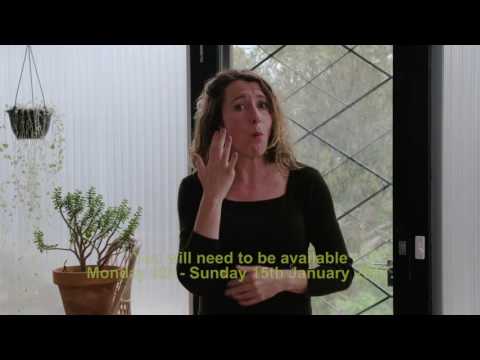
- Start with your dominant hand in a flat handshape (like a “B”).
- Position your hand in front of your body, about shoulder height.
- Move your hand slightly away from your body and then back, creating a gentle wave motion. This movement signifies the presence of someone in the background.
- Maintain a neutral facial expression, or use a slight smile to indicate that the background person is not the focus.
Common Mistakes
- Some learners may forget to use the gentle wave motion, making the sign look static and less expressive.
- Another common error is not positioning the hand at the appropriate height, which can confuse the meaning.
- Facial expressions can be overlooked, leading to a lack of clarity in the context of the sign.
Related Signs
- 1 – The sign for the number one.
- 1 Dollar – The sign for one dollar, often used in financial contexts.
- 10 – The sign for the number ten.
- 100 – The sign for one hundred, useful in counting and finance.
- 11 – The sign for the number eleven.
Using “Background Person” in Everyday Conversations
The sign “Background Person” is commonly used in various everyday conversations, particularly when discussing stories, events, or situations where the role of a person in the background is significant. Here are a few example sentences to illustrate its use:
- I saw my friend at the party, background person was dancing.
- In the movie, background person was important for the scene.
- At the meeting, background person was taking notes quietly.
These examples demonstrate how “Background Person” can be used in casual discussions about social gatherings, films, or professional settings, highlighting the role of individuals who may not be in the spotlight but contribute to the overall context.
Cultural Notes
The concept of a “Background Person” holds particular significance in the Australian Deaf community, where storytelling often emphasizes the importance of all participants, not just the main characters. This reflects the Deaf culture’s value on community and inclusivity. In various regions, you may notice slight variations in how this sign is produced, with northern and southern dialects sometimes featuring different hand shapes or movements. This diversity enhances the richness of Auslan and illustrates how regional influences can shape communication styles.
Tips for Learning This Sign
To effectively learn and remember the sign “Background Person,” consider the following strategies:
- Mirror Practice: Stand in front of a mirror and practice signing “Background Person.” This helps you see your movements and correct your form.
- Watch for Non-Manual Features: Pay attention to facial expressions and body language that accompany the sign. These non-manual features are crucial for conveying the right meaning.
- Use in Short Signed Sentences: Incorporate “Background Person” into your everyday conversations. The more you use it, the more natural it will become. Try creating short stories or sharing experiences that involve background people.
By applying these tips, you’ll enhance your Auslan skills and deepen your understanding of the context in which “Background Person” is used.
Frequently Asked Questions
How can I use “background person” in a sentence?
You might say, “In the story, there was a background person who was just watching.” This makes it clear who the focus is on.
Are there regional variations of this sign?
Yes, some regions may have slight variations in handshape or movement, so it’s helpful to observe local signers.
What is a similar sign to “background person”?
The sign for “observer” might also convey a similar meaning and can be useful in contexts where someone is watching.
How does this sign compare to BSL?
In BSL, the sign for “background” may look different, as each sign language has its own unique signs and structure.
Any tips for teaching this sign?
Encourage students to practice with storytelling, emphasizing the context where a background person would be relevant.
Practice This Sign
Try signing Background Person In Auslan with your camera and get AI coaching on your handshape, movement, and location.
Free · No signup required