
Yourself in Sign Language (ASL)
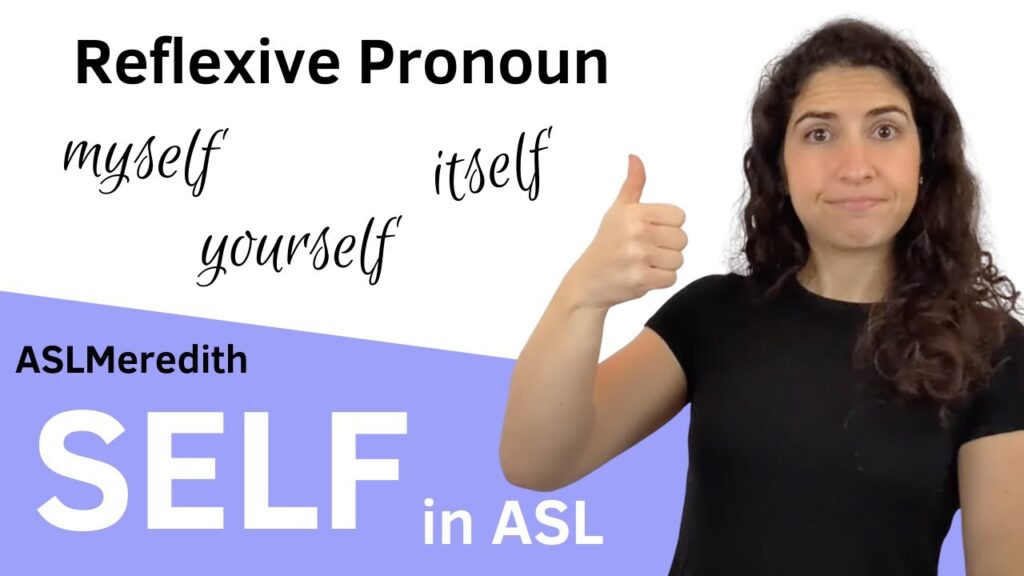
The sign “Yourself” is commonly used in American Sign Language to refer to the person being addressed, often emphasizing personal responsibility or action. This sign plays a crucial role in conversations, especially when discussing actions related to one’s own identity or choices. It can function in various contexts, such as self-reflection, instructions, or personal anecdotes.
[VIDEO_PLACEHOLDER]
Table of Contents
Forming the sign
- Handshape: Use a flat hand with the palm facing inward. The fingers should be together and extended, resembling a flat plane.
- Location: Start the sign in front of your chest, at the centerline of your body.
- Movement: Move your hand slightly outward and away from your body, while maintaining the flat handshape. The movement should be gentle and deliberate.
- Non-manual signals: Maintain an engaged facial expression, which can indicate the tone of the conversation. A slight nod can also enhance the meaning, depending on the context.
The sign “Yourself” emphasizes the individual, often highlighting personal agency. The outward movement of the hand can symbolize extending oneself or reflecting on one’s own actions. It’s an important sign to master for effective self-expression in ASL.
Using “Yourself” in sentences
In conversation, “Yourself” can be incorporated in various ways. For example, you might say, “You need to take care of yourself” where “Yourself” emphasizes the individual responsibility. It can also be used in phrases like, “Be true to yourself,” stressing authenticity. The sign adds a personal touch to statements, reinforcing individual involvement in the action being discussed.
Signs related to “Yourself”
Here are a few signs that are related to “Yourself”:
- You – A foundational sign that refers to the person being addressed.
- Self – A sign that conveys the idea of one’s own being or identity.
- Take care – Often used in conjunction with “Yourself” to encourage self-care.
- Love – Can be used to express self-love, enhancing the context of “Yourself.”
- True – Useful in expressions like “Be true to yourself.”
Common confusion with a similar sign
While learning “Yourself,” it’s essential to distinguish it from the sign for “You.” The handshape and movement are similar, but “Yourself” has a distinct outward motion that emphasizes individuality. Misusing these signs can lead to confusion in conversations, especially when discussing personal actions versus general attribution. Observing the context and the direction of the movement can help clarify the intended meaning.
FAQ
What does “Yourself” convey in ASL?
“Yourself” conveys a focus on the individual being addressed, often relating to personal responsibility or identity.
Can “Yourself” be used in different contexts?
Yes, “Yourself” can be used in various contexts, such as self-care advice, personal anecdotes, or when discussing actions related to oneself.
How can I practice the sign “Yourself” effectively?
To practice, try incorporating “Yourself” into daily conversations or storytelling. Record yourself to observe your handshape and movement for accuracy.
Is “Yourself” used in the same way across all dialects of ASL?
While the sign itself is widely recognized, regional variations may exist in terms of nuance or accompanying expressions, so it’s good to be aware of local signing communities.
Practice ASL Signs
Use your camera to practice signs and get real-time AI feedback on your technique.
Free · No signup required