
You’re Welcome in Sign Language (ASL)
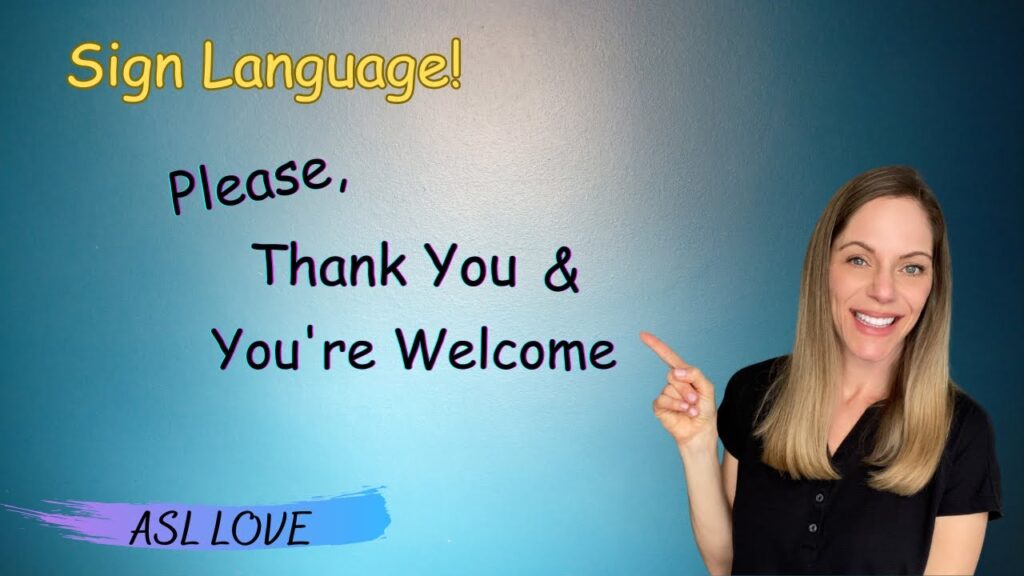
You’re Welcome is a courteous response to someone expressing gratitude. It signifies acknowledgment and appreciation of the other person’s thanks, often used in everyday conversations among Deaf and hearing communities alike. The sign conveys warmth and politeness, reinforcing social bonds.
[VIDEO_PLACEHOLDER]
Table of Contents
How to Sign You’re Welcome
- Handshape: Begin with an open hand, palm facing inward. The fingers should be extended but relaxed.
- Location: Position your hand near the chin or mouth area, slightly to one side.
- Movement: Move your hand outward from your face, away from your body in a smooth, gentle motion, as if you are offering something to the other person.
- Non-manual signals: Accompany the sign with a friendly facial expression. Smiling while signing enhances the warmth of your response, making it feel more genuine and welcoming.
In essence, the flow of the sign mirrors the act of giving, embodying the spirit of generosity and kindness. The movement and facial expressions are essential since they convey the positive emotions associated with the phrase.
Using “You’re Welcome” in Sentences
You’re Welcome can be used in various contexts to respond to expressions of gratitude. For instance, if someone signs “thank you,” you would respond with You’re Welcome, demonstrating politeness and acknowledgment of their thanks. It can be used in casual settings, such as among friends, or in more formal interactions, such as in a workplace.
When someone appreciates a favor, you might sign:
– “You helped me with my project.” (pause) “You’re Welcome.”
This emphasizes not just the response but also reinforces the supportive nature of the interaction.
Signs Related to “You’re Welcome”
Here are a few signs that are often used in conjunction with or are conceptually related to You’re Welcome:
Thank You – The sign for expressing gratitude.
Sorry – A sign used when apologizing, showing care for others’ feelings.
Hello – A common greeting that can lead into a conversation where You’re Welcome might be used.
Compliment – A sign that can prompt a response where You’re Welcome is appropriate.
Understanding Regional Variations
While You’re Welcome is widely understood, it may have slight variations based on regional dialects within the Deaf community. In some areas, signers might use a more exaggerated movement or different facial expressions to convey the same meaning. Being aware of local variations can enhance communication and show respect for regional sign languages. Always observe how native signers use the expression in their conversations, as nuances in signing can enrich your understanding.
Common Confusion with a Similar Sign
Some learners may confuse You’re Welcome with the sign for ‘Goodbye’. Both signs involve hand movements away from the body, but the context and facial expressions differentiate them. You’re Welcome is accompanied by a friendly expression and generally responds to gratitude, while ‘Goodbye’ tends to be more neutral or can be somber, depending on the context. It’s important to practice both signs in conversation to become comfortable with their distinctions.
FAQ
What does “You’re Welcome” signify?
It is a polite response to someone thanking you. It conveys acknowledgment and appreciation of their gratitude.
Can “You’re Welcome” be used in formal settings?
Yes, it’s appropriate in both casual and formal interactions. The sign remains the same, but the context may dictate the tone of your expression.
How can I practice signing “You’re Welcome”?
Practice with friends or in front of a mirror. Pay attention to your facial expressions and ensure they match the friendly tone of the sign.
Is there a different sign for “You’re Welcome” in other sign languages?
Yes, signs vary between different sign languages, and it is essential to learn the appropriate version for the community you are communicating with.
Why is facial expression important when signing?
Facial expressions convey emotions and nuances in your message, enhancing the meaning of the sign and making your communication more effective.
Practice ASL Signs
Use your camera to practice signs and get real-time AI feedback on your technique.
Free · No signup required