
Write in Sign Language (ASL)
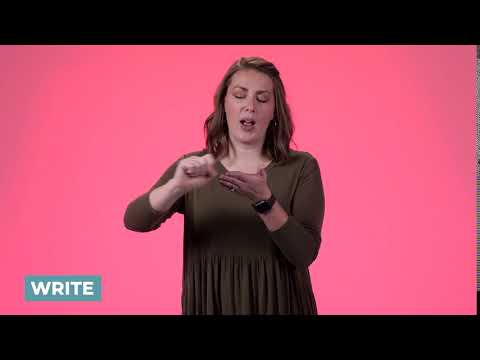
The sign “Write” is used to describe the action of writing, whether it be with a pen, pencil, or any other writing instrument. This sign can be used in various contexts, such as asking someone to write something down or describing the act of writing in general. In Deaf culture, writing is a fundamental means of communication, especially in environments where sign language is not the primary mode of interaction.
[VIDEO_PLACEHOLDER]
Table of Contents
How to Form the Sign “Write”
- Handshape: Begin with your dominant hand in a flat ‘B’ handshape (a flat hand with fingers extended and together).
- Location: Position your dominant hand above your non-dominant hand, which should be held flat, representing a surface like a piece of paper.
- Movement: Move your dominant hand in a motion that mimics the act of writing, typically moving it back and forth across the non-dominant hand.
- Non-manual signals: Maintain a neutral facial expression while performing the sign. You may also slightly raise your eyebrows to indicate that you are actively describing the action.
The movement of the dominant hand is key to conveying the action of writing. Ensure that your motion is fluid and mirrors the natural process of writing. This helps to reinforce the meaning of the sign in conversation.
Using “Write” in Everyday Signing
In daily conversations, “Write” can be used to prompt someone to jot down information or to talk about writing in general. For example, you might say, “Can you write your name?” or “I love to write stories.” The context in which the sign is used can clarify whether you are requesting someone to write, discussing the act of writing, or expressing a love for writing.
Related Signs
Here are some signs related to “Write” that you might find useful:
- Read – The sign for reading, which often accompanies writing.
- Book – Refers to the medium often used for writing or reading.
- Sign – Relates to the act of signing documents or signing as a whole.
- Note – Often what you write; short written messages.
- Draw – A similar action that involves creating images rather than text.
Common Mistakes to Avoid
When signing “Write,” it’s crucial to avoid using a stiff hand or making abrupt movements, which can lead to confusion with other signs. Ensure that your dominant hand mimics an actual writing motion smoothly. Additionally, some learners might mistakenly point their non-dominant hand downwards; instead, keep it flat as if it were a writing surface.
Deaf Cultural Note
In Deaf culture, writing serves not only as a practical tool for communication but also as a means of preserving and sharing stories, ideas, and experiences. Many Deaf individuals utilize writing to bridge communication gaps in situations where sign language might not be as easily understood, such as in hearing-dominated environments. This practice reinforces the importance of written language alongside sign language in the Deaf community.
FAQ
What is the difference between “Write” and “Draw”?
The sign “Write” specifically refers to the act of writing text, while “Draw” refers to creating images or sketches. The hand movements for each sign differ, with “Write” mimicking the motion of writing and “Draw” indicating more fluid, artistic movements.
Can “Write” be used in other contexts?
Yes, “Write” can be adapted to various contexts, such as when discussing writing emails, sending messages, or even taking notes in a meeting. The versatility of the sign allows it to be applicable in numerous situations related to written communication.
Is there a specific way to show writing in different languages?
While the sign for “Write” remains the same, you can clarify the language by signing the language’s name before or after the action. For example, you might sign “Write” and then fingerspell “E-N-G-L-I-S-H” to indicate you are referring to writing in English.
How can I practice the sign “Write” effectively?
To practice, try writing short messages or phrases while signing simultaneously. This helps reinforce the movement and connection between the action of writing and the sign. Also, watching videos of fluent signers can provide helpful insights into the fluidity and nuance of the sign.
Practice ASL Signs
Use your camera to practice signs and get real-time AI feedback on your technique.
Free · No signup required