
Work in Sign Language (ASL)
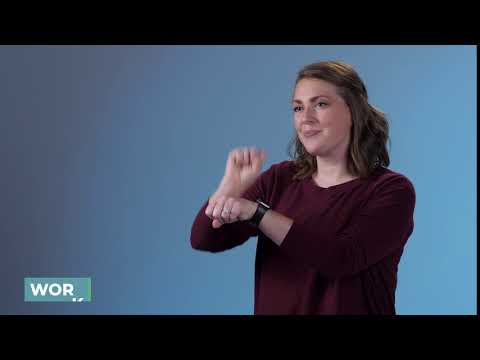
The sign for Work represents the concept of labor or effort, typically used to refer to one’s job or responsibilities. It can also encompass the idea of engaging in tasks or activities that require dedication and exertion. This sign is commonly used in conversations about employment, tasks at hand, or even academic efforts.
[VIDEO_PLACEHOLDER]
Table of Contents
Forming the sign
- Handshape: The dominant hand forms a “W” shape, with the index, middle, and ring fingers extended while the thumb and little finger are tucked in.
- Location: Position your dominant hand in front of your chest, slightly off to the side.
- Movement: Move the dominant hand downwards towards the non-dominant hand, which is held flat, palm facing up, at approximately waist level.
- Non-manual signals: Maintain a neutral facial expression. Your posture should be upright, conveying a sense of focus and determination.
This sign visually mimics the action of placing effort into work. The downward movement suggests the act of pushing or applying yourself, reflecting the nature of working hard. The use of the “W” handshape emphasizes the seriousness and commitment associated with labor.
Using “Work” in sentences
Here are some examples of how to use the sign Work in sentences:
- I have to work late today. (sign “I”, then “work”, followed by the sign for “late”)
- She loves her work. (sign “she”, then “work”, followed by the sign for “love”)
- Do you want to work together? (sign “do”, “you”, then “want”, followed by “work”, and “together”)
These examples illustrate how to incorporate the sign into different contexts, whether you’re talking about your own work or inquiring about someone else’s job. Remember to adjust your non-manual signals to match the tone of the conversation.
Signs related to “Work”
To expand your vocabulary related to the concept of work, consider these related signs:
- Job: Refers to a specific position or role within a work environment.
- Employment: Highlights the state of having a job or being employed.
- Task: Indicates a specific duty or piece of work that needs to be completed.
- Career: Encompasses one’s professional journey and long-term employment goals.
- Business: Refers to commercial activities or enterprises and can also imply work in a corporate context.
Common confusion with a similar sign
It’s easy to confuse the sign for Work with the sign for Job, especially for beginners. While both signs can relate to employment, “Job” specifically refers to a position or role, whereas “Work” is broader and encompasses any labor or effort. Paying attention to the context in which these signs are used can help you differentiate between them.
FAQ
How do I express different types of work in ASL?
You can specify types of work by combining the sign for Work with other signs, such as “office” or “construction,” to give more context to the kind of work you’re referring to.
Can I use the sign for Work to describe volunteering?
Yes, the sign for Work can include volunteer efforts or any unpaid labor, as the concept of work is not limited to paid employment.
What is the difference between “work” and “working”?
The sign for Work remains the same, but to indicate “working,” you might use a repeated motion to show ongoing action, emphasizing that the activity is currently happening.
Are there regional variations of the sign Work?
Yes, some regions may have slight variations in the handshape or movement. It’s best to learn from local Deaf communities to understand any unique adaptations.
Practice ASL Signs
Use your camera to practice signs and get real-time AI feedback on your technique.
Free · No signup required