
We in Sign Language (ASL)
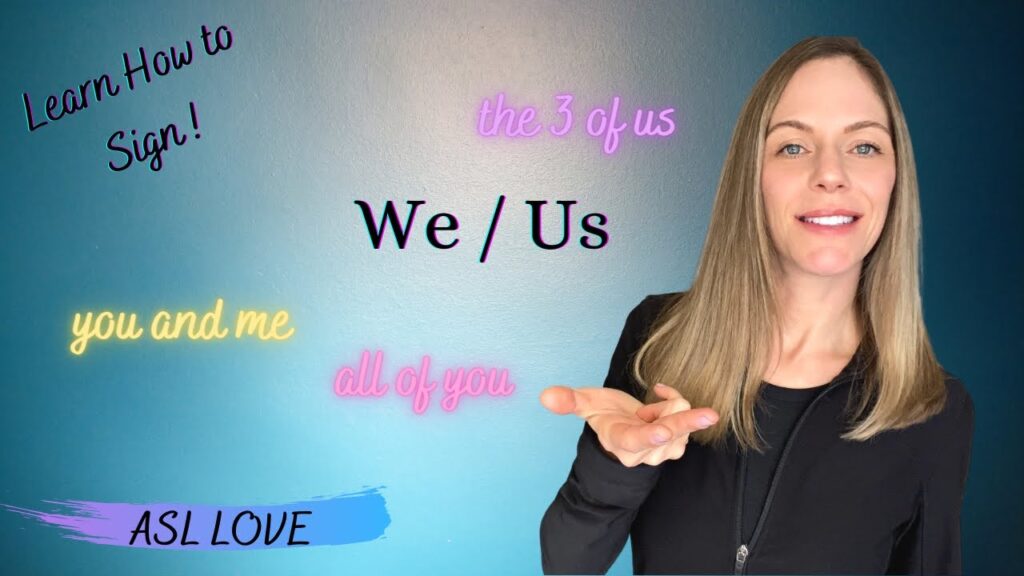
The sign “We” is used in American Sign Language to refer to a group that includes the speaker and at least one other person. It is an inclusive pronoun that plays a crucial role in expressing shared experiences, thoughts, or actions. Understanding how to properly form and use this sign can enhance communication among Deaf and hearing individuals alike.
[VIDEO_PLACEHOLDER]
Table of Contents
Forming the sign
- Handshape: Use both hands in the “W” handshape (fingers extended and together, palm facing forward).
- Location: Position your hands in front of your chest, near the centerline of your body.
- Movement: Bring your hands together toward one another, and then move them outward slightly in a gentle, circular motion.
- Non-manual signals: Maintain an open and engaged facial expression. Slightly raise your eyebrows as you sign to convey a sense of inclusivity and connection.
The movement of bringing the hands together and then outward symbolizes the coming together of individuals in a group. This visual representation emphasizes the collective aspect of the pronoun “We.” To ensure clarity, pay attention to your facial expressions, as they can add depth and meaning to your signing.
Using “We” in sentences
In American Sign Language, “We” can be used in various contexts to indicate shared experiences or actions. For example, you might say, “We are going to the store,” which would involve signing “We” followed by the appropriate signs for “go” and “store.” Using “We” effectively can help specify who is included in an action or event, making your communication clearer and more inclusive.
Signs related to “We”
US – Refers to the United States, often used in conjunction with “We” to denote a shared identity.
You – Used to address someone specifically, contrasting with the collective “We.”
They – Refers to individuals who are not included in the “We.”
Us – A closely related sign that also denotes a collective but can imply a more intimate group.
Group – Represents a collection of people, often used to discuss larger assemblies in contrast to “We.”
Common confusion with a similar sign
A common point of confusion for learners is the distinction between “We” and “Us.” While “We” includes the speaker and at least one other person, “Us” often refers to the group as the object of a verb or action. For example, saying “They are with us” uses “Us” to indicate the group being referenced, while “We are going” uses “We” to denote the group performing the action.
FAQ
What is the difference between “We” and “Us”?
“We” is used as a subject pronoun, while “Us” is used as an object pronoun. This distinction is important in sentence structure.
Can “We” be used for larger groups?
Yes, “We” can refer to any size group that includes the signer, from a small gathering to a larger community.
Do facial expressions matter when signing “We”?
Absolutely! Facial expressions enhance the meaning of the sign and convey emotions or inclusiveness.
Is “We” used differently in other sign languages?
While the concept of “We” exists in various sign languages, the specific handshape and movements may differ. It’s essential to learn the conventions of each language.
Practice ASL Signs
Use your camera to practice signs and get real-time AI feedback on your technique.
Free · No signup required