
Watch in Sign Language (ASL)
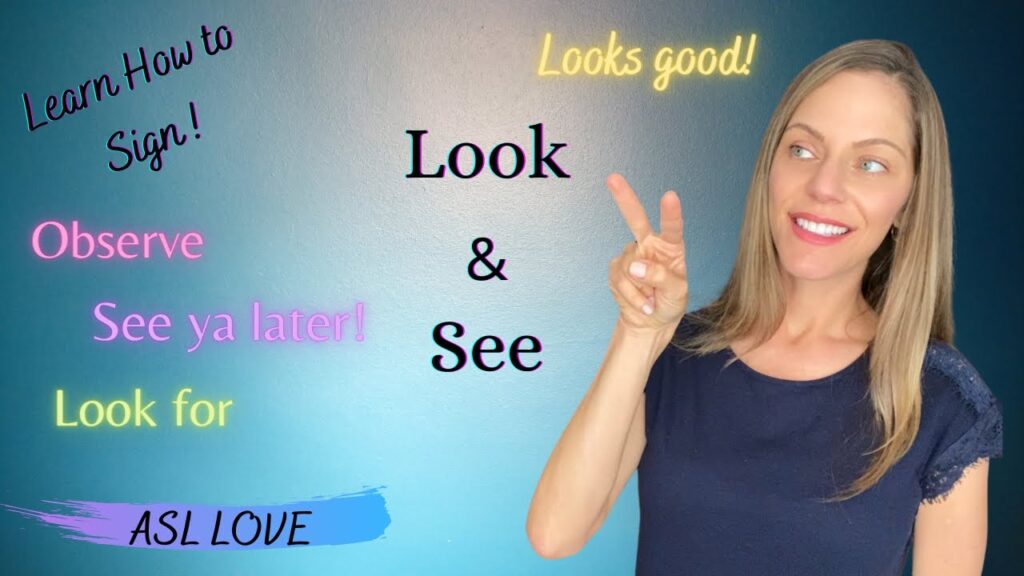
The sign “Watch” refers to the act of observing or looking at something attentively. It is commonly used when discussing activities involving visual engagement, such as watching a movie, a performance, or someone’s actions. This sign plays a crucial role in everyday communication within the Deaf community.
[VIDEO_PLACEHOLDER]
Table of Contents
Forming the sign
- Handshape: The dominant hand is in the ‘B’ handshape, with fingers extended and together, resembling an open palm.
- Location: The sign is typically made in front of the face or towards the body, at about eye level.
- Movement: The dominant hand moves outward from the face, often accompanied by a slight forward movement to emphasize the action of watching.
- Non-manual signals: Eyebrows are raised, and the eyes are focused on the sign to indicate attentiveness and interest while watching.
The “Watch” sign is straightforward and relies heavily on the visual aspect of Deaf communication. It’s essential to maintain a clear expression to convey the intensity of watching, especially in contexts where focus is required, such as during a performance or a game.
Showing tense, aspect & repetition
The sign “Watch” can be modified to indicate different tenses or aspects. For instance, to signify that you ‘watched’ something in the past, you can move the sign backward slightly after performing the action. Conversely, for ongoing or habitual actions, you can repeat the sign several times, indicating that watching is a regular activity. This flexibility allows for clear communication of the timing and frequency of your watching.
“Watch” in everyday signing
In daily conversations, “Watch” can be integrated seamlessly to discuss various topics. For example, you might sign, “I will watch a movie,” or “Did you watch the game last night?” This sign is versatile and can be paired with other signs to provide more context, such as specifying what is being watched or who is watching. This helps in creating a fuller picture of the situation, enhancing understanding in conversations.
Mistakes to avoid
One common mistake when signing “Watch” is placing the hand too far from the face, which can make the sign less intuitive. Ensure that the sign remains at eye level for clarity. Another mistake is neglecting non-manual signals, such as facial expressions, which are key in conveying the sign’s meaning. Remember to focus your eyes in the direction of the sign to enhance comprehension.
Common confusion with a similar sign
Some learners may confuse “Watch” with the sign for “See,” which has a different handshape and movement. While “Watch” suggests active engagement and focus, “See” refers to the passive ability to perceive something visually. Being mindful of these distinctions can aid in clearer communication.
FAQ
What is the difference between “Watch” and “Look”?
The sign “Look” typically indicates a quick glance or a more casual observation, while “Watch” implies a more sustained and active engagement with what you are observing.
Can “Watch” be used for activities other than viewing screens?
Yes! “Watch” can be used for any situation where someone is observing something attentively, such as watching a person perform, a live event, or a natural phenomenon.
How do you sign “I watched a movie”?
You would sign “I” (point to yourself), then “Watch,” and follow it with the sign for “movie” to complete the sentence. This structure helps maintain clarity in communication.
Is there a specific facial expression I should use when signing “Watch”?
Yes, a focused and attentive expression enhances the meaning of “Watch.” Raising your eyebrows and concentrating your gaze on the sign can convey interest and engagement.
Practice ASL Signs
Use your camera to practice signs and get real-time AI feedback on your technique.
Free · No signup required