
Wall in Sign Language (ASL)
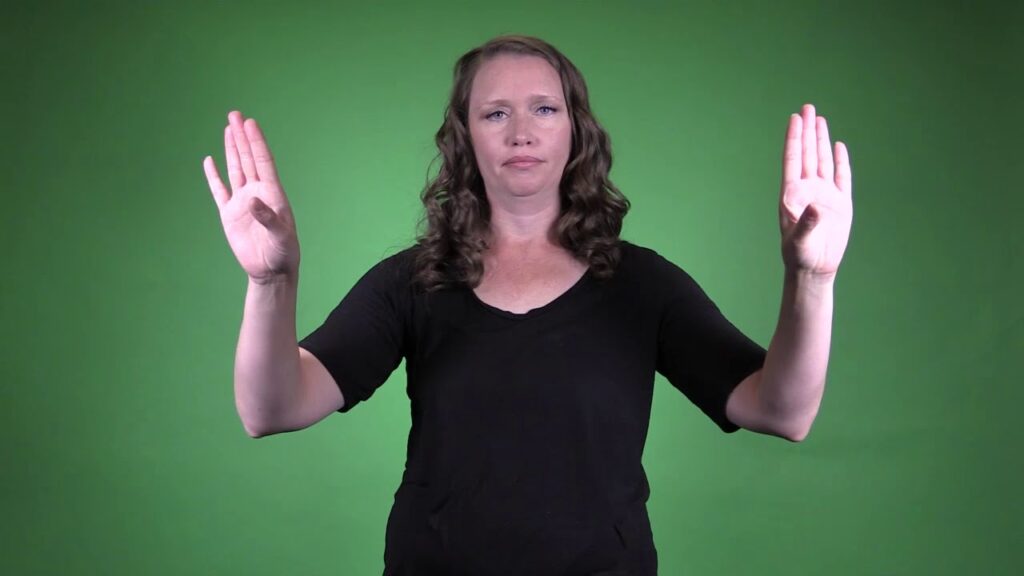
The sign for Wall represents a vertical surface that encloses or divides a space. It is commonly used in conversations about physical spaces, architecture, or when describing a room’s layout. Understanding this sign is essential for discussing homes, buildings, or any structures that include walls.
[VIDEO_PLACEHOLDER]
Table of Contents
Forming the sign
- Handshape: Use the dominant hand in a flat “B” shape, where the fingers are extended and together, and the thumb is folded across the palm.
- Location: Position the sign at about shoulder height in front of your body, ensuring it is visible to your conversation partner.
- Movement: Move your hand horizontally from left to right or right to left while holding the handshape. This movement should be smooth and deliberate.
- Non-manual signals: Maintain a neutral facial expression during the sign to convey clarity. You may lean slightly towards the direction of the movement to emphasize the action.
The sign effectively illustrates the concept of a wall by embodying the flat, expansive nature of a wall surface. It is often accompanied by additional context in conversation, such as identifying which wall you are referring to or discussing what is found on or near that wall.
Using “Wall” in sentences
In a conversation, you might say: “The bathroom wall needs to be painted,” which can be signed as “BATHROOM WALL PAINT.” This sentence clearly identifies the subject and action. Another example could be, “I hung a picture on the wall,” which can be conveyed through the signs for “PICTURE” and “WALL” paired together. In this way, “Wall” serves as a foundational term that can be built upon with additional signs to create meaningful statements.
Signs related to “Wall”
Understanding “Wall” is enhanced by familiarizing yourself with these related signs:
- Door – Represents an opening in a wall, providing access to another space.
- Window – A part of the wall that allows light and air into a building.
- Room – A space enclosed by walls, helping to contextualize where walls exist.
- Paint – Related to the action of decorating a wall.
Regional variation
The sign for “Wall” may have slight variations across different regions. For instance, some areas might emphasize the movement aspect more or use a different handshape to convey the same idea. It’s beneficial to observe how native signers use the sign in various contexts, which can enhance your understanding and adaptability in signing environments.
FAQ
What is the best way to practice the sign for “Wall”?
Practice in front of a mirror to see your handshape and movement. You can also record yourself signing and compare it to instructional videos.
Can I use “Wall” to describe different types of walls?
Yes, you can specify the type of wall by adding additional signs, like “brick wall” (using the sign for “brick” before “wall”).
Is the sign for “Wall” the same in all forms of sign language?
No, signs vary between different sign languages. Always check the specific sign language you are using for accuracy.
How does context affect the use of the sign “Wall”?
The context can add meaning, such as indicating whether you are discussing the interior or exterior wall by using additional modifiers.
Practice ASL Signs
Use your camera to practice signs and get real-time AI feedback on your technique.
Free · No signup required