
Visit in Sign Language (ASL)
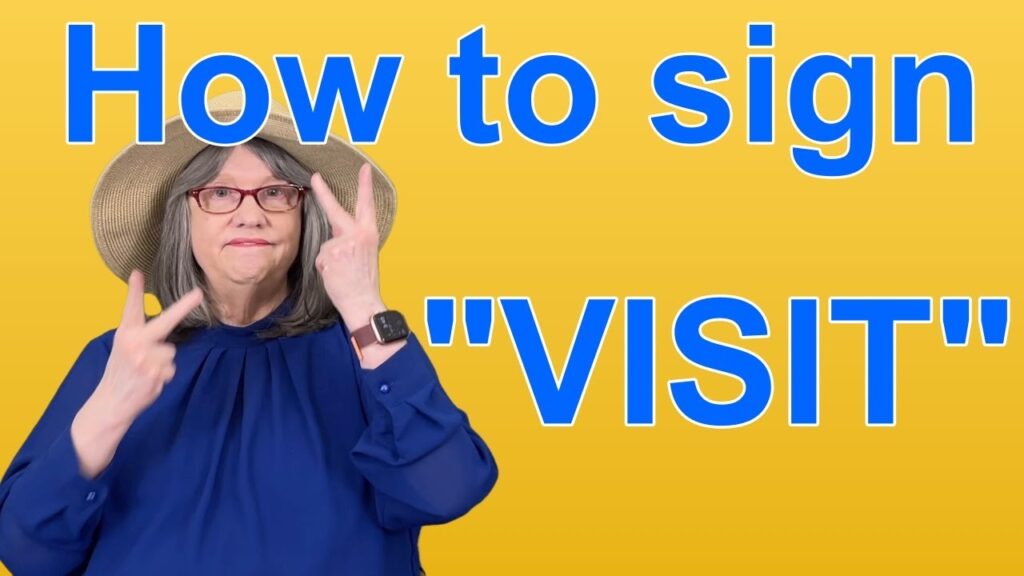
Visit is a common sign used to express the action of going to see someone or spending time with them. Whether catching up with a friend or checking in on family, this sign captures the essence of connection and social engagement in the Deaf community. Understanding how to use Visit effectively can enhance your conversations and relationships.
[VIDEO_PLACEHOLDER]
Table of Contents
How to Form the Sign Visit
- Handshape: Start with your dominant hand in a “V” shape, with the index and middle fingers extended and separated.
- Location: Position your hand around chin level, in front of your face.
- Movement: Move your hand slightly forward and then back towards your face in a gentle motion, as if gesturing towards someone you are about to visit.
- Non-manual signals: Maintain eye contact while signing. A friendly facial expression can emphasize the warmth of the visit.
To sum up, the Visit sign combines a “V” handshape with a forward movement that signifies reaching out to someone, reflecting the act of visiting. This sign is not only about the action but also conveys the social aspect of spending time with others, making your communication more engaging.
Using Visit in Everyday Signing
In everyday conversations, the sign Visit can be used in various contexts. Here are a few examples:
- I will visit my friend tomorrow.
- Did you visit your family last weekend?
- Let’s plan to visit the museum together.
Using Visit correctly in sentences helps convey your intentions clearly. It’s often paired with time indicators or questions to provide context. For instance, “I’m going to visit” can be modified with a time component, such as “later” or “soon,” to specify when the visit will occur.
Related Signs
There are several signs that relate to the concept of visiting or spending time with others:
- Friend: An important aspect of visiting is spending time with friends.
- Family: Often, visits are made to see family members.
- See: This sign can also be used when discussing visiting someone.
- Time: Useful for indicating when you plan to visit.
A Common Mistake to Avoid
One common mistake for learners is confusing the sign for Visit with the sign for Go. While both involve movement and interaction, Go tends to indicate movement towards a location without the social aspect that Visit implies. Be mindful of the context in which you use these signs to ensure clarity in your conversations.
Frequently Asked Questions
What is the difference between Visit and See?
Visit emphasizes the social aspect of spending time with someone, while See is more general and can refer to simply looking at someone or something.
Can Visit be used for virtual meetings?
Yes, Visit can also be used to refer to virtual meetings, especially when discussing online catch-ups with friends or family.
Are there regional variations for the sign Visit?
While the basic sign typically remains consistent, some regional variations may exist. It’s always good to observe and adapt to local signing styles.
How can I practice using Visit effectively?
Try incorporating the sign into everyday conversations with Deaf friends or in practice sessions. Role-playing different scenarios can also enhance your fluency.
Practice ASL Signs
Use your camera to practice signs and get real-time AI feedback on your technique.
Free · No signup required