
View in Sign Language (ASL)
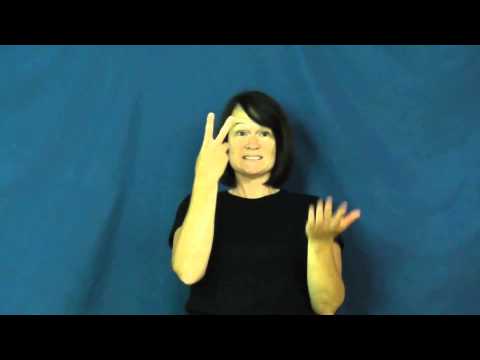
The sign “View” is often used to discuss perspectives, sight, or opinions about various subjects. It can apply to both literal and metaphorical contexts, such as seeing a movie or having a particular outlook on a situation. Understanding how to use this sign can enhance communication in discussions involving observation or perspective.
[VIDEO_PLACEHOLDER]
Table of Contents
How to Form the Sign “View”
- Handshape: Start with your dominant hand in a flat “V” shape, where the index and middle fingers are extended and separated. Your other fingers should be folded down.
- Location: Position your hand in front of your face, about a foot away, at eye level.
- Movement: Move your hand slightly forward and back, as though you are indicating the act of looking or observing something more closely.
- Non-manual signals: Accompany the sign with a facial expression that reflects curiosity or attentiveness, often raising your eyebrows as you perform the movement.
The sign is a visual representation of the concept of viewing, engaging the signer’s physical gesture to convey the act of seeing or perceiving. It’s commonly used in both formal and informal settings when discussing perspectives or viewpoints.
Using “View” in Everyday Signing
In conversations, “View” can be employed in various contexts. For example, you might say, “What’s your view on this movie?” or “I have a different view about that topic.” The sign effectively communicates not just the physical act of seeing but also the abstract notion of perspective or opinion. This versatility makes it a valuable sign for discussions that require depth and nuance.
Signs Related to “View”
Explore these related signs that can enhance your discussions about perspectives and opinions:
- Perspective – Discussing different angles or viewpoints.
- See – The act of looking at something visually.
- Opinion – Expressing personal beliefs or thoughts.
- Watch – Observing something attentively, usually visually.
Common Confusion with a Similar Sign
Many learners often confuse “View” with the sign for “Look.” While both signs involve similar movements and handshapes, “Look” emphasizes the action of searching or directing one’s gaze towards something specific, whereas “View” conveys a broader sense of perception or observation. It’s essential to practice each sign in context to distinguish their meanings effectively.
Frequently Asked Questions
What are some examples of sentences using “View”?
You can use “View” in sentences like, “My view on climate change is very strong,” or “Can you share your view on the latest news?”
How can I incorporate facial expressions with “View”?
When signing “View,” use raised eyebrows to convey interest or curiosity, which adds depth to the sign and shows engagement in the conversation.
Are there any regional variations for “View”?
While “View” is generally consistent across ASL users, some regions may have slight variations in handshape or movement. It’s always best to observe local signers for nuances.
Is “View” used in formal or informal settings?
“View” can be used in both settings. In formal discussions, it can express opinions professionally, while informally, it can be used in casual conversations.
Practice ASL Signs
Use your camera to practice signs and get real-time AI feedback on your technique.
Free · No signup required