
Vegetable in Sign Language (ASL)
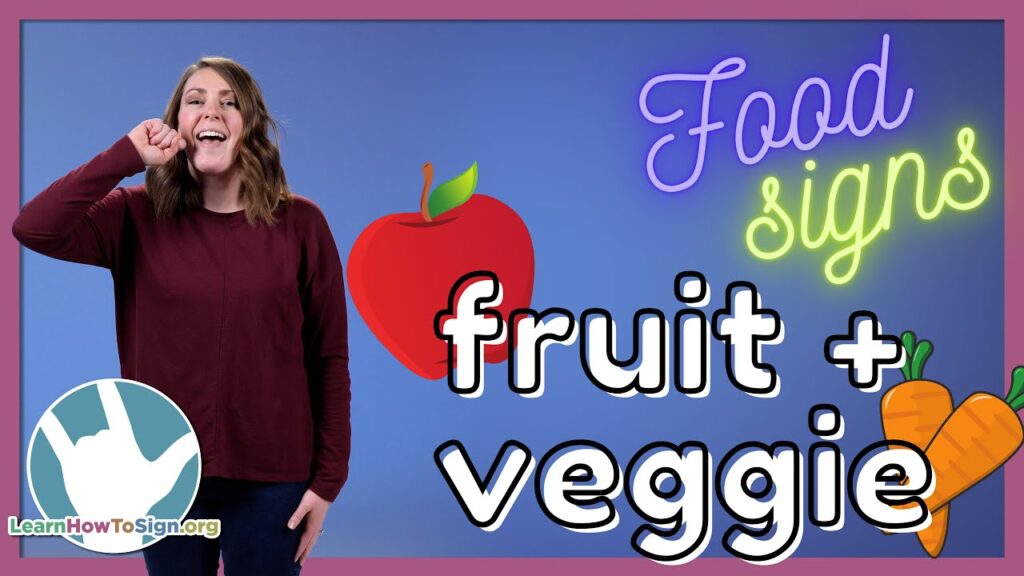
Vegetable refers to any plant or part of a plant that is consumed as food, typically as a savory dish. This sign is commonly used in conversations about food, nutrition, and cooking. Knowing how to sign Vegetable can help enhance communication about healthy eating habits in Deaf communities.
[VIDEO_PLACEHOLDER]
Table of Contents
How to form the sign Vegetable
- Handshape: Start with a flat hand shape, similar to an open “B” handshape.
- Location: Position your dominant hand in front of your chest.
- Movement: Move your dominant hand downwards with a slight wiggle, mimicking the action of picking a vegetable from the ground.
- Non-manual signals: Maintain a neutral facial expression while signing. A slight smile can indicate a positive connotation associated with vegetables.
This sign effectively conveys the idea of vegetables through its movement and handshape. The downward motion simulates reaching down to harvest or pick vegetables, which adds a vivid dimension to the communication. The neutral facial expression helps ensure clarity while reinforcing the concept without adding unintended emotion.
Using Vegetable in sentences
In conversational ASL, you might say: “I eat a lot of vegetables.” This would be signed as “I” + sign for “eat” + sign for “vegetable” + a sign indicating quantity. Another example could be: “Do you like vegetables?” which can be expressed by signing “You” + sign for “like” + sign for “vegetable.”
Understanding how to integrate Vegetable into various sentences enhances communication about dietary preferences, recipes, and meal planning. It’s particularly useful in discussions around health and wellness, where vegetables play a crucial role.
Signs related to Vegetable
Here are some related signs that may be useful:
- Fruit – the sign for fruit, often discussed alongside vegetables in the context of health.
- Food – the general sign for food, which encompasses vegetables and other edibles.
- Cook – the sign for cooking, relevant when discussing how to prepare vegetables.
- Garden – the sign for garden, where many vegetables are grown.
Common confusion with a similar sign
It’s essential to differentiate the sign for Vegetable from the sign for “plant.” While both involve similar handshapes and locations, the movement and context are what set them apart. Vegetable typically involves a downward motion to signify harvesting, while the sign for “plant” may use a more straightforward upward motion to signify growth. Practicing both signs can help avoid confusion in conversation.
FAQ
What are some examples of vegetables that can be signed?
Common vegetables like carrot, broccoli, and potato have their own specific signs in ASL. You can pair the sign for Vegetable with these specific signs to discuss them in detail.
Can I use the sign for Vegetable in a cooking context?
Absolutely! The sign for Vegetable is very relevant in cooking contexts. You can combine it with signs for cooking methods to discuss how to prepare vegetables.
Are there regional variations for the sign Vegetable?
While the sign for Vegetable is quite standard, some regional variations may exist. It’s always good to learn from local signers to ensure clarity and understanding.
How can I practice signing Vegetable?
You can practice by incorporating it into sentences about your meals. Try signing about what you had for lunch or what vegetables you enjoy cooking.
Practice ASL Signs
Use your camera to practice signs and get real-time AI feedback on your technique.
Free · No signup required