
Vacation in Sign Language (ASL)
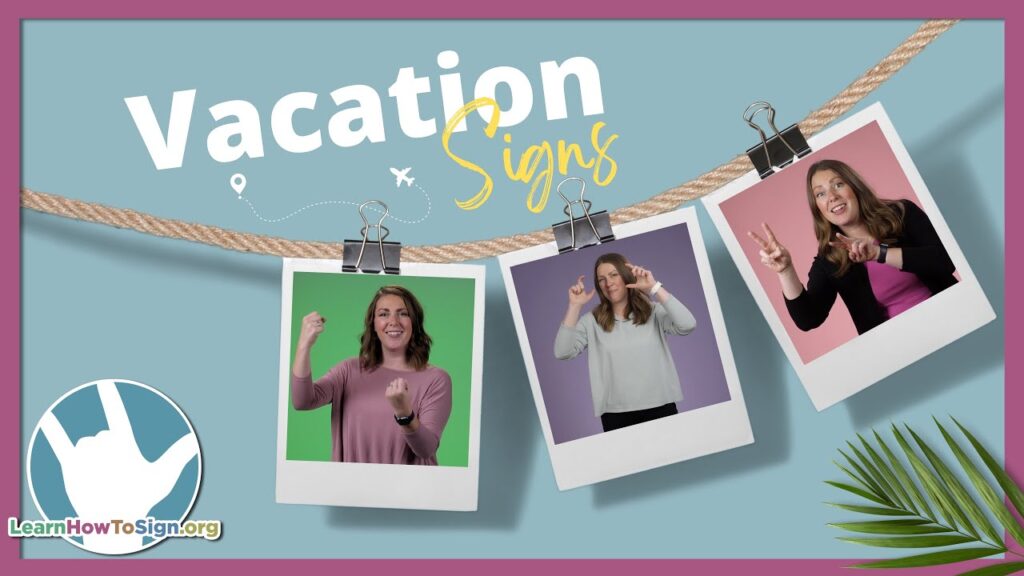
The sign for Vacation refers to a period of time spent away from home or work for leisure and enjoyment. It’s commonly used in discussions about travel, holidays, and downtime. This sign is essential in conversations regarding plans, leisure activities, and overall well-being.
[VIDEO_PLACEHOLDER]
Table of Contents
Forming the sign
- Handshape: The sign begins with a flat handshape, typically using the dominant hand. The fingers are extended and held together, resembling a palm facing outward.
- Location: Start with your dominant hand near your forehead, representing a connection to the mind or plans for travel.
- Movement: Move your hand away from your body and slightly forward in a fluid motion, imitating the action of traveling or going somewhere new.
- Non-manual signals: Accompany the sign with a pleasant facial expression, such as a smile, to convey the positive feelings typically associated with vacations.
This sign encapsulates the idea of a getaway and is particularly expressive when paired with appropriate facial expressions and body language, enhancing its meaning in context. It can be used in various settings, from casual conversations with friends to more formal discussions about travel plans.
Using “Vacation” in sentences
Here are a few examples of how to incorporate the sign for Vacation into sentences:
- Last year, I went on a Vacation to Hawaii.
- We plan to take a Vacation next month for some relaxation.
- Do you have any plans for your Vacation this year?
These sentences demonstrate the sign’s versatility in everyday conversation, whether discussing past, present, or future trips.
Signs related to “Vacation”
- Travel – A sign for the act of moving from one place to another.
- Leisure – Represents free time spent enjoying oneself, often connected to vacations.
- Holiday – Often used interchangeably with vacation, but can imply a specific festive time.
- Relax – To unwind, often a key activity during a vacation.
Cultural note on vacations
In Deaf culture, vacations are significant for building community and maintaining social bonds. Traveling together can provide Deaf individuals with opportunities to connect with others in different regions, fostering an understanding of diverse cultures and sign languages. This communal aspect of vacations can be especially enriching, as Deaf travelers often discover the importance of shared experiences and the joy of connecting with others.
FAQ
What is the difference between “Vacation” and “Holiday” in ASL?
While both terms can refer to leisure time, “Vacation” typically implies a trip taken away from home, whereas “Holiday” may refer to specific days of celebration that can occur at home or away.
Can I use “Vacation” to refer to a staycation?
Yes, “Vacation” can be used for a staycation, as it encompasses any form of vacation time, including those spent at home relaxing.
Is the sign for “Vacation” the same in all regions?
There may be slight regional variations in the sign, but the general concept remains the same. It’s always good to ask for clarification when in a new community.
How do I sign “I want to go on vacation”?
You can combine the sign for “I want” with “Vacation.” Sign “I want” by placing your hands in front of you with open palms and pulling them toward your chest before signing “Vacation.”
Practice ASL Signs
Use your camera to practice signs and get real-time AI feedback on your technique.
Free · No signup required