
Try in Sign Language (ASL)
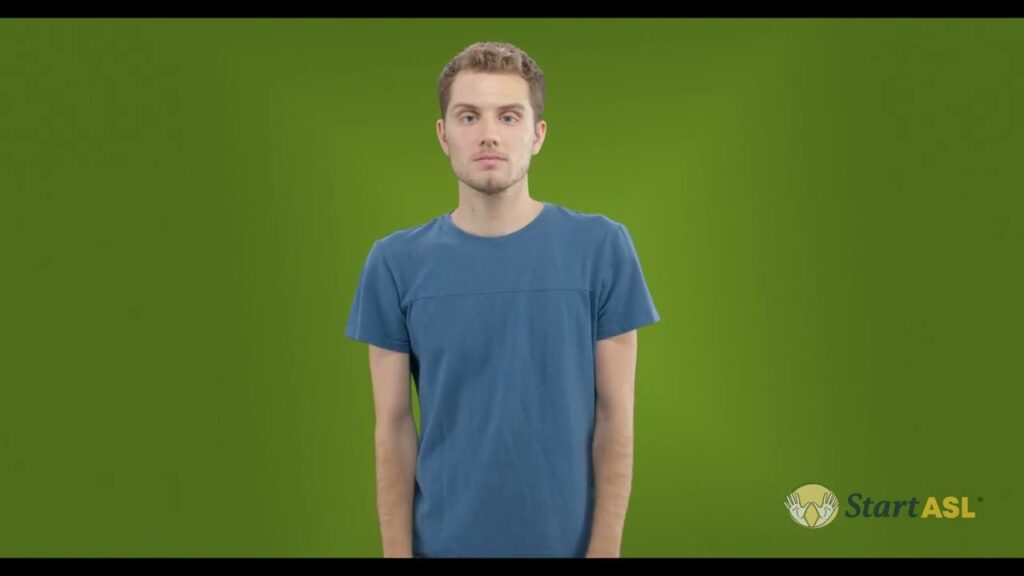
The sign “Try” conveys the action of attempting or making an effort to do something. It’s commonly used in various contexts, whether it’s about trying out a new activity or making an attempt to solve a problem. Using this sign can express determination and the willingness to give something a go, even when faced with challenges.
[VIDEO_PLACEHOLDER]
Table of Contents
Forming the sign
- Handshape: Use both hands in the flat “B” handshape. Your fingers should be together and extended, with your palms facing down.
- Location: Position your hands in front of your body, around chest height.
- Movement: Move your hands slightly forward and then back toward your body in a small arc, as if you are testing or examining something.
- Non-manual signals: Accompany the sign with an expression of intent or effort on your face. This can help convey the seriousness of your attempt.
When you sign “Try,” the movements you make should reflect the effort involved in making an attempt. The emphasis on facial expressions can enhance the meaning, particularly when discussing challenges or expressing determination.
Showing tense, aspect & repetition
The sign “Try” can be adapted to express different tenses and aspects through changes in movement and repetition. For instance, if you want to indicate that you are currently trying something, you can perform the sign with a smooth, continuous motion. If you want to show that you have tried something in the past, you can perform the sign once and then show a facial expression that communicates satisfaction or frustration. Additionally, using the sign multiple times in quick succession can emphasize that you have made several attempts.
“Try” in everyday signing
In everyday conversations, “Try” can be used in a variety of contexts. For example, when discussing a new recipe, you might say, “I want to try this dish.” Alternatively, if a friend is hesitant about a new sport, you could encourage them by saying, “You should try it!” This sign is versatile and can be combined with other signs to create more complex sentences expressing encouragement or determination.
Common confusion with a similar sign
Many learners often confuse the sign “Try” with the sign for “Test.” While both signs involve making an attempt, “Try” is more about effort and willingness, whereas “Test” typically signifies evaluating or assessing something. To differentiate between them, pay attention to the facial expressions and the context in which the signs are used. “Try” will often be accompanied by expressions of encouragement or determination, while “Test” may carry a more analytical or critical tone.
FAQ
What is the difference between “Try” and “Attempt” in ASL?
In ASL, “Attempt” is a more formal or serious way of indicating trying something, whereas “Try” is more casual and is often used in everyday conversation.
Can “Try” be used in different contexts?
Yes, “Try” is very versatile and can be used when discussing food, activities, or even personal challenges.
How do I express “tried” in the past tense with “Try”?
You can sign “Try” once with a facial expression that indicates completion or frustration to show that you have made an attempt in the past.
Is there a difference in signing “Try” based on regional variations?
Most variations of the sign “Try” are minimal and primarily involve slight differences in movement or facial expressions, but the fundamental concept remains the same.
Practice ASL Signs
Use your camera to practice signs and get real-time AI feedback on your technique.
Free · No signup required