
Theory in Sign Language (ASL)
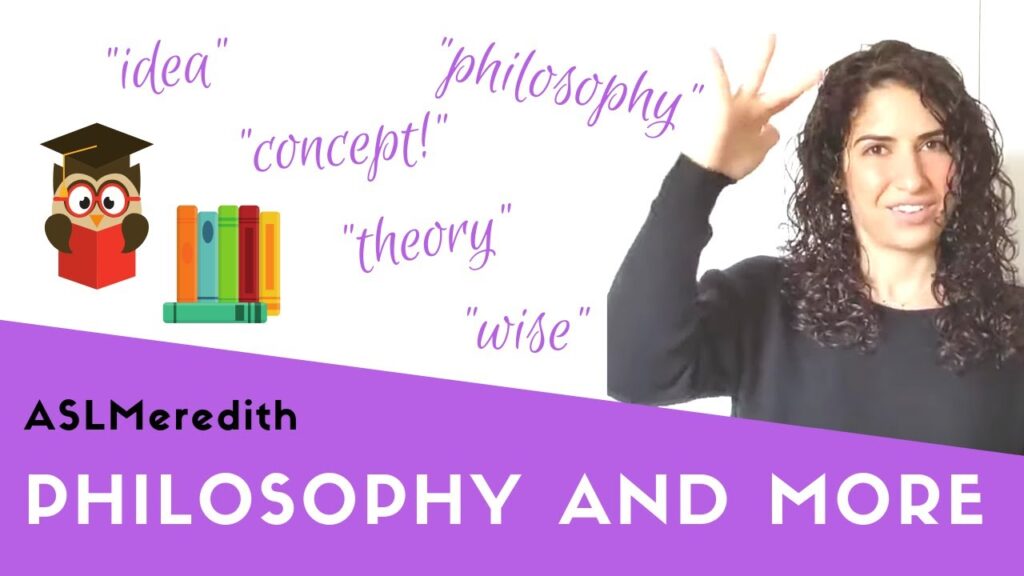
The sign for “Theory” represents the concept of a systematic explanation or framework for understanding phenomena, often used in academic and intellectual discussions. It can be employed in various contexts, such as philosophy, science, or social studies. Understanding this sign is essential for engaging in conversations about ideas and principles.
[VIDEO_PLACEHOLDER]
Table of Contents
How to form the sign for Theory
- Handshape: Use the letter ‘T’ handshape. This is formed by making a fist and placing your thumb between your index and middle fingers.
- Location: Position your dominant hand in front of your chest at about shoulder height.
- Movement: Move your hand in a circular motion, indicating the ongoing nature of theories as they develop and evolve over time.
- Non-manual signals: Raise your eyebrows slightly to indicate that you are presenting a concept and invite attention to the idea being discussed.
The circular motion of the hand emphasizes the dynamic and evolving nature of theories, suggesting that they are not static but rather subject to discussion and revision. This sign is commonly used in academic settings or when discussing ideas with peers.
Using “Theory” in sentences
Here are a few examples of how to incorporate “Theory” into your conversations:
- “The scientific Theory of evolution explains how species change over time.”
- “In our class, we discussed different philosophical theories about morality.”
- “She presented her Theory on climate change at the conference.”
These sentences illustrate how “Theory” can be used in both formal and informal contexts, making it a versatile addition to your ASL vocabulary.
Signs related to Theory
Several signs are closely related to the concept of “Theory,” including:
- Concept – A more general term that refers to an abstract idea or a mental representation.
- Idea – A thought or suggestion as to a possible course of action, often a building block of theories.
- Practice – Refers to the application of a theory in real-world scenarios.
- Explain – The act of making something clear or understandable, often necessary when discussing theories.
- Prove – To demonstrate the truth of a theory through evidence or argument.
Regional variations of the sign
The sign for “Theory” may have slight variations across different regions or communities within the Deaf culture. Some individuals may use a more pronounced circular motion, while others might keep the motion subtle. It’s always best to observe the local signing community and adapt to their variations for better understanding and communication.
Common confusion with a similar sign
Many learners of ASL often confuse the sign for “Theory” with “Thought.” While both involve the mind and ideas, “Thought” has a more personal connotation, often representing an individual’s opinion or consideration, whereas “Theory” refers to a broader systematic explanation applicable in academic or intellectual discussions. Practicing these signs in context can help clarify their meanings.
FAQ
What is the difference between “Theory” and “Hypothesis”?
A theory is a well-substantiated explanation of an aspect of the natural world, while a hypothesis is a proposed explanation made on the basis of limited evidence as a starting point for further investigation.
Can “Theory” be used in casual conversations?
Yes, “Theory” can be used in casual conversations, especially when discussing ideas or opinions. However, it’s more commonly used in academic or formal contexts.
Is there a specific context where “Theory” is most frequently used?
The term “Theory” is frequently used in academic discussions, sciences, and philosophy, where ideas are analyzed and critiqued.
What are some synonyms for “Theory” in ASL?
Some related signs include “Concept,” “Idea,” and “Principle,” all of which may convey similar meanings depending on the context.
Practice ASL Signs
Use your camera to practice signs and get real-time AI feedback on your technique.
Free · No signup required