
Study in Sign Language (ASL)
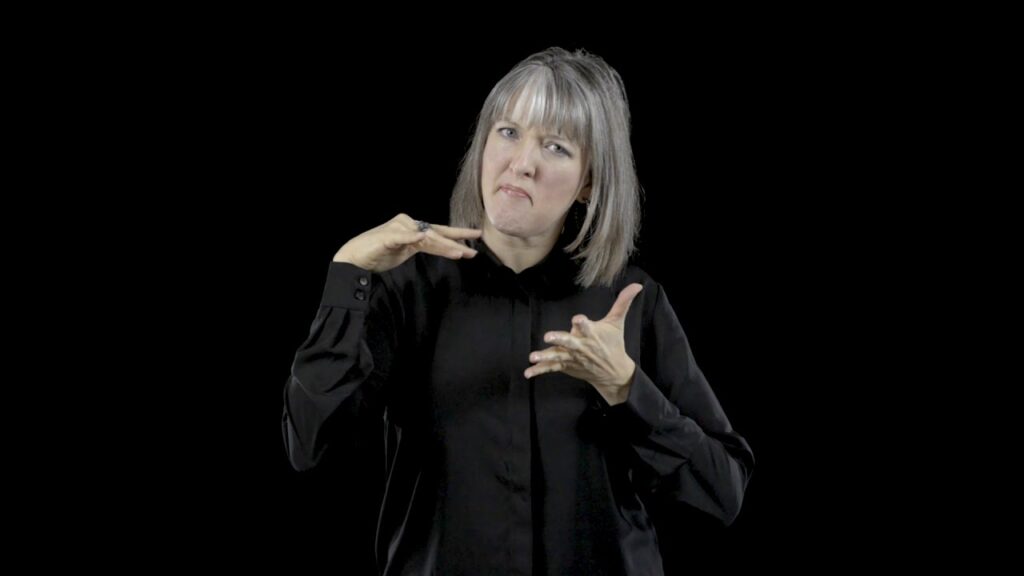
The sign “Study” refers to the process of engaging in academic activities, such as reading, attending classes, or researching. This sign is commonly used in educational settings or when discussing learning and knowledge acquisition. Whether you’re talking about your own study habits or asking someone about their studies, this sign plays a key role in academic conversations.
[VIDEO_PLACEHOLDER]
Table of Contents
Forming the sign
- Handshape: Use a flat hand with fingers extended. Your dominant hand should be in a “B” handshape.
- Location: Position your dominant hand in front of your forehead, slightly to the side, as if you are directing your focus inward.
- Movement: Move the flat hand away from the forehead and then bring it forward in a small arc. This movement signifies the act of pulling knowledge or information toward yourself.
- Non-manual signals: Maintain a focused expression while performing the sign. This reinforces the intention of studying and conveys seriousness about the subject matter.
The motion of moving the hand away from the forehead symbolizes taking information into your mind, making it a visually expressive sign. This sign is versatile; it can be used to discuss various forms of study, whether it’s casual reading or formal education.
Showing tense, aspect & repetition
To indicate different tenses or aspects when using “Study,” you can modify the movement and the intensity of your sign. For example, a quick, repeated motion might imply studying intensively or cramming for an exam, while a slower, more deliberate motion can signify ongoing or habitual study.
For past tense, you might sign “Study” and then shrug your shoulders or shake your head slightly to indicate that the action is completed. This can help clarify your intended meaning in conversations. To express future study, you can point forward after signing “Study” to indicate your plans for upcoming academic work.
“Study” in everyday signing
This sign is commonly used in various contexts, such as in schools, universities, or casual conversations among friends. You might say, “I need to study for my test tomorrow” or “What are you studying in class?” The sign can also be combined with other signs to create more complex ideas, like “study group” or “study session.”
In group settings, using “Study” can help facilitate discussions about academic topics, homework assignments, and collaborative projects. Emphasizing the importance of study in daily life can also be conveyed through facial expressions and body language, enhancing communication.
Common mistakes to avoid
One common mistake when signing “Study” is not using the correct handshape or movement. Ensure that the motion is clear and directed away from the forehead, as this is essential for conveying the sign’s meaning accurately. Another frequent error is neglecting to incorporate appropriate non-manual signals; facial expressions add depth and context to the sign and should reflect engagement or concentration.
Additionally, avoid rushing through the sign. A hurried signing can lead to misunderstandings. Instead, maintain a steady and clear movement, allowing others to follow your intent easily.
Related signs
For a richer understanding of academic-related vocabulary, consider these related signs:
- School – Refers to an institution for education.
- Learning – The process of acquiring knowledge or skills.
- Homework – Assignments given to students to complete outside of class.
- Teacher – An individual who instructs students.
- Class – A course or session of instruction.
A learner’s tip
When mastering the sign “Study,” practice it in context with sentences that relate to your own experiences or academic life. Engage with peers or tutors who are fluent in ASL to receive feedback on your signing. Watching videos of fluent signers can also help you pick up nuances in movement and facial expression that are critical for conveying meaning effectively.
FAQ
What is the origin of the sign “Study”?
The sign “Study” is derived from the visual representation of engaging with knowledge. The movement away from the forehead symbolizes the act of bringing information into one’s understanding.
Can “Study” be used for different subjects?
Yes, “Study” can refer to various subjects. You can accompany it with other signs to specify the subject matter, such as “math,” “science,” or “history.”
How do I express studying with others?
You can use “Study” combined with signs like “group” or “together” to convey the idea of studying in a collaborative setting.
Is there a sign for “study session”?
Yes, you can combine “Study” with the sign for “session” to express the concept of a dedicated time for studying.
Practice ASL Signs
Use your camera to practice signs and get real-time AI feedback on your technique.
Free · No signup required