
Stand in Sign Language (ASL)
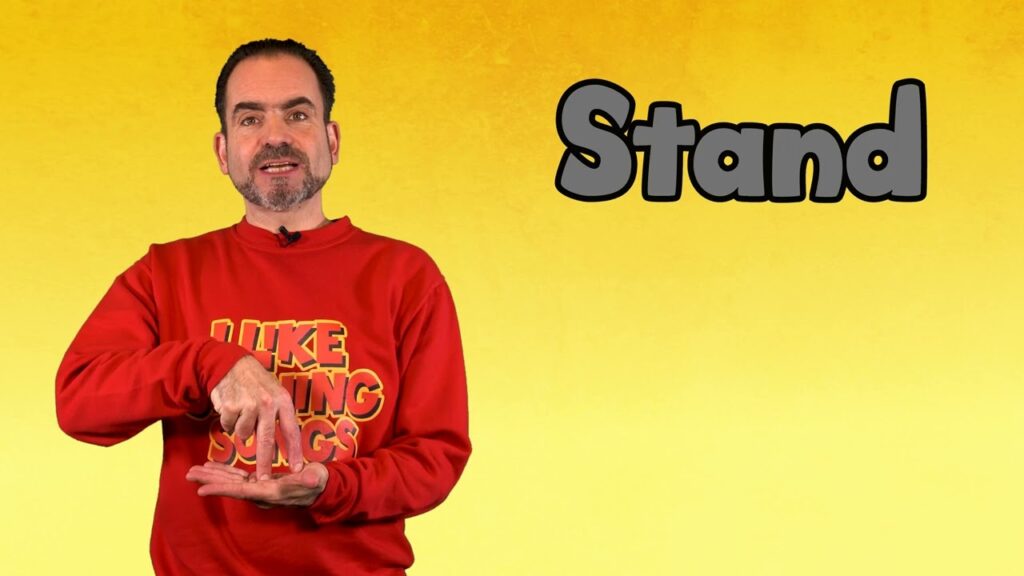
Stand is a commonly used sign in American Sign Language that represents the action of rising to an upright position or maintaining oneself in that position. This sign can be utilized in various contexts, such as describing someone getting up from a chair, indicating a position, or discussing physical posture. Understanding this sign enhances communication regarding movement and physical states.
[VIDEO_PLACEHOLDER]
Table of Contents
Forming the sign
- Handshape: Use your dominant hand in the “B” handshape. This means all fingers are extended and together, with the thumb resting against the palm.
- Location: Position your dominant hand in front of your body, typically at waist height. The palm should face towards you.
- Movement: The motion consists of moving your dominant hand upward as if someone or something is rising. The movement should be smooth and controlled, reflecting the action of standing.
- Non-manual signals: You can enhance the sign by adding facial expressions. A slight raise of your eyebrows can indicate a question or emphasis, while a neutral expression can convey a simple statement.
This sign encapsulates the essence of standing and can be used both literally and metaphorically. For example, when discussing someone who “stands up” for their beliefs, the sign can convey both physical and figurative meanings.
Showing tense, aspect & repetition
To convey different tenses or aspects of the action “Stand,” you can modify the movement of the sign. For example, to indicate the past tense, you might use a downward movement that starts at your waist and moves downward to indicate that someone has already stood up. For the ongoing aspect, you can hold the sign in the standing position for a moment to show that someone is currently standing. Repetition can also be indicated by performing the sign multiple times in succession, which reflects the action of someone repeatedly standing or getting up.
“Stand” in everyday signing
This sign appears frequently in everyday conversations, especially when discussing activities or movements. For instance, one might use “Stand” when giving directions—like “stand over there”—or when talking about someone needing to stand up from a seated position. Furthermore, it can be part of a larger sentence structure, integrating with other signs to convey complex ideas, such as “I want to stand up” or “Please stand by.” Familiarity with this sign allows for more fluid and natural communication in various social settings.
Mistakes to avoid
When signing “Stand,” it’s crucial to avoid common mistakes that can lead to misunderstanding. One frequent error is using the incorrect handshape; ensure that your fingers are fully extended and together. Additionally, the movement should be distinct and clear; a half-hearted motion may confuse the meaning. Lastly, remember to maintain proper eye contact and facial expressions that match the sentence’s intention, as non-manual signals play a significant role in conveying the message accurately.
Common confusion with a similar sign
New learners often confuse “Stand” with the sign for “Sit.” The sign for “Sit” involves a similar handshape but is performed at a lower location and often involves a downward motion instead of upward. To differentiate them, remember that “Stand” involves an upward motion to indicate rising to an upright position, while “Sit” signifies moving downwards into a seated posture. Proper practice and attention to detail will help clarify these signs in your signing vocabulary.
FAQ
What does the sign “Stand” mean?
The sign “Stand” represents the action of rising to an upright position or maintaining that position, often used in discussions about posture or movement.
Can “Stand” be used in different contexts?
Yes, “Stand” can be used literally, such as indicating someone getting up, or metaphorically, like standing up for beliefs or principles.
How can I modify the sign “Stand” to indicate past tense?
You can modify the sign by moving your hand downward, starting from the waist, to indicate that the action has already been completed.
Are there regional variations for the sign “Stand”?
While “Stand” is fairly consistent across ASL users, some regional variations may involve slight differences in movement or emphasis, so it’s good to be aware of your local signing community.
How can I practice the sign “Stand” effectively?
Practice in front of a mirror to ensure your handshape, movement, and facial expressions are correct. Additionally, incorporate “Stand” into sentences with other signs to improve fluency.
Practice ASL Signs
Use your camera to practice signs and get real-time AI feedback on your technique.
Free · No signup required