
Socks in Sign Language (ASL)
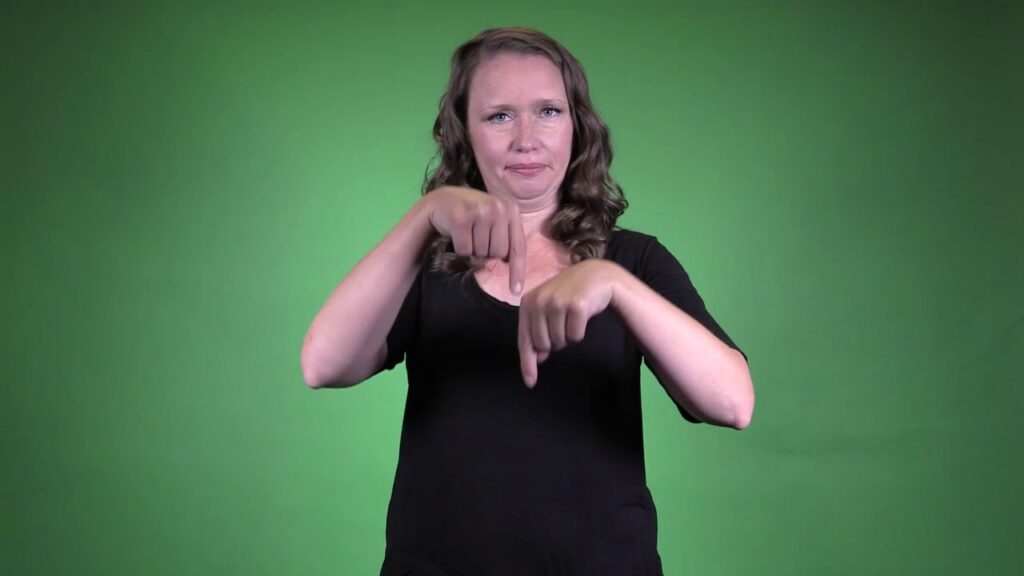
The sign “Socks” refers to the common clothing item worn on the feet. It’s a useful sign in various contexts, especially when discussing clothing or personal attire. You might use it when getting dressed, shopping, or talking about fashion.
[VIDEO_PLACEHOLDER]
Table of Contents
How to form the sign for Socks
- Handshape: Start with your dominant hand in a flat “B” handshape. The fingers should be together and extended, resembling a flat surface.
- Location: Position your dominant hand near your ankle, typically in front of your body. This placement mimics the location where socks are usually worn.
- Movement: Move your dominant hand downward, as if you are pulling on a sock. This action can be done gently or with a bit of flair, depending on the context.
- Non-manual signals: Add an expression that matches the context. If you are excited about new socks, for example, smile or raise your eyebrows during the sign.
When using the sign “Socks,” it’s effective to incorporate facial expressions that show your feelings about socks—whether it’s excitement or disapproval. The combination of handshape and movement clearly communicates the concept, ensuring that others understand exactly what you are referring to.
Using “Socks” in sentences
Here are a few examples of how to incorporate “Socks” into your signing:
- Example 1: “I need to find my socks.” You can sign “I” with a point to yourself, then “need” with a forward motion of your dominant hand, followed by the sign for “socks.”
- Example 2: “These socks are new.” Using the sign for “these” in conjunction with “socks” adds clarity to your statement.
- Example 3: “I love wearing colorful socks.” Here, you can emphasize “love” with a hand gesture that shows enthusiasm, followed by the sign for “socks.”
Practicing these sentences will help you become more comfortable with using “Socks” in conversation. The context will guide how you sign it, whether it’s casual or formal.
Signs related to “Socks”
To expand your signing vocabulary related to clothing and accessories, consider learning these related signs:
- Shoes – The sign for another essential clothing item for the feet.
- Clothes – A general term for garments, which can include socks.
- Hat – An accessory worn on the head, often discussed in conjunction with clothing.
- Jacket – Another clothing item that can be mentioned when talking about an outfit.
- Pants – Often paired with socks in clothing discussions.
Where this sign comes from
The sign “Socks” has its origins in the American Deaf community, developing through the natural evolution of ASL. Clothing-related signs tend to reflect tangible actions and concepts, which help users relate to their everyday experiences. The movement of pulling on a sock resonates culturally; it’s a common action that many people experience daily. This sign showcases how ASL captures both practical and visual elements of communication, making it intuitive for users.
Common confusion with a similar sign
It’s easy to confuse the sign for “Socks” with the sign for “Stockings.” Both involve similar movements and handshapes but differ in the details of the sign and context. Remember that “Socks” is typically signed closer to the ankle, while “Stockings” may involve a more extended motion up the leg, indicating the length of the item. Pay close attention to the context and the position of the hands when signing to avoid misunderstandings.
FAQ
What is the difference between “Socks” and “Stockings”?
“Socks” refers to foot coverings typically made for everyday wear, while “Stockings” are longer and may reach higher on the leg. The signs reflect this difference in placement and movement.
When should I use the sign for “Socks”?
You can use the sign when discussing clothing, shopping for socks, or talking about your outfit. It’s a versatile sign that fits in many contexts related to attire.
Can I sign “Socks” in a more expressive way?
Yes! Incorporating facial expressions and body language can enhance the meaning of your sign. For example, showing excitement when discussing colorful socks adds emotional depth to the conversation.
Are there regional variations for the sign “Socks”?
While “Socks” is relatively standard across various ASL regions, some communities may have slight variations in movement or handshape. It’s beneficial to observe and adapt to local signing styles.
How can I practice the sign “Socks”?
Practice the sign in front of a mirror or with a partner. Use it in sentences and include related signs to build fluency. Joining a sign language class or community can also provide helpful practice opportunities.
Practice ASL Signs
Use your camera to practice signs and get real-time AI feedback on your technique.
Free · No signup required