
Sleep in Sign Language (ASL)
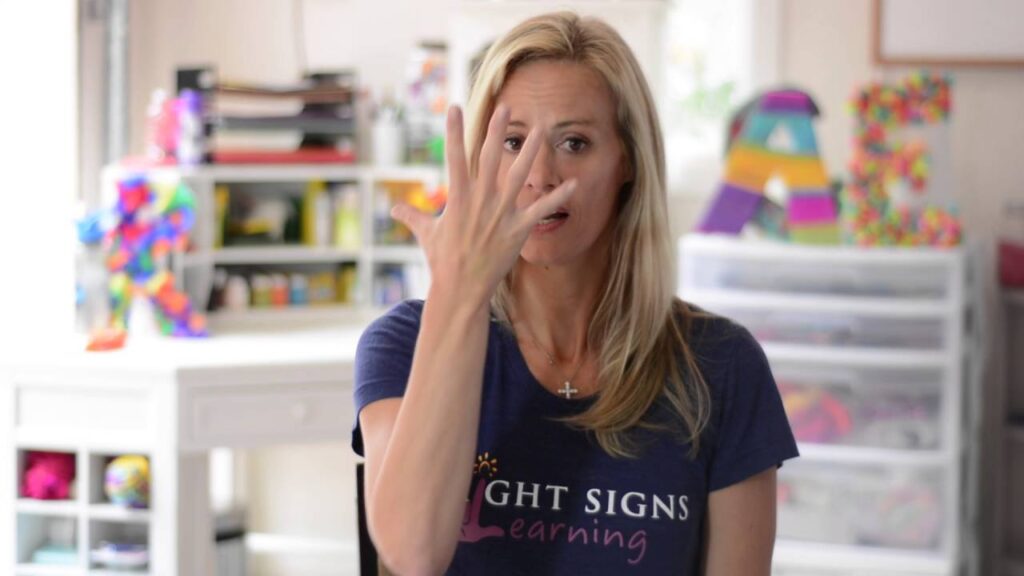
The sign “Sleep” represents the action of resting or being in a state of sleep. It is used in various contexts, whether discussing bedtime, expressing tiredness, or even referring to someone who is napping. This sign is essential for effective communication, especially when describing daily activities or sharing personal feelings about rest.
[VIDEO_PLACEHOLDER]
Table of Contents
Forming the sign
- Handshape: Use your dominant hand in a flat handshape, with fingers extended together.
- Location: Position your dominant hand near your face, typically in front of the forehead or in the area of the temple.
- Movement: Gently move your hand downwards, curving it slightly toward the chin, as if mimicking the act of lowering the head to sleep.
- Non-manual signals: You can enhance the sign by incorporating a sleepy facial expression, such as drooping eyelids or a slight sigh.
The sign effectively captures the essence of sleep, visually mimicking the action of resting one’s head. The downward movement signifies the transition into a restful state, while the facial expressions add emotional depth to the communication.
Showing tense, aspect & repetition
When discussing sleep in various tenses or aspects, consider the context. For example, if you want to express that someone “falls asleep,” you can incorporate a downward motion followed by a relaxed posture. To indicate “waking up,” you might reverse the motion, bringing your hand up and away from your face while opening your eyes wide. Repetition of the sign can also imply a habitual action, such as “I sleep” or “I regularly take naps.” This can be demonstrated by performing the sign multiple times in quick succession.
“Sleep” in everyday signing
The sign “Sleep” can be used in many common phrases and contexts. For instance, you might say “I am tired” followed by the sign for sleep to convey that you need rest. Additionally, it’s often used when discussing bedtime routines, such as “Time for bed” or “I will sleep now.” The sign can also be paired with adjectives or adverbs, such as “deep sleep” or “sleeping well,” to provide more context about the type or quality of sleep being referred to.
Common confusion with a similar sign
Some learners may confuse the sign for “Sleep” with the sign for “Rest.” While “Sleep” involves a more defined downward motion towards the chin, “Rest” is often represented with a flat hand resting on the opposite palm without the downward movement. Understanding these nuances can help avoid miscommunication when discussing different states of being.
FAQ
How do you sign “good night” in ASL?
To sign “good night,” combine the sign for “good” (a flat hand moving from the chin outward) with the sign for “night” (a flat hand moving downwards from the forehead to indicate nighttime).
Can “Sleep” be used to express other meanings?
Yes, while the primary meaning is related to rest, “Sleep” can be used metaphorically to discuss being unaware or indifferent to a situation, as in “sleeping on an issue.”
What are some signs that can be combined with “Sleep”?
You can combine “Sleep” with signs like “deep” or “sound” to describe the quality of sleep, as well as “bed” or “nap” to specify the context.
Is there a cultural significance to sleep in the Deaf community?
Yes, discussions about sleep often reflect cultural attitudes towards rest and self-care in the Deaf community, highlighting the importance of adequate rest for mental and physical health.
How can I practice the sign for “Sleep” effectively?
Practice in front of a mirror to ensure that your handshape and movement are accurate. Pay attention to your facial expressions, which are crucial for conveying the intended meaning.
Practice ASL Signs
Use your camera to practice signs and get real-time AI feedback on your technique.
Free · No signup required