
Silly in Sign Language (ASL)
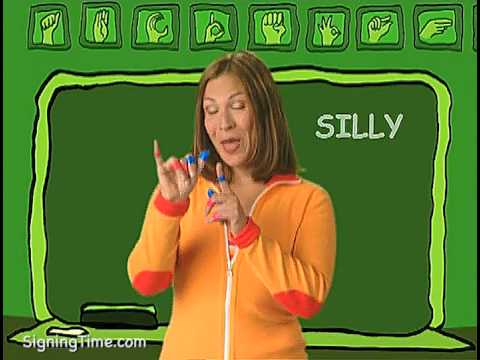
The sign “Silly” conveys a playful, whimsical, or amusing quality. It’s often used in light-hearted contexts to describe someone acting in a funny or nonsensical way. This sign is perfect for expressing joy, playfulness, or when teasing someone in a friendly manner.
[VIDEO_PLACEHOLDER]
Table of Contents
How to Form the Sign “Silly”
- Handshape: Use your dominant hand in the “S” handshape. Make sure your fingers are closed together, forming a fist.
- Location: Position your hand in front of your forehead or slightly to the side of your head.
- Movement: Move your hand in a circular motion, making small circles while keeping the fist shape. This should be done in a playful manner, as the movement enhances the meaning of being silly.
- Non-manual signals: Accompany the sign with a playful facial expression. Raise your eyebrows and smile to emphasize the silliness of the action or statement.
The combination of the handshape, movement, and facial expressions all contribute to the sign’s meaning. The playful circular motion mimics the light-heartedness associated with silliness, while the non-manual signals enhance the emotional context. Practicing this sign with a mirror can help you perfect both the movement and expression.
Adding Emphasis to “Silly”
You can enhance the sign “Silly” by incorporating different degrees of emphasis to convey stronger feelings. For instance, if someone does something particularly funny, you might exaggerate the circular motion of your hand, making larger circles. This indicates that their behavior is not just silly but exceptionally so.
Additionally, you can use facial expressions to convey the intensity of the silliness. A wide smile and raised eyebrows can amplify the playful tone, while a smirk might suggest a more teasing kind of silly. Understanding how to adjust your movements and expressions will help you convey the right message.
Combining “Silly” with Other Signs
“Silly” can be paired with various signs to create fuller phrases. For example, you might sign “silly” followed by “person” (PERSON) to describe someone as a silly person, or “silly” followed by “game” (GAME) when referring to a light-hearted or whimsical game. Such combinations allow for a richer expression of ideas.
When using “Silly” in context, consider gestures that convey the scenario. If a child is being silly, you might sign “child” (CHILD) followed by “silly.” This not only describes the action but also specifies who is acting that way.
Common Confusion with Similar Signs
Many learners may confuse “Silly” with other signs that convey humor or playfulness, such as “funny” (FUNNY). While both express a sense of amusement, “Silly” tends to suggest a more childlike or carefree demeanor, whereas “Funny” can refer to more adult-oriented humor or jokes. Being aware of these nuances can help clarify your messages in conversation.
Frequently Asked Questions
Can “Silly” be used in formal settings?
While “Silly” is primarily used in informal contexts, it can be appropriate in settings where humor is welcomed, such as during casual presentations or among friends. However, it’s best to gauge the atmosphere first.
Is there a regional variation for the sign “Silly”?
This sign is relatively consistent across different regions of the United States, but some variations may exist in facial expressions or hand movements. Always observe local signing communities to adapt as needed.
Can “Silly” be used negatively?
While “Silly” is generally positive, it can also carry a mildly negative connotation when used to describe someone’s foolish behavior. Context is key; facial expressions can suggest whether you’re being playful or critical.
How can I practice the sign “Silly”?
Practice in front of a mirror to refine your handshape and facial expressions. Engage friends in playful scenarios where you can use “Silly” naturally. The more you practice, the more comfortable you will become.
Are there other signs that convey similar meanings?
Yes, you can explore other related signs such as “funny,” “joke,” (JOKE), or “playful” (PLAYFUL) to expand your vocabulary and expressive range.
Practice ASL Signs
Use your camera to practice signs and get real-time AI feedback on your technique.
Free · No signup required