
Script in Sign Language (ASL)
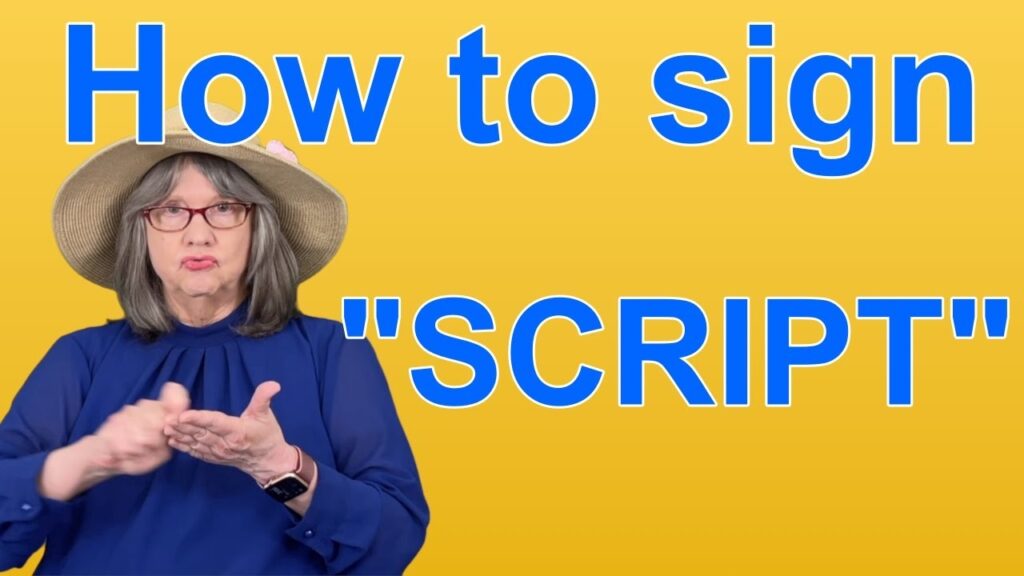
In American Sign Language, the sign “Script” refers to a written text or manuscript, often used in the contexts of literature, theater, or any written dialogue. It can signify the physical document or the act of writing down a piece of work. This sign is commonly used in discussions about writing, performance arts, and education, making it essential for those involved in these fields.
[VIDEO_PLACEHOLDER]
Table of Contents
Forming the sign
- Handshape: Start with your dominant hand in a flat “B” handshape, where the fingers are extended and closed together, while the thumb is held against the palm.
- Location: Position your dominant hand in front of your body, at about chest height, with the palm facing down.
- Movement: Move your hand slightly forward and downward, as if you are laying down a piece of paper. This movement should be smooth and controlled.
- Non-manual signals: Incorporate a slight nod of your head as you perform the sign, which can add emphasis and clarity to your message.
The movement mimics the action of writing or placing down a script, embodying both the physical and conceptual aspects of the term. This makes it a powerful representation of the idea of script and its usage in various contexts.
Using “Script” in sentences
In a sentence, “Script” can be used to communicate about different forms of written works. For instance:
- When discussing a play, you might say, “I received the new Script for the performance.” This conveys the idea that you have been given a written version of the play.
- In an academic context, you could say, “The Script was difficult to understand because of the old language used.” This indicates a criticism of the text’s complexity.
- When talking about a film, you might say, “The Script was written by a famous screenwriter.” This highlights the authorship and significance of the script in question.
Signs related to “Script”
Several signs are related to “Script” and can help expand your vocabulary on the topic of writing and literature:
- Write – The action of inscribing letters or characters onto a surface.
- Story – A narrative that could be found within a script.
- Book – A collection of written pages, which often includes scripts.
- Read – The act of interpreting written text, including scripts.
- Perform – To present a script in front of an audience, often in a theatrical context.
Regional variation
The sign for “Script” may vary slightly by region or community within the Deaf culture. While the core handshape and movement remain consistent, some areas may incorporate different facial expressions or subtle variations in movement to convey nuances. Familiarizing yourself with local variations can enhance your signing skills and help you connect better with different Deaf communities.
FAQ
What is the difference between “Script” and “Write”?
“Script” refers specifically to a written document or manuscript, while “Write” refers to the action of creating text.
Can I use the sign “Script” when referring to a screenplay?
Yes, “Script” can be used to refer to screenplays, as they are written texts that guide film production and performances.
Is “Script” used in other contexts besides theater?
Absolutely! “Script” can be used in any context where written dialogue or text is discussed, including education, literature, and public speaking.
How can I practice the sign “Script” effectively?
To practice, try incorporating the sign into everyday conversation about writing or literature. Use it with related signs to develop fluency.
Practice ASL Signs
Use your camera to practice signs and get real-time AI feedback on your technique.
Free · No signup required