
Respect in Sign Language (ASL)
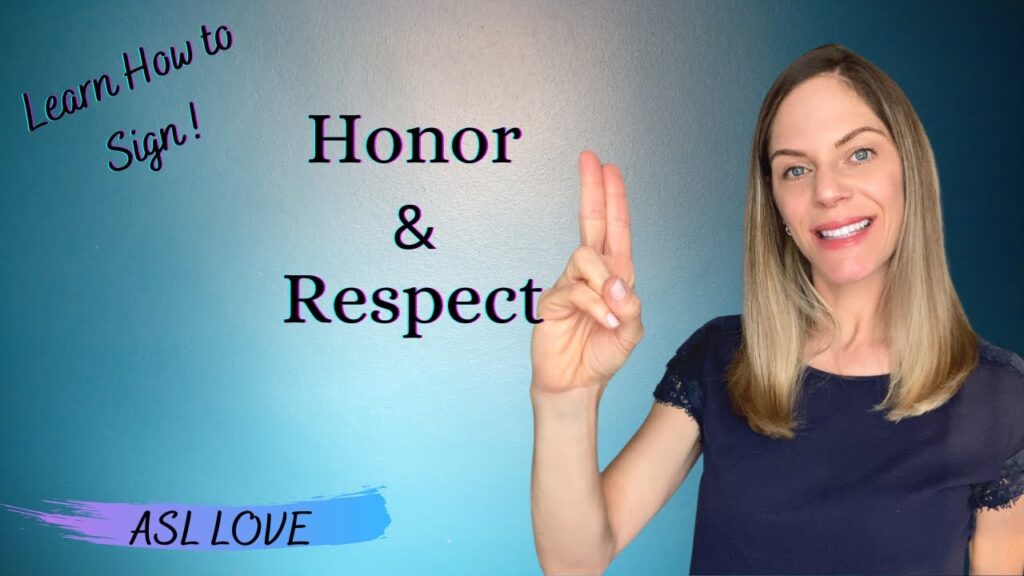
Respect is a fundamental concept in both Deaf and hearing cultures, signifying admiration, honor, and regard for individuals, their beliefs, and their boundaries. This sign is commonly used in conversations to express appreciation or acknowledgment of someone’s values or contributions. Understanding how to sign Respect is essential for promoting positive interactions and fostering inclusive communication.
[VIDEO_PLACEHOLDER]
Table of Contents
Forming the sign
- Handshape: Start with your dominant hand in the “flat B” handshape, where the fingers are extended straight and together, with the thumb tucked across the palm.
- Location: Position your dominant hand at the center of your chest, indicating a personal connection and significance.
- Movement: Move your hand outward slightly from your chest, as if you’re extending your respect toward the person or idea you are acknowledging.
- Non-manual signals: Maintain a neutral facial expression or nod as you perform the sign to indicate sincerity and understanding.
This sign visually represents the act of reaching out with respect, making it a powerful gesture in communication. Practicing the movement and facial expressions will enhance clarity and intent when signing.
Using “Respect” in sentences
Integrating the sign Respect into your sentences can enhance your conversations. For example, you might sign, “I respect your opinions” or “It’s crucial to show respect in our community.” These examples illustrate how to convey admiration and understanding within various contexts, whether discussing personal beliefs or cultural values.
Signs related to “Respect”
Several signs are closely related to Respect, enhancing your ability to communicate nuanced ideas. Here are a few:
- Honor – A sign that conveys a sense of value and tribute.
- Admire – Used when expressing admiration for someone’s qualities or achievements.
- Courtesy – Signifying politeness and respectful behavior toward others.
- Trust – A fundamental aspect of relationships that often accompanies respect.
- Boundary – Important for understanding mutual respect in personal relationships.
Common confusion with a similar sign
One common point of confusion with the sign Respect is its similarity to the sign for “Thank You.” While Thank You involves a motion from the chin outward, Respect retains a more grounded motion from the chest. Recognizing this difference is key to clear communication, as both signs express appreciation but in different contexts and nuances.
FAQ
What is the significance of the sign Respect in Deaf culture?
In Deaf culture, Respect signifies acknowledgment of various individual identities, cultural values, and the importance of communication. It helps create a supportive environment within the community.
Can the sign Respect be used in different contexts?
Yes, Respect can be used in various contexts such as personal interactions, discussions about cultural values, and when addressing differing opinions.
How can I improve my signing of Respect?
Practice the movement in front of a mirror to ensure clarity. Engage with native signers to receive feedback and enhance your expressive skills.
Are there any regional variations to the sign Respect?
The sign for Respect may have slight variations in handshape or movement depending on the region. It’s beneficial to observe local Deaf communities for these nuances.
Practice ASL Signs
Use your camera to practice signs and get real-time AI feedback on your technique.
Free · No signup required