
Research in Sign Language (ASL)
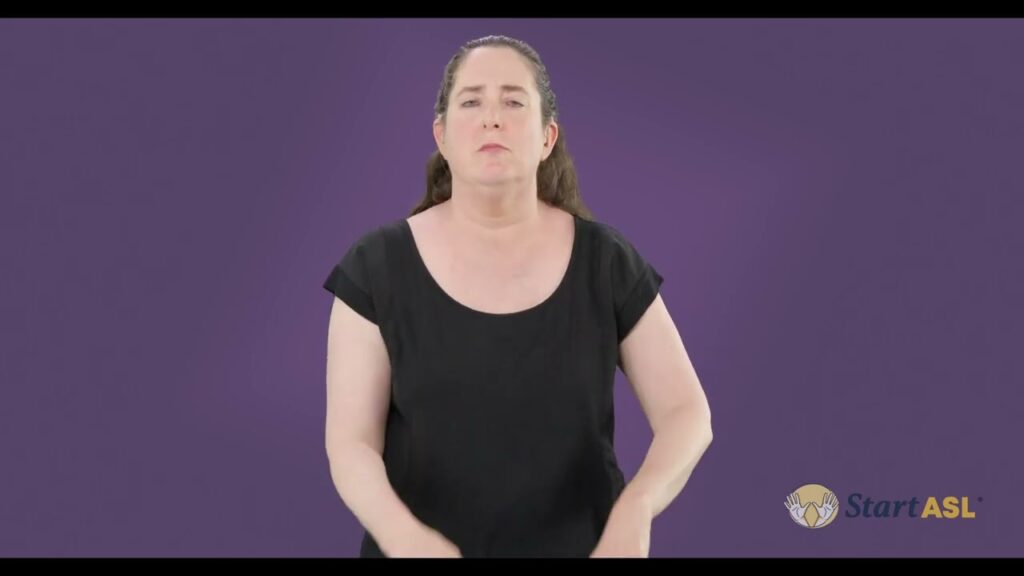
Research refers to the systematic investigation and study of materials, theories, or phenomena to establish facts and reach new conclusions. This sign captures the essence of seeking knowledge through inquiry and analysis, commonly used in academic, scientific, or professional contexts. In conversations, it can signify discussions about studies, projects, or investigations.
[VIDEO_PLACEHOLDER]
Table of Contents
Forming the sign
- Handshape: Start with both hands in the “R” handshape, where the index and middle fingers are extended while the other fingers are tucked in.
- Location: Position your dominant hand (the one making the motion) above the non-dominant hand, which remains stationary in front of you.
- Movement: Move the dominant “R” hand in a circular motion around the non-dominant “R” hand, suggesting a process of examination and analysis.
- Non-manual signals: Maintain a neutral facial expression while signing, and you can raise your eyebrows slightly to indicate curiosity or inquiry.
When signing “Research,” the circular movement represents the iterative nature of research, as it often involves revisiting questions and exploring various avenues of inquiry. The use of the “R” handshape emphasizes the focus on the specific subject matter being explored. Practice smoothing out the circular motion to ensure clarity in your signing.
Using “Research” in sentences
Here are some examples of how to incorporate “Research” into sentences:
- I’m going to conduct some Research for my thesis this weekend.
- She presented her Research findings at the conference.
- Our team is currently engaged in Research on climate change impacts.
These examples illustrate how “Research” can be utilized in various contexts, from academic settings to professional environments. It emphasizes the importance of inquiry and discovery in expanding knowledge.
Signs related to “Research”
There are several signs that relate to “Research,” which can enhance your discussions on the topic:
- Study – Refers to the act of learning or reviewing material.
- Analyze – This sign emphasizes breaking down information to understand it better.
- Experiment – Represents conducting tests or trials as part of research.
- Data – Refers to the facts and statistics collected for analysis.
Common confusion with a similar sign
It’s important to distinguish “Research” from the sign for “Search.” While both convey exploration, “Search” typically involves looking for something specific, such as searching for an item or information. In contrast, “Research” entails a broader, more systematic approach to gathering knowledge and understanding a subject.
FAQ
What is the difference between “Research” and “Study”?
“Research” often refers to a more formal, systematic investigation, while “Study” can be understood as the act of learning or reviewing material without the formal aspect of gathering new information.
Can “Research” be used in casual conversation?
Yes, “Research” can be used in casual conversations, especially when discussing topics like school projects, personal interests, or professional inquiries.
Is there a specific context where “Research” is more commonly used?
“Research” is more commonly used in academic, scientific, and professional contexts, especially when discussing findings, methodologies, or investigations.
How can I improve my signing of “Research”?
Practice the circular motion to ensure it is smooth and clear. Additionally, watch videos or interact with fluent ASL users to gain feedback and tips on enhancing your signing skills.
Are there any regional variations for the sign “Research”?
While the sign for “Research” is generally consistent, some regional variations may exist based on local sign language communities. It’s always beneficial to learn from local signers.
Practice ASL Signs
Use your camera to practice signs and get real-time AI feedback on your technique.
Free · No signup required