
Percent in Sign Language (ASL)
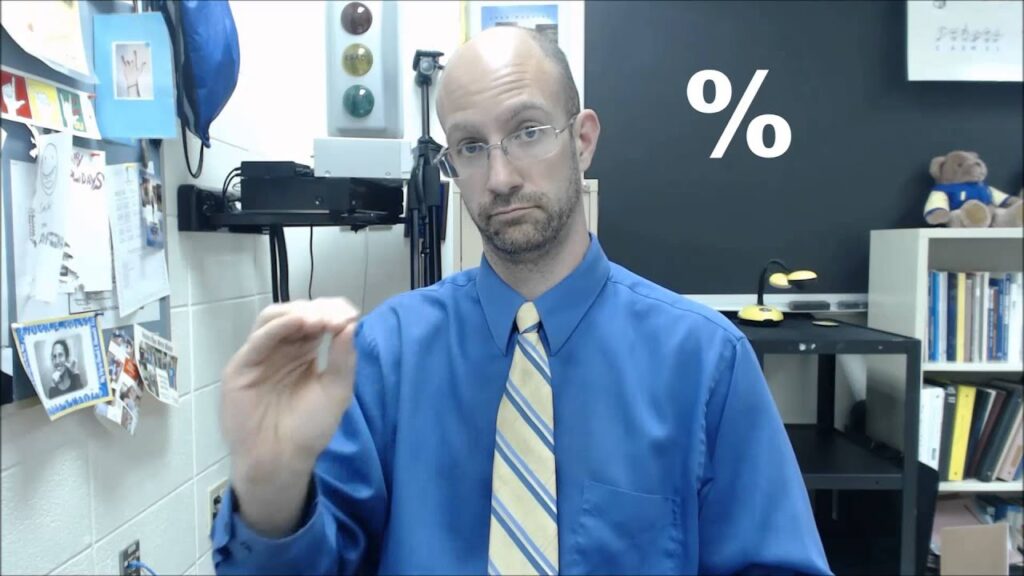
The sign for Percent is used to express a proportion or fraction of a whole, commonly in mathematical contexts, finance, or statistics. It allows for clear communication about percentages in discussions, making it an essential sign for both educational and everyday situations.
[VIDEO_PLACEHOLDER]
Table of Contents
Forming the sign
- Handshape: Start with the dominant hand in the shape of the letter ‘P’. The ‘P’ handshape is formed with the index and middle fingers extended and separated while the thumb supports the hand from underneath.
- Location: Position your ‘P’ handshape just in front of your forehead, a few inches away from your face. This location is important as it keeps the sign within the personal space typically used for expressing numerical concepts.
- Movement: Move the ‘P’ handshape slightly downward in a gentle, fluid motion. This downward movement is subtle but highlights the concept of percentage, indicating a reduction or part of a whole.
- Non-manual signals: Incorporate a thoughtful expression while signing Percent. This could involve raising your eyebrows slightly to emphasize the importance of the number being discussed.
When forming the sign, ensure that your hand is steady to maintain clarity. The movement should not be overly exaggerated, as precision is key in sign language. Practicing in front of a mirror can help in perfecting the handshape and movement. The Percent sign is not only used in mathematical discussions but also in everyday conversations when discussing sales, discounts, or statistics.
Using Percent in sentences
Percent can be used in various contexts. For instance, one might say, “I received 20 Percent off on my purchase” by signing each word carefully, emphasizing the number and the ‘Percent’ sign to convey the discount clearly. Another example could be, “The population increased by 15 Percent,” where clarity and accuracy in signing are crucial to ensure the listener understands the extent of the increase being discussed.
Signs related to Percent
To further enhance your understanding and usage of Percent, here are some related signs:
- Percentage – a broader term often used interchangeably with Percent.
- Fraction – a mathematical concept that represents parts of a whole, similar to Percent.
- Discount – often discussed in relation to Percent when shopping or calculating savings.
- Statistics – a field that frequently uses the concept of Percent in analyzing data.
Common confusion with a similar sign
Beginners often confuse the sign for Percent with the sign for ‘price’ due to the similarities in handshape and movement. The ‘price’ sign typically involves a different handshape and is signed closer to the body. To avoid confusion, practice differentiating the two signs by focusing on the specific movements and contexts in which they are used. This will help solidify your understanding and usage of Percent.
FAQ
What is the importance of the Percent sign in everyday conversations?
The Percent sign is crucial for discussing discounts, statistics, and data analysis, making it a vital part of financial and academic discussions.
Can Percent be used in mathematical equations?
Yes, Percent is often used in mathematical equations, particularly in calculations involving discounts, interest rates, and statistical data analysis.
Are there different signs for Percent in other regions?
While the Percent sign is widely recognized, there may be slight regional variations in the execution of the sign. It is beneficial to learn local variations if you are in a different region.
How can I practice using the Percent sign?
Practicing with friends or in a classroom setting can help. It’s also effective to incorporate the sign into everyday conversations about discounts, statistics, or personal finance.
Is Percent used in other contexts aside from mathematics?
Yes, Percent can also be applied in various contexts such as health statistics, sales discussions, and data interpretation, making it a versatile sign.
Practice ASL Signs
Use your camera to practice signs and get real-time AI feedback on your technique.
Free · No signup required