
Open in Sign Language (ASL)
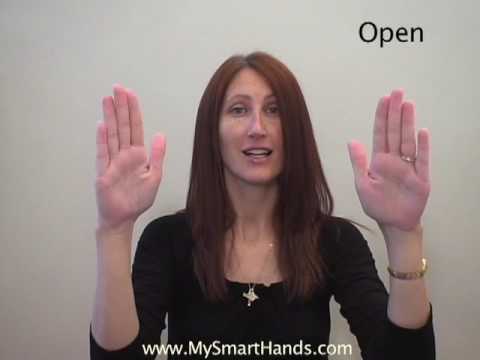
The sign “Open” conveys the action of making something accessible or free from a closed state. This can refer to physical objects like doors or containers, as well as concepts like opening opportunities or discussions. Knowing how to sign “Open” can enhance communication in various contexts, making it a fundamental sign in American Sign Language.
[VIDEO_PLACEHOLDER]
Table of Contents
Forming the sign
- Handshape: Start with both hands in the “B” handshape, where the fingers are extended together and the palm is facing down.
- Location: Position your hands in front of your torso, approximately at the chest level.
- Movement: Move your hands outward and apart from each other, as if you are metaphorically opening something. This motion should be smooth and deliberate.
- Non-manual signals: Maintain an attentive facial expression, which indicates the action. You may also raise your eyebrows slightly during the movement to emphasize the action of opening.
When performing the sign, aim for clarity and fluidity to ensure that your message is understood. The movement should be distinct but not overly exaggerated, as subtlety can be just as effective in conveying the meaning.
Using “Open” in everyday signing
The sign “Open” can be used in various everyday contexts. For example, you might sign “Open” when talking about opening a door, a book, or even when inviting someone to join a conversation. Here are some example sentences:
- “Can you open the door, please?”
- “I want to open this book.”
- “Let’s open the discussion on this topic.”
Understanding how to incorporate “Open” into sentences is essential for effective communication. It helps foster engagement and encourages others to participate actively in conversations.
Signs related to “Open”
There are several related signs that you may find useful while signing “Open.” These include:
- Close: The opposite action of “Open”, useful in contrasting scenarios.
- Door: Often used in conjunction with “Open” when discussing doors specifically.
- Invite: This sign can complement “Open” in a social context, such as inviting someone to participate.
- Start: Related in the context of opening discussions or beginnings.
Common confusion with a similar sign
Many learners might confuse the sign “Open” with the sign for “Close.” While “Open” involves moving your hands outward, “Close” is performed by bringing your hands together. It’s essential to practice these signs to differentiate between them clearly, particularly in conversations where context matters.
FAQ
What is the significance of “Open” in conversation?
The sign “Open” is significant as it not only indicates a physical action but also represents the idea of accessibility and invitation in discussions and social interactions.
Can “Open” be used in a metaphorical sense?
Yes, “Open” can be used metaphorically to signify opening up conversations, opportunities, or feelings, making it a versatile sign.
Is there a specific context where “Open” is more commonly used?
While “Open” can be used in various contexts, it is particularly common in discussions about physical spaces, meetings, and social gatherings.
How can I improve my signing of “Open”?
To improve your signing, practice with a mirror or video yourself to see your hand movements and facial expressions, ensuring they align with the sign’s meaning.
Practice ASL Signs
Use your camera to practice signs and get real-time AI feedback on your technique.
Free · No signup required