
Office in Sign Language (ASL)
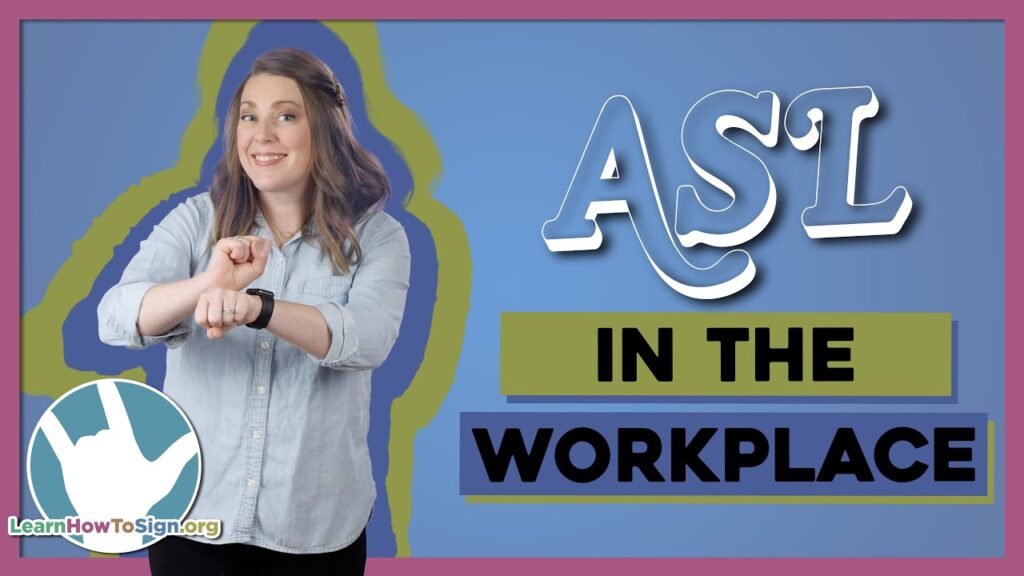
The sign “Office” refers to a place where professional work is carried out, typically involving job-related tasks, meetings, and administrative functions. It is commonly used in conversations about employment, workplaces, or discussing the location of work activities. This sign is essential for anyone engaging in professional dialogue within the Deaf community.
[VIDEO_PLACEHOLDER]
Table of Contents
Forming the sign
- Handshape: Start with your dominant hand in a “B” handshape. The palm should face downward.
- Location: Position your hand at the side of your face, near your cheek, approximately at the level of your chin.
- Movement: Move your dominant hand away from your face while keeping the “B” handshape, as if you are indicating a space or location.
- Non-manual signals: Maintain a neutral facial expression during the sign. This will convey clarity and ensure the sign is interpreted correctly.
This sign effectively represents the physical space of an office. The movement away from the face signifies distance or the idea of a specific location. Remember to keep your hand steady and maintain a clear “B” handshape throughout the sign for best results.
Using “Office” in sentences
Incorporating “Office” into sentences can enhance communication about work environments. Here are a few examples:
- “I work in an office with ten other people.”
- “The office is located downtown.”
- “She has a meeting in her office today.”
These examples showcase how “Office” can be used to describe personal experiences and factual information about workplace settings. Using it in context helps reinforce understanding and promotes fluid conversation.
Signs related to “Office”
To expand your vocabulary related to the concept of an office, consider these related signs:
- Job – This sign pertains to employment or work responsibilities.
- Meeting – Refers to gatherings that often take place in an office setting.
- Work – A general term for job-related activities and tasks.
- Boss – This sign indicates a supervisor or manager, often found in an office environment.
Where this sign comes from
The sign “Office” has evolved within the Deaf community to represent the professional environment effectively. It reflects the spatial dynamics of office work, where communication and collaboration are essential. The “B” handshape acts as a symbol of stability and organization, evoking the structured nature of office settings. Understanding the cultural origins of signs can enrich your appreciation and usage of ASL.
Common confusion with a similar sign
Many learners may confuse the sign “Office” with the sign for “Building.” While both involve a similar handshape and location, the movement differs significantly. The sign for “Building” typically indicates a stationary structure, while “Office” conveys the idea of a designated workspace. Paying attention to the specific movements and contexts will help clarify these signs in practice.
FAQ
What is the significance of the “B” handshape?
The “B” handshape is commonly used in ASL to represent flat surfaces or the concept of space, making it ideal for conveying the idea of an office.
Can “Office” be signed differently in different regions?
While the core sign for “Office” remains consistent, small regional variations in handshape or movement may occur, reflecting local signing styles.
Is there a specific context when to use “Office”?
The sign is primarily used in professional settings, discussions about work, and when referring to a physical location related to employment.
How can I improve my signing of “Office”?
Practice the movement in front of a mirror to ensure your handshape and location are accurate. Also, incorporate it into everyday conversations to build familiarity.
Practice ASL Signs
Use your camera to practice signs and get real-time AI feedback on your technique.
Free · No signup required