
Need in Sign Language (ASL)
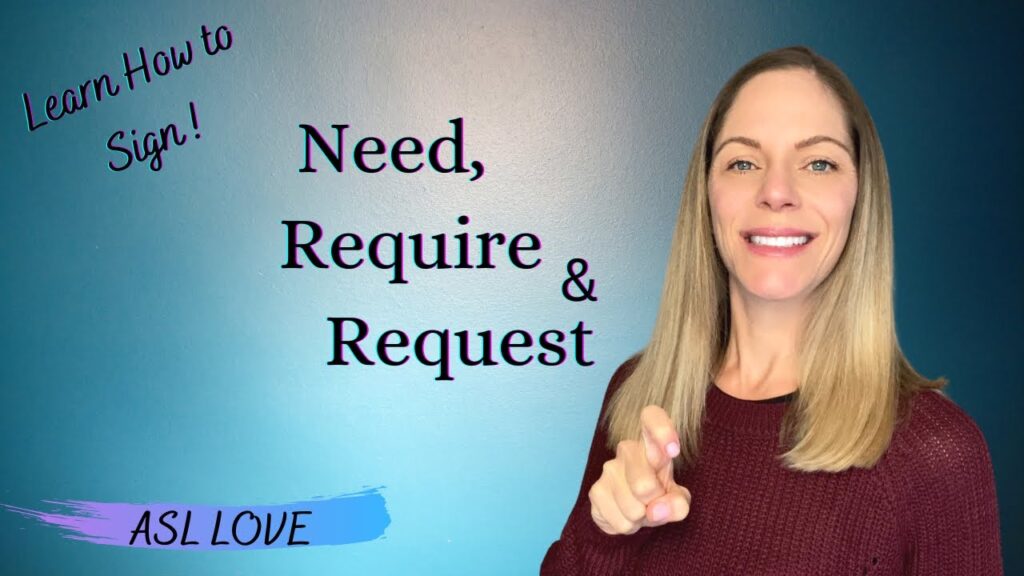
The sign “Need” expresses a requirement or necessity. It is used in various contexts, such as when you want to convey that something is essential for you or someone else. Understanding how to properly sign “Need” can enhance clarity in your communication with Deaf individuals.
[VIDEO_PLACEHOLDER]
Table of Contents
Forming the sign
- Handshape: Use your dominant hand in a “s” handshape (a fist with the thumb wrapped around the fingers).
- Location: Position your dominant hand in front of you, around waist level.
- Movement: Start with your dominant hand slightly open and move it towards your chest, as if you are pulling something toward yourself.
- Non-manual signals: Raise your eyebrows slightly while performing the sign to emphasize the need or urgency.
When you sign “Need,” ensure that your movement is deliberate, as this conveys the importance of the request. The facial expression and body language play a crucial role in conveying the intensity of the need.
Using “Need” in sentences
In everyday conversation, “Need” can be used to express various necessities. For example, you might say:
- “I Need water.” (to indicate thirst)
- “They Need help.” (to express that assistance is required)
- “Do you Need this?” (to inquire if someone requires an item)
Each of these examples demonstrates how “Need” can be adapted to different contexts while maintaining its core meaning of necessity.
Signs related to “Need”
Several signs may be relevant when discussing needs or necessities. Here are a few related signs:
- Want – expresses desire for something.
- Help – communicates the need for assistance.
- Must – indicates an obligation or strong necessity.
Common confusion with a similar sign
Sometimes, learners confuse “Need” with the sign for “Want.” While both express a desire for something, “Need” conveys a sense of urgency or necessity, whereas “Want” is more about preference. When signing, pay attention to your facial expressions and the context to emphasize the difference between needing something and merely wanting it.
FAQ
Can “Need” be used in questions?
Yes! You can ask questions using “Need” by incorporating appropriate facial expressions. For example, “You Need help?” can be signed with raised eyebrows to indicate it’s a question.
How can I show urgency when signing “Need”?
To convey urgency, use a more forceful movement when bringing your hand to your chest and pair it with an intense facial expression. This helps to show that the need is immediate.
Are there any regional variations of the sign “Need”?
While “Need” is generally consistent across regions, some variations may exist. It’s always good to learn from local Deaf communities or observe how individuals use the sign in different places.
Is “Need” a commonly used sign?
Yes, “Need” is a fundamental sign in ASL that frequently appears in everyday conversations, making it essential for effective communication.
Practice ASL Signs
Use your camera to practice signs and get real-time AI feedback on your technique.
Free · No signup required