
Mom in Sign Language (ASL)
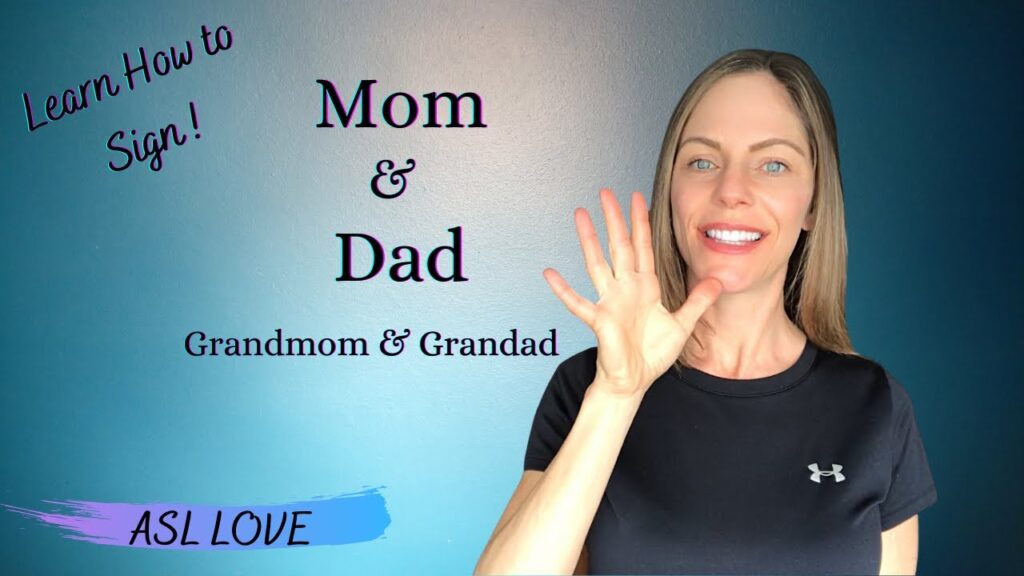
The sign for Mom is a fundamental and affectionate term used to refer to one’s mother. It carries deep emotional significance and is commonly used in everyday conversation among Deaf individuals. This sign can be used both when directly addressing one’s mother or when discussing her in conversations with others.
[VIDEO_PLACEHOLDER]
Table of Contents
How to form the sign “Mom”
- Handshape: The dominant hand forms the letter “M” in ASL. This is done by placing your thumb under your first three fingers, which are held together.
- Location: Position your dominant hand near your chin. This location is significant as it indicates a personal connection, often showing affection.
- Movement: The sign is made by gently tapping your chin with the “M” handshape once. The movement is subtle and should convey warmth.
- Non-manual signals: Accompany the sign with a smile or a gentle nod of the head to express affection or friendliness. Positive facial expressions enhance the warmth of the sign.
The sign for Mom is straightforward yet powerful, signifying not only the person but also the bond between a child and their mother. It’s often one of the first signs learned by children in Deaf families, promoting early communication with their caregivers.
Using “Mom” in sentences
In conversation, you might use the sign for Mom in various contexts. Here are a few examples:
- Talking to your Mom: “Mom, can you help me with my homework?” (sign Mom and then follow with the sign for help).
- Discussing family: “My Mom loves to cook.” (sign Mom followed by the sign for love and then the sign for cook).
- Expressing feelings: “I miss Mom.” (sign Mom while expressing a sad facial expression).
Using the sign for Mom in these sentences showcases the connection between the signed word and the emotional context, enriching the conversation.
Signs related to “Mom”
There are various related signs that can enhance conversations about family and relationships. Here are a few:
- Dad – The equivalent sign for a father, often used in family discussions.
- Parent – A broader term encompassing both Mom and Dad.
- Child – Useful when discussing family dynamics.
- Family – A general sign for talking about your family unit.
Regional variations of the sign
While the sign for Mom is fairly consistent across ASL users, some regional variations may exist. In certain areas, you might see a slight difference in movement or handshape. However, the foundational concept remains the same. It’s always helpful to observe and adapt to local signing styles when interacting with different Deaf communities.
FAQ
What is the difference between “Mom” and “Mother” in ASL?
While “Mom” is a more informal and affectionate term, “Mother” can sometimes be seen as more formal or respectful. The signs are similar, but context dictates the choice.
When should I use the sign for “Mom”?
You can use the sign for “Mom” whenever you are referring to your mother, whether in conversation, storytelling, or addressing her directly.
Can children learn to sign “Mom”?
Yes, many Deaf children learn to sign “Mom” early in life as a means of communication. It’s one of the first signs introduced to promote bonding with caregivers.
Is there an emotional aspect to signing “Mom”?
Absolutely! The sign often carries warmth and affection, and many Deaf individuals express this through facial expressions when signing.
Practice ASL Signs
Use your camera to practice signs and get real-time AI feedback on your technique.
Free · No signup required