
Luck in Sign Language (ASL)
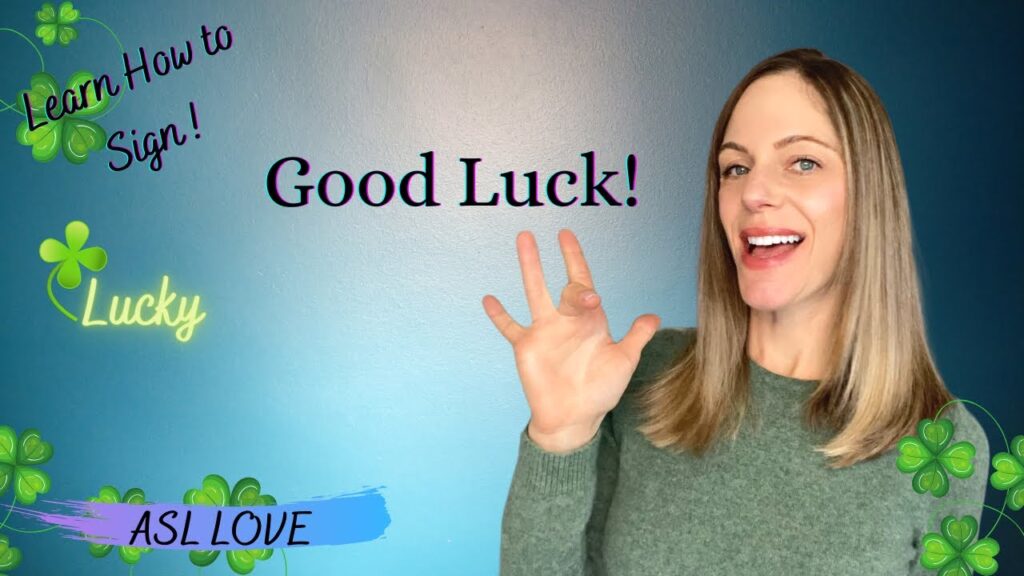
Luck refers to the chance occurrences and events that result in favorable or unfavorable outcomes. It is often used in discussions about fate, fortune, and the unpredictability of life. People may express their feelings about luck in various contexts, such as when discussing gambling, chance encounters, or even daily life events.
[VIDEO_PLACEHOLDER]
Table of Contents
Forming the sign
- Handshape: Use your dominant hand in a ‘L’ shape, with the thumb extended and the index finger pointing up.
- Location: Position your hand near your forehead or just above, allowing it to be clearly visible to others.
- Movement: Move the hand slightly outward from the forehead while maintaining the ‘L’ handshape. This motion can be interpreted as a gesture of revealing or showcasing luck.
- Non-manual signals: Incorporate facial expressions that convey excitement or hopefulness, such as raising your eyebrows or smiling.
This sign effectively captures the essence of luck by using a clear handshape and expressive movement. The outward gesture can symbolize the act of drawing luck towards oneself or putting it into play. When combined with appropriate facial expressions, it enhances the overall meaning, adding depth to the communication.
Using “Luck” in sentences
In a conversation, you might say, “I hope I have good Luck at the casino tonight.” Another example could be, “She has always had great Luck with finding good jobs.” The sign can be easily integrated into various contexts where luck is a theme, such as discussions about opportunities, risks, or uncertainties.
Signs related to “Luck”
- Chance – Refers to the possibility of something happening.
- Fortune – Often associated with wealth or good luck.
- Destiny – Indicates a predetermined fate.
- Opportunity – Represents favorable circumstances.
Common confusion with similar signs
It’s easy to confuse the sign for “Luck” with similar signs like “Good” or “Fortune.” While “Good” has a more general positive connotation and is often used in broader contexts, “Luck” is specifically tied to chance occurrences. Make sure to use the correct facial expressions and handshape to convey the intended meaning accurately.
FAQ
What is the cultural significance of luck in the Deaf community?
Luck plays a significant role in many cultures, including the Deaf community, where it is often tied to storytelling and folklore. Many Deaf individuals may share anecdotes of good or bad luck that resonate culturally, strengthening community bonds.
Can “Luck” be expressed differently in various situations?
Yes, “Luck” can be adapted based on context. For instance, in a more serious conversation about life changes, you might use a slower, more deliberate sign to emphasize its importance, while in a casual chat, a quick sign with an enthusiastic facial expression might be appropriate.
Is there a specific sign for “bad luck” in ASL?
While there isn’t a universally recognized sign for “bad luck,” you can modify the sign for “Luck” with a frown or negative facial expression to indicate misfortune or negativity related to luck.
How can I practice signing “Luck” effectively?
Practice in front of a mirror while focusing on both the handshape and facial expressions. You can also record yourself to see how well you convey the meaning and adjust as needed.
Practice ASL Signs
Use your camera to practice signs and get real-time AI feedback on your technique.
Free · No signup required