
Listen in Sign Language (ASL)
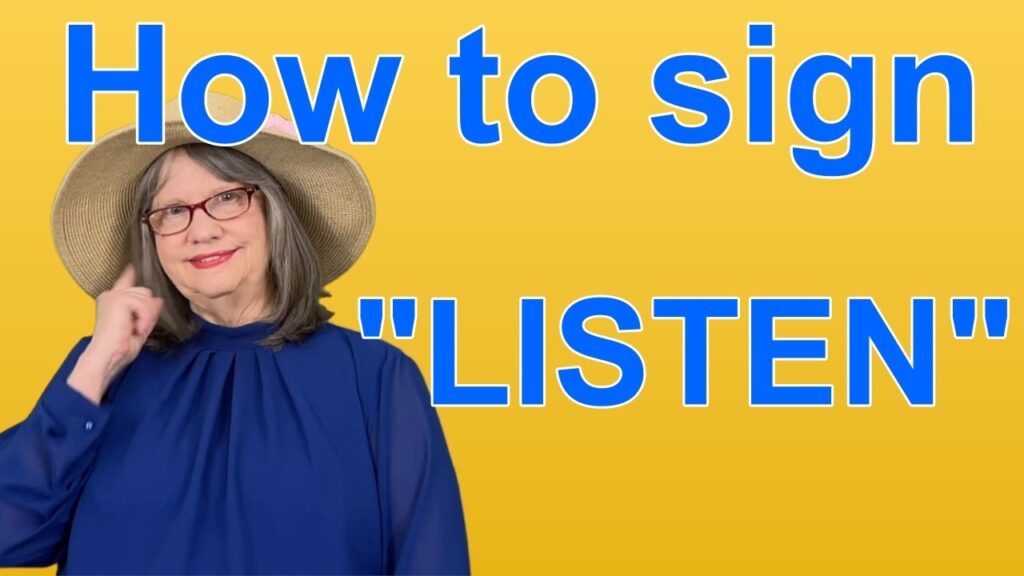
Listen is a fundamental sign in American Sign Language that expresses the action of paying attention to sounds, particularly spoken words. It is often used in contexts where emphasis on understanding or focusing on auditory information is important. This sign is essential for effective communication and interaction within the Deaf community.
[VIDEO_PLACEHOLDER]
Table of Contents
Forming the sign
- Handshape: Use the dominant hand in a flat “B” shape, with fingers extended and close together.
- Location: Position your dominant hand near your ear, typically at a slight distance away from the side of your head, ensuring it is clear and visible.
- Movement: Bring your hand toward your ear as if you are cupping your hand to better hear something. This movement should be smooth and deliberate, emphasizing the action of listening.
- Non-manual signals: Accompany the movement with a focused facial expression, such as raising your eyebrows slightly, to convey attentiveness and engagement.
Overall, the sign Listen is characterized by its clear handshape and purposeful movement, reflecting the essence of the action it represents. The non-manual signals play a crucial role in conveying the meaning and intent behind the sign.
Showing tense, aspect & repetition
In ASL, the sign Listen can indicate different tenses and aspects through the use of facial expressions and the context in which it is used. For example, to emphasize continuous listening, you might repeat the sign several times while maintaining a focused expression. To indicate the past, you could sign Listen while looking back or using a specific facial expression that denotes reflection.
Additionally, incorporating context is vital; for instance, when discussing an event that requires attentive listening, such as a presentation or lecture, you can modify your expression to denote seriousness or urgency. This allows for a richer understanding of when and how the sign is applied.
“Listen” in everyday signing
The sign Listen is commonly used in various scenarios, such as during conversations, educational settings, or when someone wants to express the importance of attention. For example, one might say, “Please listen,” while signing to ensure that the other person is engaged and comprehending the information being shared. This sign can also be paired with other signs to create more complex statements, enhancing the clarity of communication.
Using the sign effectively can lead to smoother conversations and a deeper connection with your audience, as it emphasizes the value placed on attentive listening in communication.
Mistakes to avoid
When signing Listen, it’s crucial to avoid misconceptions that may lead to ineffective communication. One common mistake is failing to incorporate appropriate facial expressions, which can significantly alter the meaning of the sign. Remember that non-manual signals are integral to conveying intent and clarity.
Another mistake is not positioning the hand correctly near the ear, which may lead to confusion with similar signs. Ensuring the handshape and movement are accurate can prevent misunderstandings. Lastly, practicing the sign in various contexts can help reinforce its meaning and usage, making it a natural part of your signing vocabulary.
Deaf cultural note
In Deaf culture, the concept of listening extends beyond mere auditory perception. It encompasses the ability to engage with others visually and emotionally. The sign Listen is not just about hearing; it’s about actively participating in communication, which is highly valued in Deaf communities. This cultural perspective encourages individuals to be present and attentive, fostering deeper connections and understanding among peers.
FAQ
How do I differentiate Listen from similar signs?
Pay attention to the handshape and movement. Listen involves bringing the hand to the ear, while other signs may have different hand positions or motions. Non-manual signals also help clarify meaning.
Can Listen be used in different contexts?
Yes, Listen can be context-specific. It can emphasize attentiveness in various situations, such as during a conversation, lecture, or announcement, indicating the importance of being engaged.
Is there a sign for “listening” as in active listening?
While Listen conveys the action of hearing, active listening can be expressed through additional signs and non-manual signals that indicate engagement and understanding.
How can I practice the sign Listen effectively?
Practice in front of a mirror to refine your handshape and movement. Additionally, try using it in conversations to build comfort and fluency.
Practice ASL Signs
Use your camera to practice signs and get real-time AI feedback on your technique.
Free · No signup required