
Lead in Sign Language (ASL)
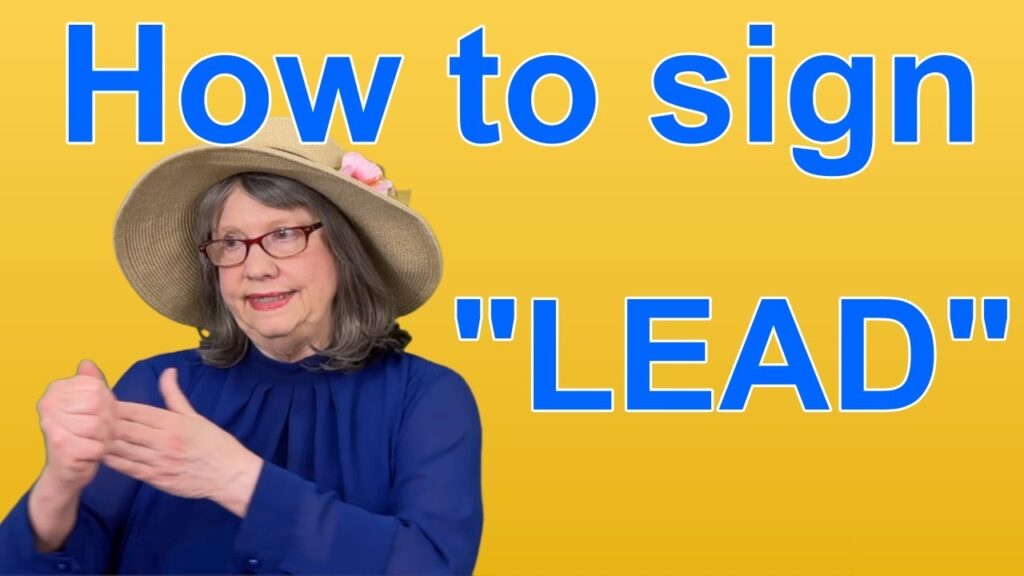
The sign for Lead is used to express the act of guiding, directing, or showing the way. It can refer to leading someone physically, such as in a walking situation, or metaphorically, such as leading a project or initiative. This action is crucial in many contexts, especially in teamwork and leadership situations.
[VIDEO_PLACEHOLDER]
Table of Contents
Forming the sign
- Handshape: The dominant hand forms the letter “L” by extending the thumb and index finger while keeping the other fingers curled into the palm.
- Location: Start the sign near the chest area, with the palm facing outward.
- Movement: Move the hand forward in a slight arc while maintaining the “L” shape. The movement should be smooth, indicating a guiding motion.
- Non-manual signals: Accompany the sign with encouraging facial expressions to emphasize the action of leading, such as raising your eyebrows and looking forward.
When you perform the sign, it is essential to maintain a clear and intentional movement that reflects the concept of guiding. The more confident and assertive your motion, the more effectively you convey the meaning of Lead.
Showing tense, aspect & repetition
In ASL, tense and aspect can be indicated through the use of movement and context. For instance, to show that you are currently leading someone, you would perform the sign with a fluid motion. If you want to express that you have led someone in the past, you can perform the sign with a more definitive motion and place emphasis on the completion of the action by moving your hand back toward your body after leading.
For ongoing actions, you might repeat the sign in a manner that shows continued leading, such as a smooth back-and-forth motion while maintaining eye contact with your audience. This repetition helps convey the duration and continuity of the action.
“Lead” in everyday signing
You can incorporate the sign Lead into various everyday conversations. For example, if you are discussing a group project, you might say, “I will Lead the team meeting.” In this context, the sign effectively captures the essence of guiding and taking charge during the meeting.
Another common usage could be when helping someone navigate in a new place: “Can you Lead me to the nearest bus stop?” Here, the sign emphasizes the act of guiding another person towards a specific destination.
Common mistakes to avoid
One common mistake when signing Lead is to use an incorrect handshape. Ensure that you are forming the “L” correctly, as using a flat hand or an open palm can confuse your meaning. Additionally, be mindful of the non-manual signals; not using facial expressions can make your sign less impactful and may lead to misunderstanding.
Another mistake is not clearly defining the direction of the lead. Ensure that your movement is forward and intentional, as aimless or unclear gestures can dilute the meaning of the sign.
Related signs
Here are some signs that are related to Lead in various contexts:
- Guide – Used to indicate someone who shows the way.
- Command – To express authority in leading.
- Direct – To indicate steering someone towards a goal.
- Inspire – To motivate others while leading.
- Follow – Opposite action of leading.
A learner’s tip
When learning the sign Lead, practice in front of a mirror to ensure your handshape and movement are accurate. Observe how your facial expressions change with the context of your sign, as emotional cues can significantly enhance your communication. Additionally, integrating this sign into role-play scenarios with friends can help solidify your understanding and comfort with its usage.
FAQ
What is the difference between Lead and Guide?
While both signs involve directing someone, Lead often implies taking charge or being in front, while Guide can mean providing assistance without necessarily being the leader.
Can Lead be used in a metaphorical sense?
Yes, Lead can be used metaphorically to refer to taking charge of projects, teams, or initiatives beyond physical direction.
Is there a specific context in which Lead is commonly used?
Lead is frequently used in team environments, educational settings, and discussions about leadership roles.
What should I focus on when practicing this sign?
Focus on the clarity of your handshape, the smoothness of your movement, and the expressiveness of your facial cues to enhance understanding.
Are there regional variations of the sign Lead?
Yes, some regions may have slight variations in the handshape or motion, so it’s beneficial to learn from local Deaf communities.
Practice ASL Signs
Use your camera to practice signs and get real-time AI feedback on your technique.
Free · No signup required