
Interpreter in Sign Language (ASL)
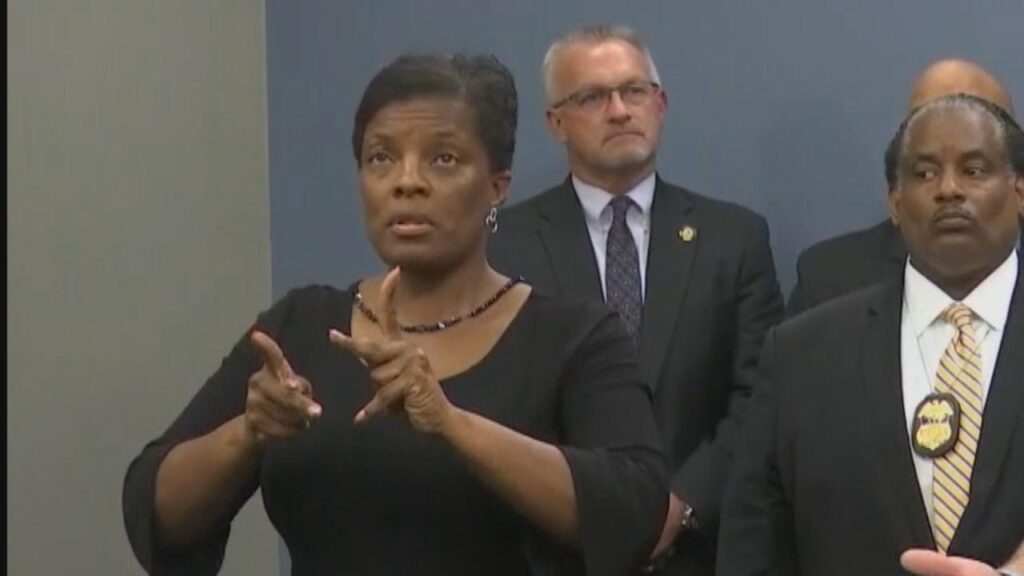
The sign “Interpreter” represents a person who facilitates communication between individuals who are Deaf and those who are hearing, using American Sign Language as the primary means of communication. This role is crucial in various settings such as schools, workplaces, and community events to ensure that Deaf individuals have equal access to information and participation. The sign is a visual representation of the concept of interpreting spoken language into sign language and vice versa.
[VIDEO_PLACEHOLDER]
Table of Contents
Forming the sign
- Handshape: Use the dominant hand in the “I” handshape, which means your pinky finger is extended while the other fingers are curled in.
- Location: Position your hand near your chin, with the palm facing inward.
- Movement: Move your hand away from your face, slightly forward, and then back towards your chin in a smooth motion, as if you are conveying a message.
- Non-manual signals: Maintain a neutral facial expression; however, you can raise your eyebrows slightly during the movement to indicate a question or emphasis.
The movement in this sign symbolizes the act of conveying information, which is integral to the role of an interpreter. The choice of handshape and location reflects the personal connection between the interpreter and the individuals they serve, emphasizing clarity and understanding in communication.
Using “Interpreter” in sentences
When using “Interpreter” in sentences, you might say, “The interpreter helped us understand the presentation,” or “I need an interpreter for my doctor’s appointment.” This sign can also be used to describe the actions of an interpreter, as in, “The interpreter interpreted the meeting effectively.” The context will help clarify the meaning, ensuring that the role and importance of the interpreter are communicated effectively.
Signs related to “Interpreter”
To further enrich your vocabulary related to interpreting, consider these related signs:
- Interpret – Refers to the act of translating spoken words into sign language.
- Translation – Involves converting written text from one language to another.
- Deaf – Sign for individuals who have hearing loss and primarily use sign language to communicate.
- Speech – The act of talking or verbal communication, which interpreters often help convey to Deaf individuals.
Regional variation
The sign for “Interpreter” can vary slightly based on regional influences within the Deaf community. In some areas, you may notice variations in the handshape or movement. For example, some signers may use a “C” handshape instead of the “I” handshape. These variations reflect the diverse nature of sign language as it adapts to different communities and cultures. It’s always beneficial to engage with local Deaf individuals to learn about these nuances and improve your signing skills.
FAQ
What qualifications does an interpreter need?
Interpreters typically require certification from a recognized body, completion of training programs, and proficiency in both ASL and English. Continuous education is often necessary to maintain certifications.
Can anyone act as an interpreter?
While friends and family can help facilitate communication, professional interpreters are trained to provide accurate and unbiased interpretation, making them the preferred choice in formal settings.
What settings do interpreters work in?
Interpreters can be found in various environments, including educational institutions, medical facilities, legal settings, and community events, ensuring equal communication access for Deaf individuals.
How do I find a qualified interpreter?
You can find qualified interpreters through local Deaf organizations, interpreting agencies, or professional networks that specialize in sign language interpretation.
Practice ASL Signs
Use your camera to practice signs and get real-time AI feedback on your technique.
Free · No signup required