
Happy in Sign Language (ASL)
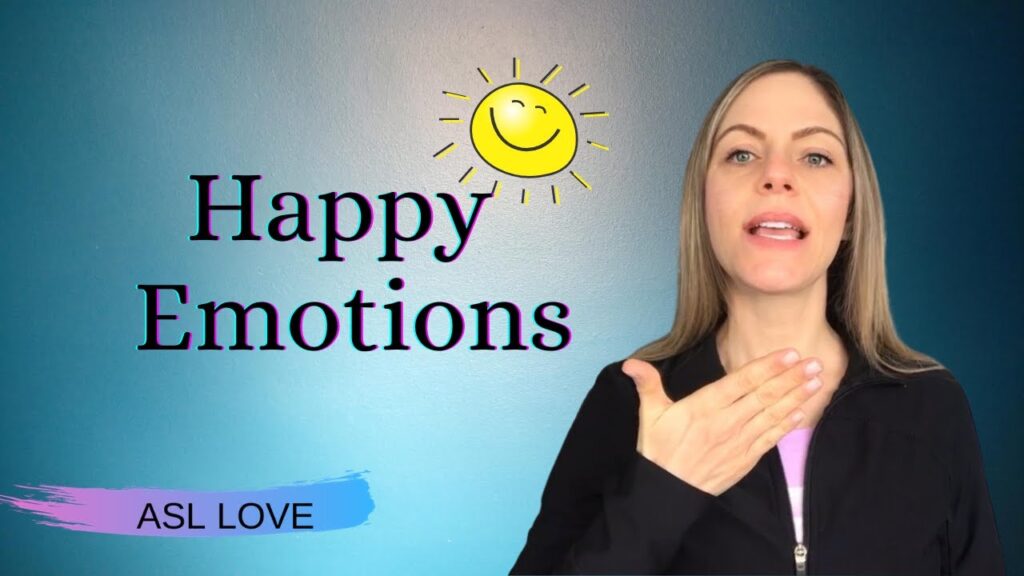
The sign “Happy” conveys a sense of joy and contentment, expressing a positive emotional state. It’s commonly used in various contexts, from casual greetings to conveying personal feelings. Understanding how to properly sign “Happy” can enhance communication in social settings and interactions.
[VIDEO_PLACEHOLDER]
Table of Contents
Forming the sign
- Handshape: The dominant hand forms an open “5” handshape, with fingers spread wide.
- Location: Start with your dominant hand positioned in front of your chest, at about chin height.
- Movement: Move the hand upwards and slightly away from the body, while maintaining the open handshape.
- Non-manual signals: Accompany the sign with a smile and bright eyes, emphasizing the emotion of happiness.
When signing “Happy,” the upward movement of the hand symbolizes the uplifting feeling associated with joy. The facial expression is crucial; a genuine smile enhances the meaning, making the sign more expressive and clear.
Adding degree & emphasis
To express varying levels of happiness, you can modify the intensity of the sign. For example, moving your hand higher or faster can indicate a greater degree of happiness, while a slower, smaller movement might convey mild happiness. Additionally, facial expressions play a significant role; a broader smile can enhance the feeling of extreme joy.
Pairing “Happy” with other signs
“Happy” can be combined with other signs to convey more complex emotions or situations. For example, pairing “Happy” with “Birthday” can create the sign for “Happy Birthday.” Alternatively, you might sign “Happy” alongside “Thank you” to express gratitude along with joy. These combinations enrich your communication and allow for more nuanced expressions of feelings.
Common confusion with a similar sign
Many learners confuse “Happy” with the sign for “Excited.” While both expressions convey positive emotions, “Excited” typically involves a more vigorous movement and a more animated facial expression. It’s essential to practice both signs to differentiate the subtle variations in emotions they represent.
FAQ
What are some other signs related to “Happy”?
Some related signs include Joy, which expresses intense happiness, Excited, for a more energized feeling, and Smile, which is a facial expression closely associated with being happy.
Can “Happy” be used in different contexts?
Yes, “Happy” can be used in various contexts, such as expressing joy about an event, a person’s presence, or a general sense of well-being. It’s versatile and can adapt to different scenarios.
How can I practice signing “Happy”?
Start by practicing in front of a mirror to observe your facial expressions while signing. Then, try using it in conversations or while discussing topics that make you happy to reinforce its usage.
Is there a difference in signing “Happy” for children versus adults?
The sign itself remains the same; however, when communicating with children, you may want to emphasize the facial expression more to engage them. Children often respond well to visual cues.
Practice ASL Signs
Use your camera to practice signs and get real-time AI feedback on your technique.
Free · No signup required