
Great in Sign Language (ASL)
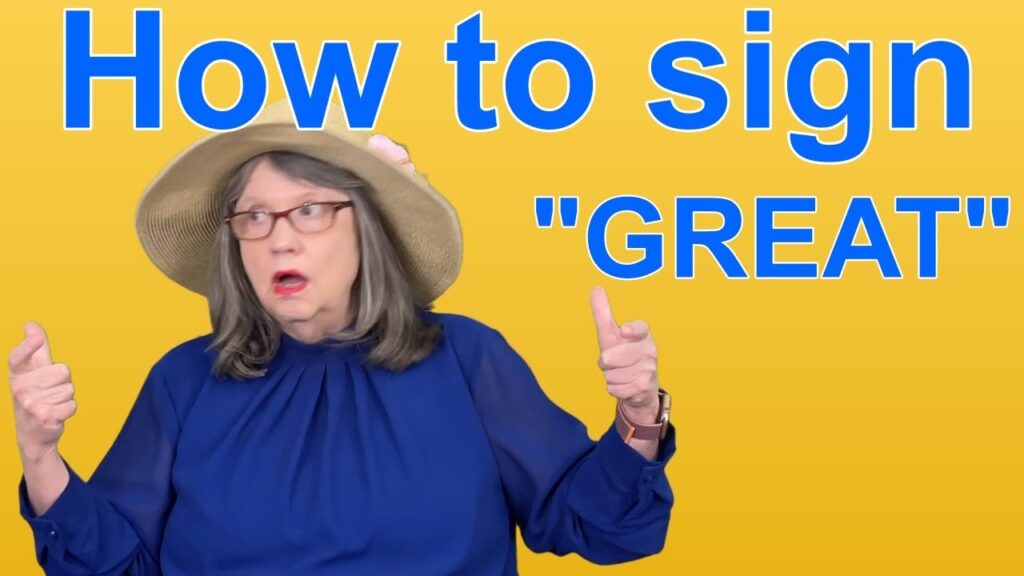
The sign “Great” expresses positivity and enthusiasm, often used to convey feelings of approval or excitement. Whether you’re celebrating a success or simply feeling optimistic, this sign is a great addition to your ASL vocabulary. It can be used in various contexts, from casual conversations to more formal discussions.
[VIDEO_PLACEHOLDER]
Table of Contents
Forming the sign
- Handshape: Use both hands in a flat ‘B’ handshape (palms facing upward).
- Location: Start with both hands held a little above your waist, in front of your body.
- Movement: Move your hands upward and outward in a sweeping motion, while slightly opening your hands as you do so.
- Non-manual signals: Accompany the sign with a bright facial expression, such as smiling or raising your eyebrows, to emphasize the positivity of the sign.
The movement of the sign captures the essence of “Great”—it reflects an upward and outward motion, symbolizing increase or elevation. The use of facial expressions is crucial in ASL, as they convey emotional context that words alone cannot express.
Adding degree & emphasis
To emphasize the sign “Great,” you can modify your facial expressions or the intensity of the movement. For instance, exaggerating the upward motion or using a more animated facial expression can indicate that something is exceptionally great. You might also combine it with signs like “very” or “super” to increase the intensity, as in “very great” or “super great,” which can be expressed by using the sign “very” (which can be represented by placing the dominant hand in front of your chin and moving it away from your face) before signing “Great.”
Pairing “Great” with other signs
“Great” often pairs well with other positive signs to enhance your message. For example, combining “Great” with “job” can express approval for someone’s work. Similarly, using “Great” with signs like “news,” “idea,” or “time” can help convey excitement about various topics. Here are some examples:
– “Great job” can be signed by first signing “job” and then the sign for “Great.”
– “Great news” can be conveyed by signing “news” followed by “Great.”
Common confusion with a similar sign
A common point of confusion arises between the signs for “Great” and “Good.” Both signs convey positive feelings, but their nuances differ. “Good” is often signed with one hand in a flat ‘B’ handshape, moving from the chin outward. In contrast, “Great” involves both hands and a sweeping upward motion, suggesting a higher level of positivity. Paying attention to the context and the accompanying facial expressions can help clarify which sign to use.
FAQ
How do I sign “Great” in a more formal context?
In formal contexts, maintain a composed facial expression and use a deliberate movement to convey enthusiasm without being overly animated.
Can “Great” be used in different contexts?
Yes, “Great” can be used in various contexts, from casual conversations to professional settings, to express approval or excitement.
How does “Great” differ from “Awesome”?
While “Great” expresses positivity, “Awesome” typically conveys a stronger sense of admiration and can be signed with a more emphatic movement.
What are some common phrases where “Great” is used?
Common phrases include “That’s great!” or “Great job!” where you can pair “Great” with other signs to express approval.
Practice ASL Signs
Use your camera to practice signs and get real-time AI feedback on your technique.
Free · No signup required