
Government in Sign Language (ASL)
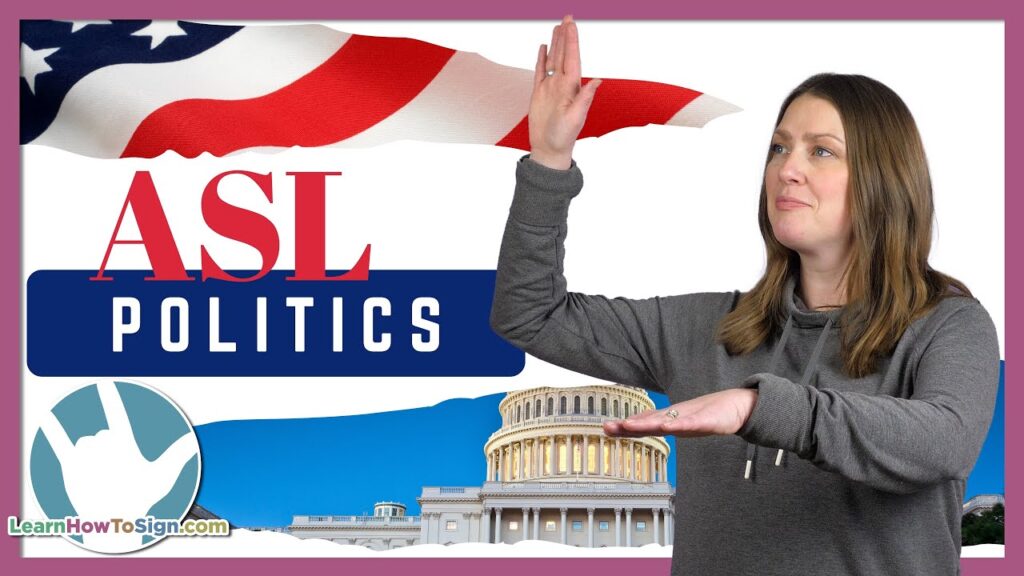
The sign for Government represents the concept of governance, authority, and the systems put in place to regulate a society. It is used in discussions about political structures, laws, and civic duties. Understanding this sign is essential for engaging in conversations about politics and community organization within the Deaf community.
[VIDEO_PLACEHOLDER]
Table of Contents
Forming the sign
- Handshape: The dominant hand is in a flat “B” handshape, where the fingers are held together and the thumb is extended.
- Location: The hand is positioned in front of your body, typically around shoulder height.
- Movement: Move the flat “B” hand downwards in a smooth motion to indicate the hierarchical nature of government.
- Non-manual signals: Maintain a neutral facial expression while signing, as this reflects the formal nature of the topic.
This sign visually conveys the concept of government as an entity that exerts authority and control over a community. Signing it with clarity and confidence can enhance communication, especially in discussions regarding civic engagement or political issues.
Using “Government” in sentences
Using the sign Government in sentences helps situate it within the context of discussions. For instance, you might say, “The Government is responsible for creating laws that protect citizens.” This can be signed as “Government RESPONSIBLE CREATE LAW PROTECT CITIZEN.”
Another example could be, “My friend works for the Government.” In ASL, this would be signed as “MY FRIEND WORK GOVERNMENT.” Integrating the sign into different sentences allows for flexibility in communication and helps in the accurate representation of ideas and opinions.
Signs related to “Government”
To expand your vocabulary related to government and civic duties, consider learning these related signs:
- Politics – Discusses the practice or theory of influencing people or groups.
- Law – Represents the system of rules created and enforced through social or governmental institutions.
- Citizen – Refers to a legally recognized subject or national of a state or commonwealth.
- Election – Signifies the process through which citizens elect representatives or decide on legislation.
- Democracy – Refers to a system of government by the whole population, typically through elected representatives.
Common confusion with a similar sign
A common point of confusion can arise between the sign for Government and the sign for Organization. While both signs involve a similar handshape and movement, the context in which they are used is different. Government refers specifically to the political entity that governs a community or nation, while Organization can refer to any structured group working together for a common purpose, which may or may not relate to government. Being aware of the context in which you are signing can help clarify your meaning.
FAQ
What does the sign for Government look like?
The sign for Government uses a flat “B” handshape, moved downwards in front of your body, typically with a neutral facial expression.
Can I use this sign in different contexts?
Yes, the sign for Government can be used in various contexts related to politics, law, and civic engagement, depending on the surrounding signs and context of the discussion.
Is there a difference in how Government is signed in different regions?
While the sign for Government is fairly consistent across most regions, there may be slight variations in handshape or movement. It’s beneficial to learn from local Deaf community members.
How can I practice this sign effectively?
To practice the sign, try incorporating it into sentences about current events or discussions about civic duties. Engage with Deaf community members to receive feedback on your signing.
What should I avoid when signing Government?
Avoid using overly exaggerated movements or facial expressions, as this can distract from the seriousness of the topic. Keep your movements smooth and your non-manual signals neutral.
Practice ASL Signs
Use your camera to practice signs and get real-time AI feedback on your technique.
Free · No signup required