
Goosebumps in Sign Language (ASL)
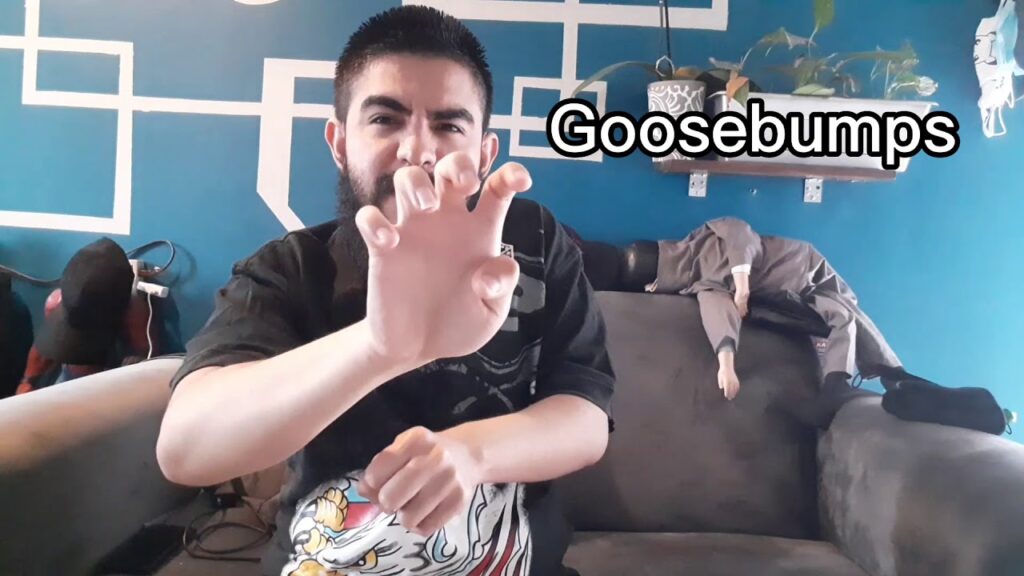
Goosebumps refer to the tiny bumps that appear on the skin, often in response to strong emotions like fear, excitement, or cold. This sign captures that physical response and is used to express feelings related to those emotions. It is commonly used in storytelling or when discussing something thrilling or chilling.
[VIDEO_PLACEHOLDER]
Table of Contents
How to Form the Sign Goosebumps
- Handshape: Start with the dominant hand in a flat ‘B’ handshape, where the fingers are extended together and the thumb is tucked across the palm.
- Location: Position your dominant hand at chest level, facing outward.
- Movement: Move your hand away from your body slightly while curling your fingers inward and down as if mimicking the appearance of goosebumps forming on the skin. You may also add a slight flicking motion to enhance the visual effect.
- Non-manual signals: Accompany the sign with a facial expression that conveys surprise or excitement, as this adds emotional depth to the sign.
This sign effectively communicates the sensation of goosebumps, linking a physical reaction to the emotions being discussed. It can be used in various contexts, like recounting a scary story or describing a thrilling experience.
Using Goosebumps in Sentences
In everyday conversation, you might use Goosebumps when describing how a movie made you feel: “When the monster jumped out, I got goosebumps!” This gives your listener insight into your emotional response. You can also use it in relation to music: “That song gives me goosebumps every time I hear it.” Both examples illustrate the expression of deep feelings through this sign.
Signs Related to Goosebumps
To further enhance your signing vocabulary, here are some related signs:
Fear – The sign for fear conveys feelings of apprehension or fright.
Excitement – This sign describes feelings of joy or anticipation.
Cold – Use this sign to indicate temperature, which can also relate to feelings that cause goosebumps.
Chills – This sign relates closely to goosebumps, often used interchangeably when discussing reactions to suspenseful moments.
Where This Sign Comes From
The sign Goosebumps is derived from the physical sensation that occurs when tiny muscles at the base of hair follicles contract, causing the skin to become bumpy. This reaction is often linked to emotional stimuli, such as fear or awe. In Deaf culture, sharing such personal experiences through signs like Goosebumps allows for a deeper connection within storytelling and conversations about emotions.
Common Confusion with a Similar Sign
Many learners confuse Goosebumps with the sign for “chills,” which uses a different handshape and movement. While both signs express similar feelings related to emotional responses, chills often imply a more general sensation of fear or excitement without the specific physical aspect of goosebumps. Practice differentiating them by focusing on the movements and facial expressions associated with each sign.
FAQ
What situations might I use the sign Goosebumps?
You can use Goosebumps when discussing anything that evokes a strong emotional reaction, such as a scary movie, an inspiring speech, or a touching song.
Are there any alternative signs for Goosebumps?
Though Goosebumps is the most widely recognized sign, some individuals may use variations that emphasize the emotional context more than the physical sensation.
How can I improve my signing of Goosebumps?
Practice in front of a mirror to refine your hand movement and facial expressions, ensuring they reflect the emotions you wish to convey.
Can Goosebumps be used in different contexts?
Yes, Goosebumps can be used in various contexts, especially in storytelling or when expressing emotional responses to different stimuli like music, movies, or personal experiences.
Practice ASL Signs
Use your camera to practice signs and get real-time AI feedback on your technique.
Free · No signup required