
Good in Sign Language (ASL)
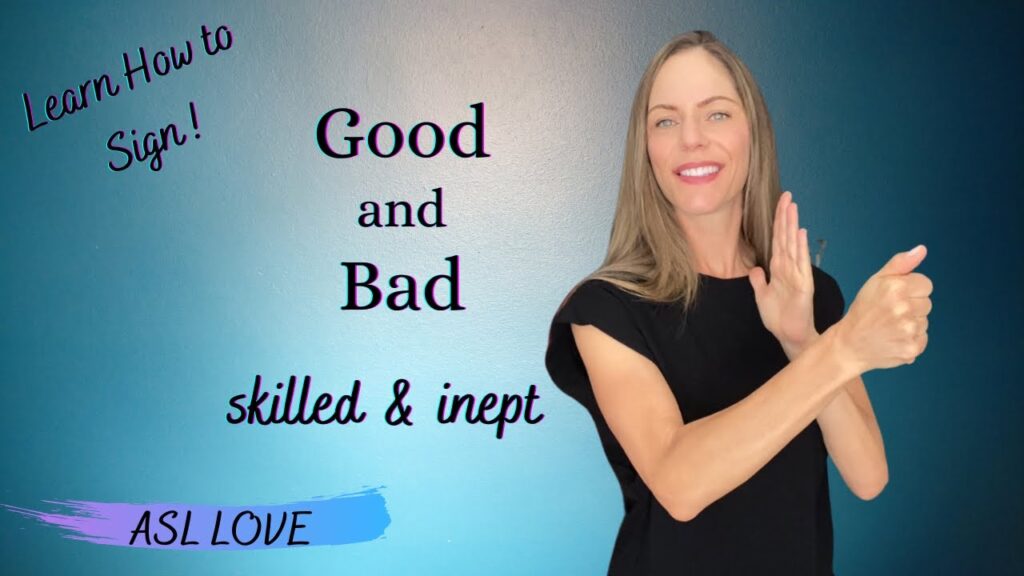
In American Sign Language, the sign “Good” is used to express a positive quality or state, often to convey approval or satisfaction. It’s commonly employed in various contexts, such as complimenting someone’s efforts or acknowledging something as favorable. This versatile sign is foundational in everyday conversation, making it essential for effective communication within the Deaf community.
[VIDEO_PLACEHOLDER]
Table of Contents
Forming the sign
- Handshape: Start with your dominant hand in a flat “B” handshape, with fingers extended and together.
- Location: Position your hand near your mouth.
- Movement: Move your hand away from your mouth slightly, and then down and forward, as if you’re placing something down gently.
- Non-manual signals: Accompany the sign with a smile to reinforce the positive meaning.
To perform the sign “Good,” begin with your fingers positioned at your lips, signifying the concept of something being commendable or praiseworthy. The movement away from your mouth symbolizes the outward expression of positivity, making it clear that you are conveying approval. The use of facial expressions, particularly a smile, enhances the overall meaning and reinforces the positive sentiment behind the sign.
Pairing “Good” with other signs
“Good” can be effectively combined with various other signs to convey more specific meanings or sentiments. For example:
- Good Morning – A greeting used to wish someone a pleasant start to their day.
- Good Night – A parting phrase used before going to sleep.
- Good Job – A compliment used to acknowledge someone’s efforts or achievements.
- Good Luck – A way to wish someone success in their endeavors.
These combinations enhance your ability to express gratitude, encouragement, and well-wishing in various social contexts.
Common confusion with a similar sign
One common point of confusion arises between the signs “Good” and “Thank You.” While both convey positive sentiments, “Thank You” is specifically used to express gratitude, whereas “Good” is more general and can apply to a variety of situations. It’s crucial to observe the context in which each sign is used to avoid misinterpretation and ensure clear communication.
FAQ
What does “Good” mean in ASL?
“Good” signifies a positive quality or approval, often used to express satisfaction or praise.
Can “Good” be used in different contexts?
Yes, “Good” can be used in various contexts, such as complimenting someone or acknowledging a favorable situation.
How do you enhance the meaning of “Good”?
Adding a smile while signing “Good” emphasizes the positive connotation, making your expression clearer and more engaging.
Is there a regional variation for the sign “Good”?
While “Good” is generally consistent, some regional differences may exist in terms of speed and facial expressions, reflecting local signing preferences.
Practice ASL Signs
Use your camera to practice signs and get real-time AI feedback on your technique.
Free · No signup required