
Give in Sign Language (ASL)
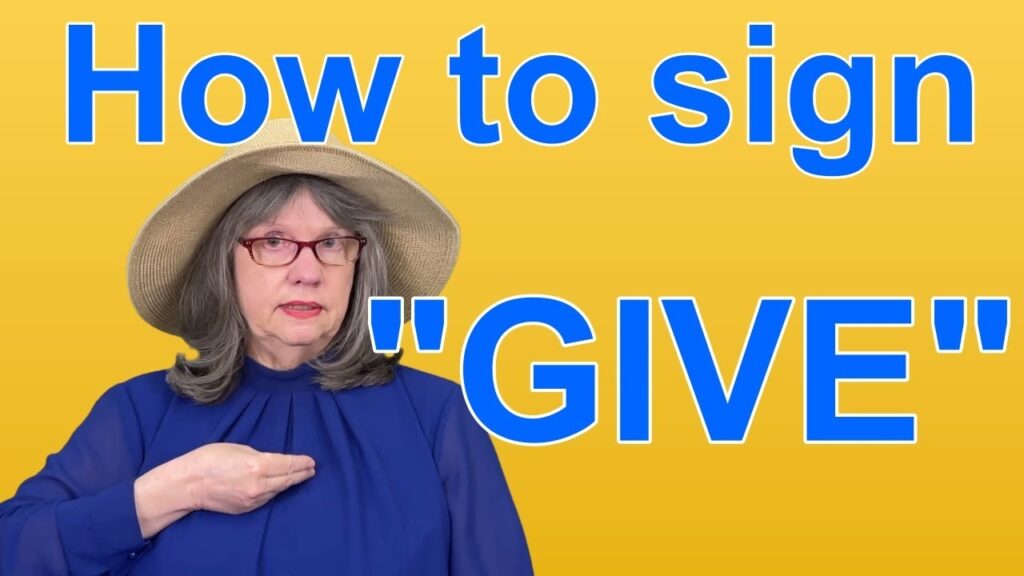
The sign “Give” conveys the action of handing something over to someone else. It’s a commonly used verb in American Sign Language, particularly in contexts where sharing or transferring items is involved. This sign is integral to daily conversations and interactions among Deaf individuals.
[VIDEO_PLACEHOLDER]
Table of Contents
Forming the sign
- Handshape: Use both hands in a flat “B” shape, where the fingers are extended together and the thumb is pressed against the palm.
- Location: Start with your hands close to your chest, representing the giver’s position.
- Movement: Extend your hands outward and slightly forward, as if you are offering or handing something to someone in front of you. The movement should be smooth and gentle.
- Non-manual signals: While signing, you can raise your eyebrows slightly to emphasize the action of giving, indicating the importance or urgency of the gesture.
When performing the sign “Give,” it’s important to ensure that the motion is clear and deliberate, as this helps convey the action effectively. The facial expressions accompanying the sign can enhance the meaning and context, making your communication richer.
Showing tense, aspect & repetition
In ASL, the sign “Give” can be modified to indicate tense and aspect through the way you perform it. For present tense, simply use the standard sign. To indicate past tense, you can start the sign closer to your body and move it outward more forcefully. For future tense, you may perform the sign with a prolonged and deliberate outward motion to suggest a forthcoming action.
Repetition of the sign can also convey different meanings. For example, signing “Give” multiple times in quick succession can indicate ongoing action, such as consistently handing over items or continuously giving support. Adjusting your speed and intensity can significantly change the nuance of what you’re communicating.
“Give” in everyday signing
You will frequently use “Give” in various everyday situations. For instance, if you want to ask someone to hand you an object, you can combine “Give” with the object you desire. For example, if you want someone to give you a book, you might sign “Give” followed by the sign for “book.”
Another common usage is in expressions of generosity or assistance, where you might say “I give you my help” to offer support. The versatility of the sign makes it a key component in effective communication among Deaf individuals.
Common mistakes to avoid
One common mistake when signing “Give” is not moving the hands outward enough, which can make the sign unclear or confusing. Always aim to make a clear, outward motion that represents the act of giving.
Another issue is neglecting to incorporate appropriate facial expressions. Without the right non-manual signals, the sign can lose its intended meaning. It’s essential to practice both the hand movements and facial expressions together to convey the message accurately.
Signs related to “Give”
There are several signs related to “Give” that can enhance your communication. Here are a few:
- Receive: The sign for receiving is often paired with “Give” to show the complete action of sharing.
- Offer: This sign indicates a similar action but often suggests a more formal or intentional gesture.
- Help: You might use “Give” alongside “Help” when you’re offering assistance or support.
- Share: This sign emphasizes the act of sharing something you have with others.
Deaf cultural note
In Deaf culture, the act of giving is often tied to concepts of community and mutual support. The significance of this gesture extends beyond the physical act; it symbolizes generosity, connection, and the importance of relationships within the Deaf community. Understanding this cultural context can enrich your appreciation of the sign and its use in conversations.
FAQ
What is the difference between “Give” and “Receive”?
“Give” focuses on the action of handing something over, while “Receive” emphasizes the act of accepting or taking something that has been offered.
Can “Give” be used in different contexts?
Yes, “Give” is versatile and can be used in various contexts, such as giving objects, offers of aid, or even giving emotional support.
How do I know when to use facial expressions with “Give”?
Facial expressions should complement the sign based on the context. If the action is significant or urgent, use more pronounced expressions.
Is “Give” used the same way across different regions?
While the sign is generally consistent, some regional variations may exist. It’s always good to be aware of local signing nuances.
Practice ASL Signs
Use your camera to practice signs and get real-time AI feedback on your technique.
Free · No signup required