
Excuse in Sign Language (ASL)
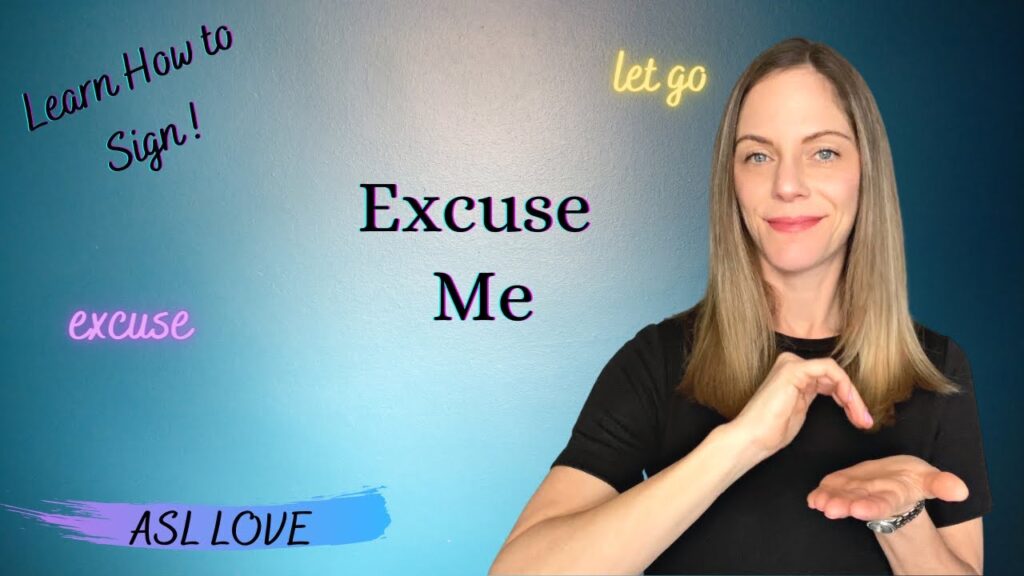
The sign “Excuse” is commonly used in American Sign Language to politely request permission to pass by someone or to interrupt. It can also express the need for forgiveness or to excuse oneself from a conversation or situation. Understanding how to properly use this sign enhances social interactions among Deaf individuals and promotes respectful communication.
[VIDEO_PLACEHOLDER]
Table of Contents
How to Form the Sign Excuse
- Handshape: Begin with your dominant hand in the letter ‘X’ shape, where the index finger is extended and the other fingers are curled in towards the palm.
- Location: Position your hand in front of your chest, with the palm facing towards you.
- Movement: Move your hand slightly forward and downward in a gentle motion, almost as if you’re gently pushing something away.
- Non-manual signals: Accompany the sign with a slight facial expression that conveys politeness, such as raised eyebrows or a soft smile.
To effectively communicate “Excuse,” remember to maintain a respectful demeanor while performing the sign. It’s often accompanied by appropriate facial expressions that help convey your intent, such as a friendly smile or raised eyebrows, which indicate politeness and sincerity.
Using “Excuse” in Sentences
Here are a few examples of how to use “Excuse” in different contexts:
- To pass by someone: “Excuse me, I need to get through.”
- To interrupt a conversation: “Excuse me for interrupting, but I have something to add.”
- To ask for forgiveness: “Please excuse my lateness; I got caught in traffic.”
It’s essential to use the sign in a manner that is contextually appropriate, ensuring that you are polite and considerate of the people around you.
Signs Related to “Excuse”
There are several related signs that are useful to know in conjunction with “Excuse”:
- Sorry – Used to express regret or apology.
- Please – A polite addition to requests.
- Thank You – A sign of appreciation that can follow “Excuse.”
- Help – Often used when seeking assistance after saying “Excuse.”
- Go – Useful for indicating movement after requesting to pass.
Common Confusion with Similar Signs
It’s easy to confuse “Excuse” with other signs like “Sorry” or “Thank you.” While “Excuse” has a more specific use for polite interruptions or requests for permission, “Sorry” is focused on expressing regret. Pay attention to the context in which these signs are used to avoid misunderstandings.
FAQ
When should I use the sign “Excuse”?
Use “Excuse” when you need to politely get someone’s attention, pass by them, or interrupt a conversation. It’s a sign of respect, showing that you acknowledge the other person.
Can I use “Excuse” in formal settings?
Yes, “Excuse” is appropriate in both informal and formal settings. It is especially useful in professional environments when you need to navigate through a crowded area.
Is there a different sign for “Excuse” in different regions?
While “Excuse” is widely understood in ASL, regional variations may exist. It’s a good idea to observe how others use the sign in different communities.
What if I accidentally bump into someone without saying “Excuse”?
If this occurs, it’s courteous to immediately sign “Sorry” to express your regret. Using these signs appropriately can help maintain positive interactions.
How can I practice using “Excuse” in conversation?
Try incorporating “Excuse” in your daily interactions with Deaf friends or during practice sessions in a classroom setting. Role-playing different scenarios can also help you feel more comfortable.
Practice ASL Signs
Use your camera to practice signs and get real-time AI feedback on your technique.
Free · No signup required