
Doctor in Sign Language (ASL)
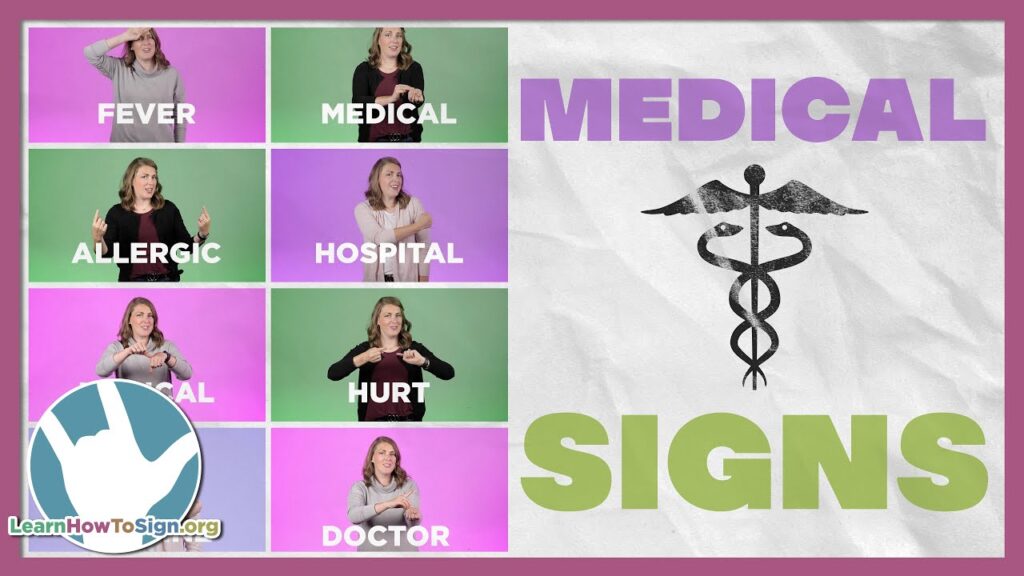
The sign for Doctor represents a medical professional who is qualified to treat patients, often in a clinical setting. This sign is used in various contexts, such as discussing health issues, making appointments, or talking about medical advice. Understanding how to sign “Doctor” is essential for effective communication in healthcare settings.
[VIDEO_PLACEHOLDER]
Table of Contents
Forming the sign
- Handshape: The dominant hand forms the letter “D” in American Sign Language. To create this shape, the index finger should extend while the other fingers are curled into the palm.
- Location: Position your dominant hand slightly in front of your forehead, just above eye level.
- Movement: Move the “D” handshape downward in a slight arc away from your forehead, ending around chin level.
- Non-manual signals: Maintain a neutral facial expression throughout the sign. You may raise your eyebrows slightly to indicate curiosity or emphasis when using the sign in a sentence.
The sign “Doctor” is straightforward and is often signed quickly in conversations. Its simplicity makes it easy to combine with other signs. For example, you might use it in phrases like “My doctor is busy,” where fluent signing flows naturally without pauses.
Using “Doctor” in sentences
In everyday communication, “Doctor” can appear in various contexts. Here are some examples:
- “I need to go see my Doctor.”
- “The Doctor will see you now.”
- “My Doctor specializes in pediatrics.”
These examples illustrate how “Doctor” functions as a noun in different situations. Notice how it can be used in both casual conversation and more formal discussions about health. The context will often dictate how much detail is necessary when signing.
Signs related to “Doctor”
There are several signs that you may find useful in relation to “Doctor.” Here are a few:
- Nurse – a healthcare professional who provides care and support to patients.
- Hospital – a facility where medical treatment is provided to patients.
- Sick – a sign used to describe illness or feeling unwell.
- Appointment – a scheduled meeting, often with a Doctor.
- Medicine – substances used to treat illnesses, often discussed in relation to what a Doctor prescribes.
Regional variation
The sign for “Doctor” can have some regional variations, which may include different locations or slight modifications in the handshape. In some areas, you may see the “D” sign made closer to the chest rather than the forehead. It’s always a good idea to observe local signers and adapt to their preferences, as regional signs can vary widely.
FAQ
What is the significance of the facial expressions while signing?
Facial expressions add context to the sign and can indicate the level of urgency or emotion behind the statement. For “Doctor,” maintaining a neutral expression is generally sufficient, but raising eyebrows can indicate curiosity or importance.
Can “Doctor” be used to refer to any medical professional?
While “Doctor” typically refers to a physician, it can informally encompass other medical professionals in casual conversation, particularly in a broader discussion about healthcare.
Is there a different sign for “Doctor” in other sign languages?
Yes, “Doctor” may have different signs in other sign languages, including variations in handshapes and movements. It’s important to learn the specific sign for each language if you’re communicating with non-ASL users.
How do I sign “I want to see a Doctor” in ASL?
Sign “I” by pointing to yourself, then sign “want” by pulling both hands toward your body in a claw shape, followed by the sign “Doctor.” Each sign should flow smoothly for clear communication.
What if I don’t know the sign for a specific Doctor specialty?
If you don’t know the specific sign for a Doctor’s specialty, you can fingerspell the specialty or describe it using related signs, such as “heart” for a cardiologist.
Practice ASL Signs
Use your camera to practice signs and get real-time AI feedback on your technique.
Free · No signup required