
College in Sign Language (ASL)
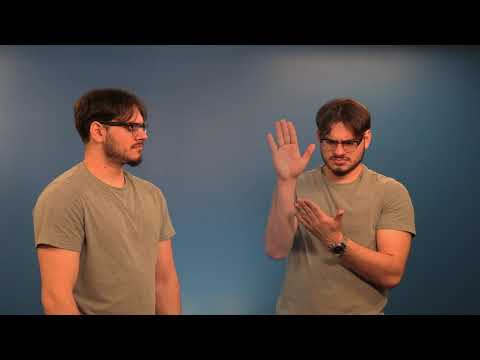
The sign for College represents the concept of higher education institutions where individuals pursue degrees and specialized knowledge. It is commonly used in discussions about academics, career paths, and personal aspirations within the Deaf community. Understanding this sign can facilitate conversations about one’s educational journey or the importance of education in general.
[VIDEO_PLACEHOLDER]
Table of Contents
Forming the sign
- Handshape: The dominant hand forms the letter ‘C’ in ASL, while the non-dominant hand remains in a flat position, palm up.
- Location: The dominant ‘C’ hand is positioned above the non-dominant flat hand, typically at chest height.
- Movement: The dominant ‘C’ hand moves downward and then slightly forward, representing the idea of a college or institution being built or established.
- Non-manual signals: Raise your eyebrows slightly to indicate that you are presenting a concept or idea, which helps to clarify the context of the sign.
The ‘C’ handshape is crucial to conveying the right meaning, as it symbolizes the word “college” effectively. The downward motion can also suggest the breadth and depth of the educational experience. Using proper facial expressions enhances the clarity of your signing, making it more engaging during conversations.
Using “College” in sentences
The sign for College can be seamlessly integrated into various sentences. For example, you might say, “I will attend College next year,” by signing “I go College next year.” Additionally, inquiring about someone’s educational background could look like, “Did you go to College?” using the sign followed by the sign for “go.” Being familiar with how to incorporate this sign into everyday language enhances communication and expression regarding academic pursuits.
Signs related to “College”
Many signs relate to College that might be useful for deeper academic discussions. Consider these:
- University – A higher education institution similar to a college but often larger and offering a wider range of degrees.
- School – A more general term encompassing primary and secondary education, as well as higher education contexts.
- Graduate – Refers to completing a degree program, often used in conjunction with discussing one’s College experience.
- Student – Essential for discussing the role of individuals attending College or university.
- Education – A broader term that encompasses all levels of learning, including College.
Common confusion with a similar sign
One common area of confusion is between the signs for College and University. While both refer to institutions of higher education, the sign for University typically uses a ‘U’ handshape instead of a ‘C’. This distinction can be crucial when discussing specific types of educational institutions. Make sure to pay attention to the context of the conversation to use the correct sign.
FAQ
What is the difference between College and University in ASL?
In ASL, College is signed with a ‘C’ handshape, while University uses a ‘U’ handshape. This distinction helps clarify the type of institution being discussed.
Can you use the sign for College when talking about community colleges?
Yes, the sign for College can apply to community colleges as well as universities; it’s a general term that includes various types of higher education institutions.
What are some other related signs I should know?
Familiarizing yourself with related signs like University, Graduate, and Student can enhance your academic-related vocabulary in ASL.
Is College used in both formal and informal settings?
Absolutely! The sign for College can be used in both formal discussions about education and casual conversations among friends.
How do I improve my signing of College?
To improve, practice signing in context with peers and ensure you’re using the correct handshape and facial expressions to convey meaning effectively.
Practice ASL Signs
Use your camera to practice signs and get real-time AI feedback on your technique.
Free · No signup required