
Children in Sign Language (ASL)
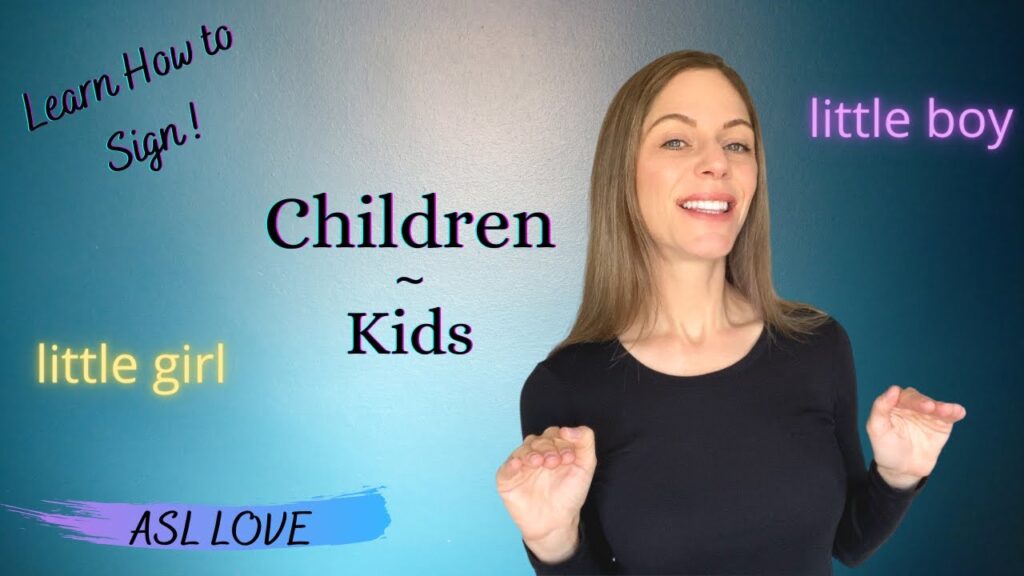
Children is a sign that represents young human offspring and is used frequently in discussions about family, education, and community. This term encompasses various age groups, typically from infancy through adolescence. Understanding this sign allows for effective communication about topics involving children in various contexts.
[VIDEO_PLACEHOLDER]
Table of Contents
Forming the sign
- Handshape: Start with both hands in a ‘B’ handshape. This means your fingers are extended and together, with the thumb folded across the palm.
- Location: Position your hands in front of your body at about chest level, with palms facing downward.
- Movement: Move both hands downward slightly in a gentle bouncing motion, as if you are indicating multiple children playing or standing together.
- Non-manual signals: Maintain a neutral facial expression. You may want to use a slight smile to convey positivity when discussing children.
The sign Children symbolizes a group of young individuals. The bouncing motion of the hands reflects their playful and lively nature. You could also subtly adjust the speed and intensity of the movement based on the context—faster for more excitement and slower for a more serious conversation.
Using “Children” in sentences
In conversation, “Children” can be used in various contexts. For example:
- When discussing family: “Do you have Children?”
- In educational settings: “The Children are learning about nature.”
- In community discussions: “The park is a great place for Children to play.”
These examples show the flexibility of this sign in different social interactions. You can pair it with various verbs or adjectives to provide context, such as “happy Children” or “teach Children.”
Signs related to “Children”
Several signs can be connected to Children to enhance communication. Here are a few:
- Family: Significantly related as it encompasses all members, including Children.
- Education: Important in the context of learning and the role of Children in schools.
- Play: Often what Children engage in during their free time.
- Grow: Refers to the development and maturation of Children.
Regional variation
The sign for Children can have slight variations based on regional dialects within the ASL community. For example, in some areas, the sign may include a more exaggerated bounce or might involve a different handshape during the movement. Engaging with local Deaf communities can help learners become familiar with these variations and the cultural nuances that accompany them.
FAQ
What age range does “Children” refer to?
“Children” typically refers to individuals from birth to around 12-13 years old, encompassing infants and adolescents.
Can I use the sign for “Children” to refer to a single child?
While “Children” indicates multiple young individuals, it can also be understood in a broader context when referring to a single child in discussions about family or community.
Is there a different sign for “Kid” or “Child”?
Yes, while “Children” refers to a group, the signs for “Kid” and “Child” are often represented by a singular hand configuration, usually with a variant of the ‘B’ handshape, depending on the context.
Are there any cultural considerations when discussing Children in ASL?
Yes, discussions about Children may carry cultural significance, particularly concerning family structure, education, and community involvement. Being respectful and aware of these cultural contexts is essential.
Practice ASL Signs
Use your camera to practice signs and get real-time AI feedback on your technique.
Free · No signup required