
Cheese Grater in Sign Language (ASL)
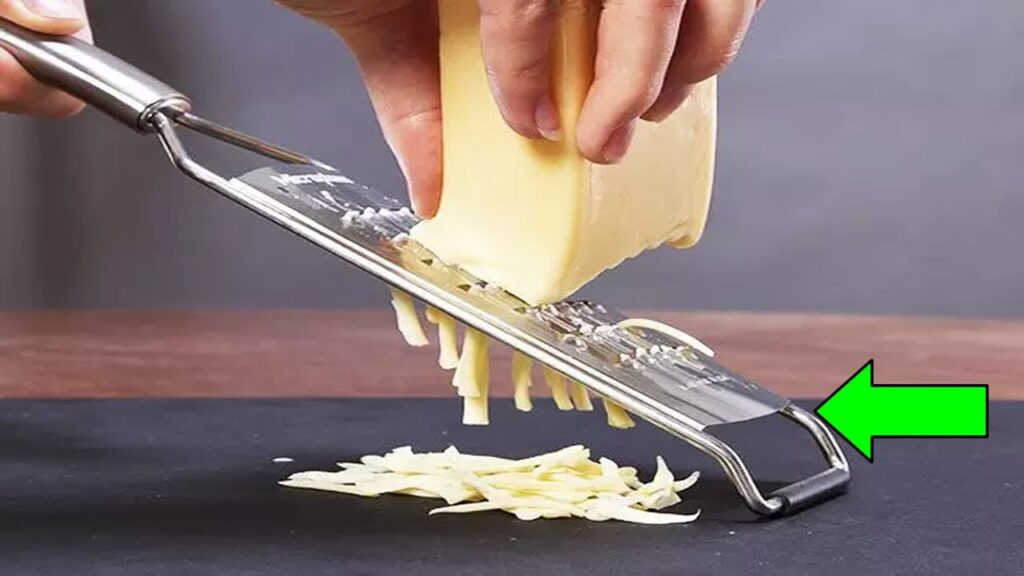
In American Sign Language, the sign for “Cheese Grater” represents the kitchen tool used to shred cheese and other foods. This sign is useful in culinary contexts, especially when discussing cooking or food preparation with Deaf individuals. It’s a straightforward sign that visually conveys the shape and function of the grater.
[VIDEO_PLACEHOLDER]
Table of Contents
Forming the sign
- Handshape: Start with a flat dominant hand, palm facing down. The fingers should be together and extended, resembling a grater’s surface.
- Location: Position your dominant hand in front of your chest, slightly to the side.
- Movement: Move your dominant hand downward in a quick, repetitive motion, as if you’re grating cheese. This simulates the action of using a cheese grater.
- Non-manual signals: Accompany the sign with a facial expression that conveys effort or focus, emphasizing the action of grating.
The sign effectively mimics the action of grating cheese, making it an intuitive choice for discussing kitchen tasks. By using the downward motion, it highlights the typical use of the grater, which is an everyday activity in many households.
Using “Cheese Grater” in sentences
When incorporating “Cheese Grater” into sentences, you might say, “I need to find the cheese grater to prepare dinner,” or “Can you pass me the cheese grater?” This sign is often paired with other food-related signs to create context around cooking or meal preparations.
Signs related to “Cheese Grater”
Here are some related signs that might come in handy:
- Cheese – The sign for cheese can be used to complement the cheese grater sign.
- Grate – A more general sign that can refer to the action without specifying the tool.
- Kitchen – Helpful for discussing the setting where a cheese grater is typically found.
- Food – A general sign that can encompass all food-related conversations.
- Cook – This sign relates to the broader context of preparing food, where a cheese grater would be used.
Where this sign comes from
The sign for “Cheese Grater” derives from the visual and functional characteristics of the kitchen tool. The movement and handshape mimic the action of grating cheese, which is a familiar concept across different cultures. In Deaf communities, signs often evolve from the visual representation of their meanings, making this sign an intuitive addition to culinary vocabulary.
Common confusion with a similar sign
It’s easy to confuse the sign for “Cheese Grater” with the sign for “Grate” by itself. While both involve similar hand movements, “Cheese Grater” specifically indicates the tool used for shredding cheese. To avoid confusion, pay attention to the context in which the sign is used and the specific handshape that distinguishes them.
FAQ
What does the sign for “Cheese Grater” look like?
The sign involves a flat dominant hand mimicking the action of grating while moving downward.
Can I use the sign for “Cheese Grater” in a restaurant setting?
Yes, it’s appropriate to use the sign when discussing menu items or cooking methods in restaurants.
Are there regional variations of this sign?
While the basic concept remains the same, some regions may have slight variations in handshape or movement.
How can I practice the sign for “Cheese Grater”?
Practice in front of a mirror to ensure your handshape and movements accurately represent the motion of grating.
Is this sign used in other contexts?
Primarily, the sign is used in culinary contexts, but it can also be used metaphorically in discussions about processing or shredding information.
Practice ASL Signs
Use your camera to practice signs and get real-time AI feedback on your technique.
Free · No signup required