
Change in Sign Language (ASL)
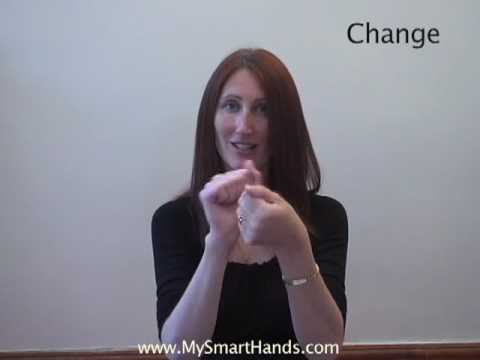
The sign “Change” conveys the idea of making something different or transforming it from one state to another. It is commonly used in various contexts, including discussions about money, plans, or personal growth. This sign can be both a noun and a verb, emphasizing its flexibility in conversation.
[VIDEO_PLACEHOLDER]
Table of Contents
Forming the sign
- Handshape: Use an open hand with fingers together. The dominant hand is in a “C” shape, while the non-dominant hand remains flat.
- Location: Start with your dominant hand positioned at the non-dominant hand’s palm level.
- Movement: Begin with the dominant hand in the “C” shape and move it outward while closing the fingers into a fist. This motion creates a visual representation of transformation.
- Non-manual signals: Maintain a neutral facial expression, but you can raise your eyebrows slightly to indicate a question or emphasize the change.
This configuration illustrates the concept of change, showing the transition from an open state to a closed one. It’s important to practice the motion fluidly to express the concept effectively.
Showing tense, aspect & repetition
In ASL, verbs can be modified to indicate tense, aspect, and repetition. For “Change,” you can use the following techniques:
- To indicate past tense, you can pull your hand back slightly before performing the sign, reflecting a sense of looking back on a change that has already occurred.
- For future tense, extend your arm further away from your body, suggesting a change that is anticipated or planned for the future.
- To show repetition of the action, perform the sign multiple times in quick succession, which visually conveys the idea of ongoing changes.
“Change” in everyday signing
In daily conversations, the sign “Change” can be integrated in various contexts. For instance, when discussing financial transactions, you might say, “I need to change money.” Additionally, it can be applied to personal situations, such as, “I have decided to change my job.” Using “Change” helps convey the notion of transformation or adjustment succinctly.
Common mistakes to avoid
When signing “Change,” some learners may confuse it with similar signs that involve physical movement or alteration, such as “Adjust” or “Modify.” It’s essential to ensure that the motion clearly reflects a transition from one state to another rather than simply a minor adjustment. Additionally, ensure your facial expressions align with the concept you are trying to convey, as they are critical in ASL communication.
Signs related to “Change”
Here are some related signs that complement the meaning of “Change”:
- Transform – Indicates a significant change or metamorphosis.
- Adjust – Represents minor modifications rather than a complete change.
- Shift – Expresses a change in position or direction.
- Evolve – Suggests a gradual change or development over time.
FAQ
What contexts can I use the sign “Change” in?
You can use “Change” in various contexts, including financial discussions, personal decisions, and general transformations in life or plans.
Is there a specific facial expression I should use?
While a neutral expression is acceptable, raising your eyebrows slightly can emphasize the significance of the change being discussed.
Can “Change” be used to refer to emotional changes?
Yes, you can use “Change” to discuss emotional transformations, such as “I feel a change in my mood” by incorporating appropriate context and facial expressions.
How do I sign “Change” in past tense?
To sign “Change” in past tense, pull your dominant hand back slightly before performing the sign to indicate that the change has already occurred.
Practice ASL Signs
Use your camera to practice signs and get real-time AI feedback on your technique.
Free · No signup required