
Be Quiet in Sign Language (ASL)
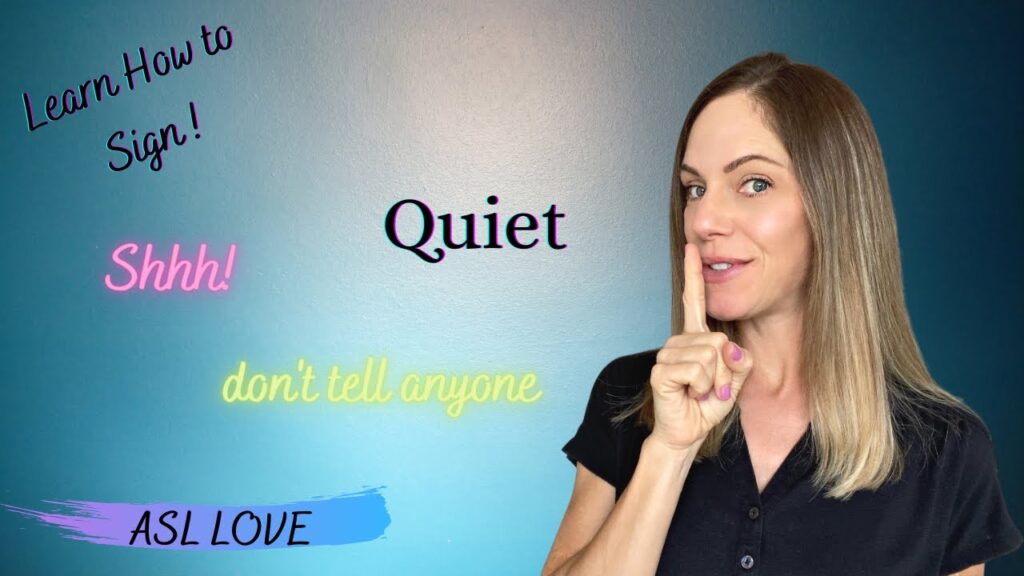
The sign “Be Quiet” is commonly used to request silence or to indicate that someone should lower their voice. It is a useful expression in both formal and informal settings, such as classrooms, meetings, or public places where maintaining quiet is important. This sign can effectively convey the need for a calm environment without the use of spoken words.
[VIDEO_PLACEHOLDER]
Table of Contents
How to Form the Sign “Be Quiet”
- Handshape: Use your dominant hand to form a “5” handshape, where your fingers are spread apart and your palm faces inward.
- Location: Position your hand in front of your mouth, approximately at chin level.
- Movement: Bring your hand slightly forward from the starting location while closing your fingers into a fist, effectively mimicking the action of “shushing” someone.
- Non-manual signals: Accompany the sign with a facial expression that indicates seriousness or urgency, such as a furrowed brow or pursed lips.
This sign is a straightforward way to communicate the need for quiet, and the movement of bringing the hand toward the mouth can help emphasize the request. The use of non-manual signals, such as facial expressions, enhances the meaning, making it clear that quietness is being requested seriously.
Using “Be Quiet” in Everyday Signing
The phrase “Be Quiet” can be incorporated into various sentences and contexts. For instance, you might use it in a classroom setting when a teacher wants students to pay attention or when a parent is trying to calm a group of children. Here are a few examples:
- During a movie, one could sign “Be Quiet” to remind others to keep their voices down.
- A teacher might say, “When I raise my hand, please be quiet,” while signing.
- In a library, one could sign “Be Quiet” to friends who are chatting loudly.
Signs Related to “Be Quiet”
There are several signs that convey similar meanings or can be used in conjunction with “Be Quiet”:
- Silence – A related sign that emphasizes the need for total quiet.
- Shush – Another way to ask someone to be quiet, often used playfully.
- Quiet – This sign is used to describe a state of low volume or sound.
Common Confusion with a Similar Sign
Some learners may confuse the sign “Be Quiet” with “Shh,” as both convey a similar message. However, “Shh” is typically performed with a more distinct motion of placing a finger to the lips, whereas “Be Quiet” focuses on the movement of the entire hand and may involve more expression. Understanding these differences can enhance clarity in communication.
Frequently Asked Questions
What situations is “Be Quiet” commonly used in?
“Be Quiet” is often used in classrooms, libraries, meetings, and any environment where silence is preferred or required. It’s a polite way to request that people lower their voices or stop talking.
Can I use “Be Quiet” with children?
Yes, “Be Quiet” is an effective sign to use with children. Pairing it with a gentle or playful expression can help communicate the message without coming across as harsh.
Are there variations of the sign?
While the core sign remains the same, regional variations may exist based on local Deaf culture. It’s a good idea to observe how others sign in your community.
Can I use facial expressions while signing?
Absolutely! Facial expressions add emotional context and can help clarify the intent of the sign, making your communication more effective.
Practice ASL Signs
Use your camera to practice signs and get real-time AI feedback on your technique.
Free · No signup required