
Bar in Sign Language (ASL)
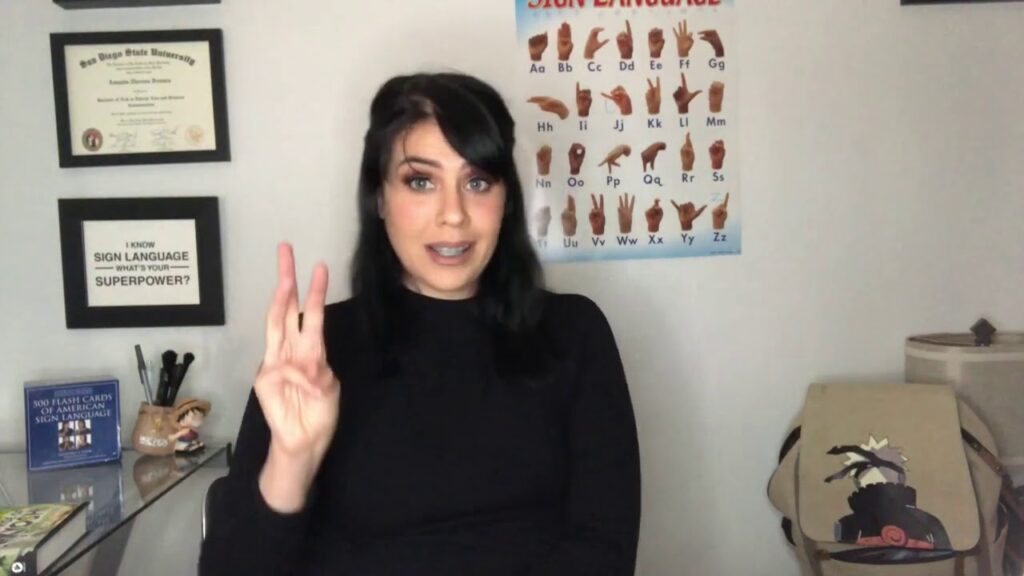
The sign “Bar” refers to a long, narrow structure or object, often associated with a place serving alcoholic beverages, or a physical barrier. It can also denote a bar in the context of a gym or fitness equipment. This sign is useful in social settings, discussions about locations, or when describing physical objects.
[VIDEO_PLACEHOLDER]
Table of Contents
Forming the sign
- Handshape: Use your dominant hand to form the letter “B” by extending your fingers and keeping them together while your thumb is placed against the palm.
- Location: Position your hand in front of your body, typically around waist height, to represent where a bar might typically be found.
- Movement: For emphasis or to indicate a specific type of bar (like a barbell), you can slide your hand slightly forward or backward, mimicking the action of moving a bar.
- Non-manual signals: You may raise your eyebrows slightly when signing to indicate that you’re referring to a bar in a specific context, such as a bar where people gather.
This structure helps convey the meaning clearly, and practicing the location and movement will make your signing more fluid in conversation.
Using “Bar” in sentences
When incorporating “Bar” into sentences, you can use it in various contexts. For example:
- “Let’s meet at the bar after work.”
- “I’m lifting weights at the gym, focusing on the bar.”
In these sentences, “Bar” signifies a location or object, depending on the context of the discussion.
Signs related to “Bar”
There are several related signs that may come in handy:
- Bartender – Refers to the person serving drinks at a bar.
- Barbell – Represents the equipment used for weightlifting.
- Barricade – A physical barrier, similar to the concept of a bar as an obstacle.
- Restaurant – Many bars are located within restaurants, making this sign relevant in dining contexts.
Common confusions with a similar sign
New learners may confuse the sign for “Bar” with the sign for “Board.” To avoid mistakes, focus on the handshape; the letter “B” has a flat palm facing outward for “Bar,” while “Board” usually involves a flat hand that moves horizontally. Paying attention to context and movement can help clarify the intended meaning.
FAQ
What is the difference between “Bar” and “Club”?
“Bar” generally refers to a place that serves alcohol, while “Club” can denote a venue that often has dancing and entertainment, typically with a bar included.
Can “Bar” be used for other meanings?
Yes, “Bar” can also refer to a physical bar used in exercise, such as a barbell, or even a barrier in a general sense.
Are there regional variations for the sign “Bar”?
While the core sign remains the same, some regional variations may exist in how the sign is articulated, particularly in terms of speed and emphasis.
Is “Bar” used in any specific Deaf cultural references?
Yes, “Bar” can be part of social gatherings within Deaf culture where members meet at bars or clubs to socialize, fostering community connections.
Practice ASL Signs
Use your camera to practice signs and get real-time AI feedback on your technique.
Free · No signup required